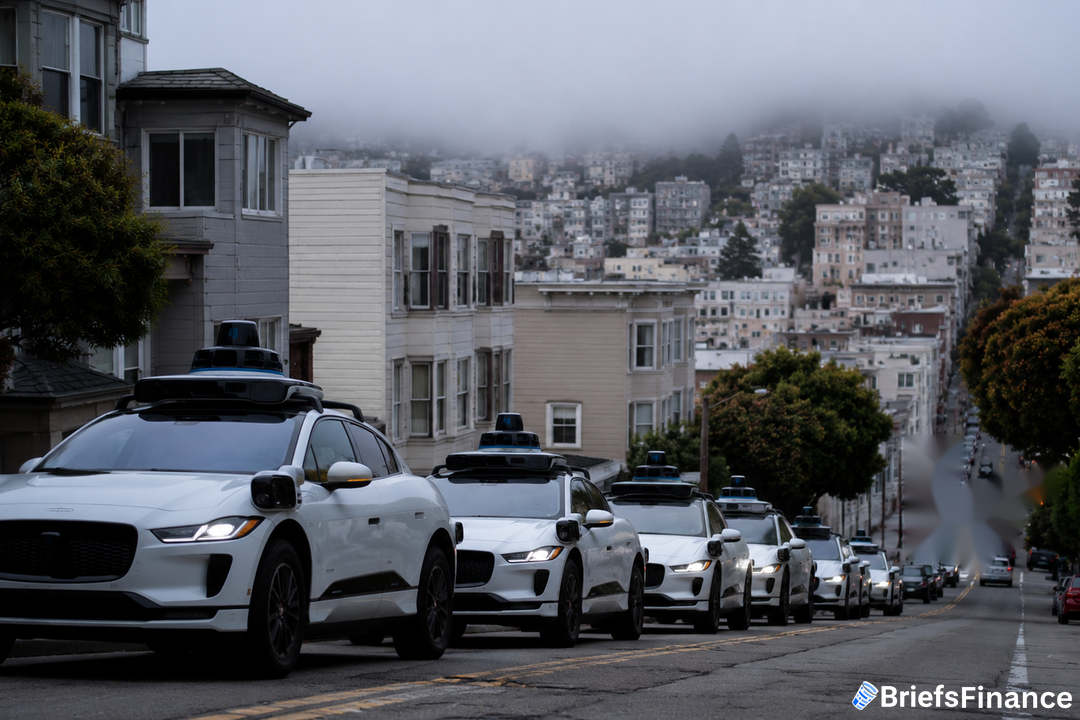
What Actually Happened on July 4th
It was the second time in about six months that Waymo robotaxis caused major disruptions - a widespread power outage in December had done the same, resulting in many Waymo cars stuck on roads and bringing traffic to a halt. Mayor Lurie had seen enough.
Lurie wrote to the California Department of Transportation, noting that existing regulations failed to properly cover autonomous vehicle behavior during major events. "California's current regulatory framework does not adequately address how autonomous vehicles operate during major incidents, planned or not," he wrote. "The challenge now is not just whether autonomous vehicles can operate safely under normal conditions, but also whether they can perform reliably during extraordinary ones."
Waymo is active in 11 urban areas and provides over half a million paid trips weekly. The firm currently runs roughly 1,000 self-driving taxis in the Bay Area.
Get the market news that matters in a five-minute read with Market Briefs, our free daily newsletter
These back-to-back incidents have shifted the debate from whether the technology works on clear days to whether it can handle the unpredictable nature of real-world emergencies.
The Four Rules Lurie Wants
Lurie outlined concrete requirements he would like the California DOT to adopt as rules across the state.
First, self-driving car operators must have the capability to quickly shift or pull their vehicles out of active driving lanes. Second, they must dynamically alter their paths, service zones, and boarding/alighting points.
Third, they must provide live operational information to municipal authorities, such as service outages, positions of stuck cars, and cleanup operations. Fourth, they must prove via tests that they can manage big crowds and heavy congestion.
Currently, firms wanting to run autonomous ride-hailing operations in California need to secure permits through two separate processes: one overseen by the state's DMV and another by the Public Utilities Commission. Six companies, including Nuro, Waymo, and Amazon-owned Zoox, already hold driverless testing permits. Uber is also poised to launch a premium robotaxi service in the area.
Notably, Tesla offers a robotaxi service under its own brand, yet it does not operate driverless cars and lacks the required permits for such operations. Instead, Tesla holds a charter transportation permit that authorizes its drivers to provide rides across San Francisco using vehicles with its semi-autonomous driving software rather than fully autonomous technology.
Lurie made clear he is not trying to kill the technology. "These changes will not undermine autonomous vehicles; they will strengthen them," he said. But his letter notes that voluntary actions - such as Waymo's pledge to limit operations on Independence Day around the waterfront and to station a liaison at the city's emergency operations center - proved insufficient, highlighting the sheer scale of Waymo's fleet.
Join Market Briefs, our free daily newsletter, for a quick daily rundown of the markets