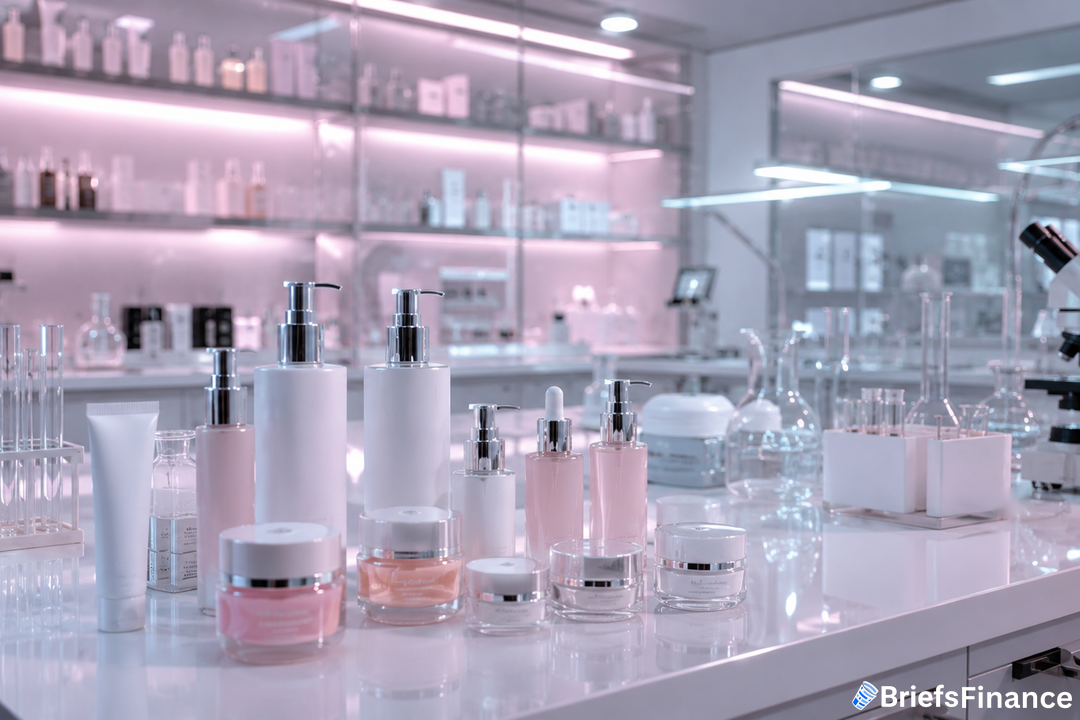
The Beauty Boom That's Lifting Stocks
South Korean clinics are injecting something new into aging faces: donated human skin.
The product, called Re2O, comes from a biotech company named L&C Bio. It was introduced in late 2024, and since then the company's stock has more than doubled. On the day this article was published, shares closed at 69,900 won, up 1.83% for the session.
What is driving the numbers? A lot of money. L&C Bio's first-quarter operating profit hit 6 billion won - about $4 million - which was a 917% increase from the same period a year earlier.
The company currently produces 80,000 vials of Re2O per month. It wants to reach 150,000 by late 2026 and 300,000 within a couple of years after that.
The global fascination with K-beauty, propelled by Korean pop culture and groundbreaking skincare technologies, has paved the way for treatments like Re2O to capture both consumer and investor attention.
How a Donated Skin Cell Becomes a Face Treatment
Re2O uses donated human skin tissue that has had all the cells stripped out. What remains is called the extracellular matrix - a scaffold of proteins that normally holds skin together. When injected into the face and neck, that scaffold fills in lines and tightens pores.
Get the market news that matters in a five-minute read with Market Briefs, our free daily newsletter
Chief dermatologist Kim Han-saem of DoD Dermatology Clinic in Seoul explains it this way: you are not just stimulating collagen the way conventional skin boosters do. You are rebuilding the skin structure itself. "It's a completely different approach," he says.
The treatment costs 600,000 to 800,000 won per session - roughly $400 to $530. That is about three times what you would pay for a standard skin booster. Yet demand is strong enough that appointments can require a wait of up to a month.
Sara Yoon, a 40-year-old influencer originally based in New Jersey and relocated to Seoul in 2023, has undergone the treatment. She has 90,000 Instagram followers and says she tends to be "more experimental." When her dermatologist told her the product is made from donated human tissue, she did not flinch. "I've shifted into more of that cultural mentality of having a lot of trust in the doctor," she says.
The Wrinkle: Ethics and Regulation
The idea of injecting something from a dead person into your face makes some people uncomfortable. L&C Bio's CEO, Lee Whan Chul, says the company gets inquiries from all over the world, partly thanks to the K-beauty boom. But not everyone is thrilled.
A lawyer named Kwon Dongju has called for a ban on cosmetic use of human tissue and wants injectable tissue products reclassified as drugs.
L&C Bio counters that the donated skin is rigorously processed. The company points to certification from the Association for Advancing Tissue and Biologics, a Washington-based group. That group says it is not aware of any impact on the supply for medical treatments, and that tissue donation honors the donor's wishes.
What This Means for Your Portfolio
The antiaging market is only getting bigger. Precedence Research projects the global market will reach $150 billion by 2035, roughly double today's size. And the customers are piling up: the United Nations estimates that 1 in 5 people worldwide will be over 60 by 2050.
L&C Bio is already planning to begin exporting. The company intends to begin exports in 2026 to markets such as Malaysia, Australia, Hong Kong, Russia, and Thailand. The U.S. market is the target for 2027. That is a big potential audience, and the stock has already shown what happens when demand catches fire.
South Korean regulators are still reviewing safety and ethical questions. Some lawmakers want stricter rules or a ban. But so far the clinics keep filling appointment books, the stocks keep climbing, and the K-beauty machine keeps churning. For investors, the question is whether this trend has staying power - or whether the ethical debate will catch up fast enough to slow it down.
Join Market Briefs, our free daily newsletter, for a quick daily rundown of the markets