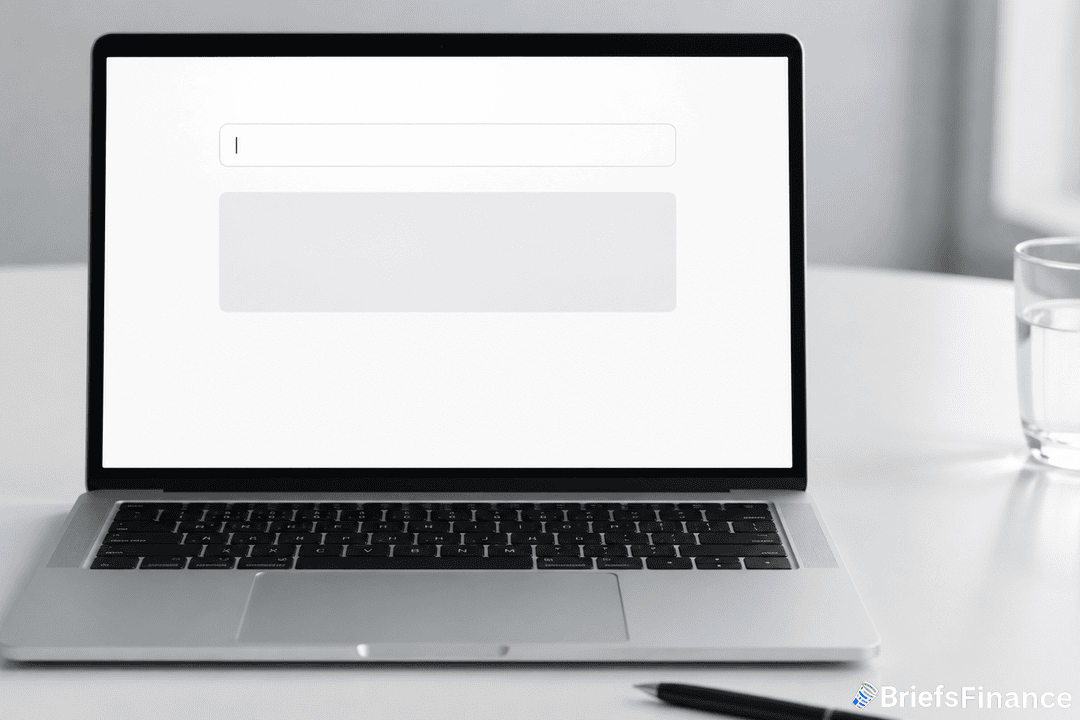
Type "disregard" into Google. You used to get a quick definition and a few useful links.
Now you get a blank box. Past the empty space sits a Merriam-Webster link buried below the fold, while the same search on Bing actually works.
What Google Just Changed
This week, Google's flagship product got a redesign. AI summaries now sit at the top of every result page.
The old "10 blue links" that defined the firm for two decades have been pushed far down. Most users will not scroll that far.
The problem is what happens at the edges. Simple word searches that used to surface a clean definition now return an AI answer with nothing in it.
The Merriam-Webster link is still on the page. But the empty AI box hides it from most users.
For a firm that built a $4 trillion business on giving you the right answer in one click, breaking a one-word search is not a great look. The bad pattern has now been flagged for other plain English words too.
The Google search overhaul was meant to keep users inside Google's own product. So far, the upgrade has also surfaced cases where the AI answer is empty.
Every morning, Market Briefs walks investors through what is going on at the biggest tech firms in five minutes. You also get a free investing masterclass as a bonus.
The Bigger Problem For Alphabet
Search is the moat. It is also the thing being challenged by ChatGPT, Perplexity, Claude, and other AI tools that answer questions without the link-and-click step.
Alphabet's response has been to put AI at the top of its own results. That has worked in some cases.
It has also created edge cases where the AI returns nothing useful and the old links are pushed too far down to help. Bing's slower, hybrid plan is starting to look smart by comparison.
The risk for Alphabet is not one weird search result. It is that small cracks in trust can change how people start their searches in the first place.
Google has pushed harder on paid AI tools too. Google AI Ultra charges $100 a month for power users.
The new search build is meant to feed that wider AI play. It is not just a way to protect old market share.
What To Watch
Search is a habit. People go to Google because it has always worked.
The minute it does not, they try the other tools sitting on their phones. The new AI tools are right there.
That risk gets bigger as Google rolls out other AI-first products. The firm just teamed with Warby Parker on smart glasses.
Each new bet on AI raises the bar for the main search tool. It still has to work for plain English words.
That is the part of the story most easy to miss. The new tools can be smart and still fail the basics.
A broken result for one word is fixable. A pattern of broken results is not.
If you want this kind of read on tech every weekday, sign up for Market Briefs. There is a free 45-minute investing course thrown in when you join.