Free NewsletterPro Login
S&P 500 6,287 +0.42%
DOW 44,521 -0.18%
NASDAQ 21,103 +0.71%

Warning: Undefined variable $funds in /var/www/briefs.co/htdocs/wp-content/plugins/oxygen/component-framework/components/classes/code-block.class.php(133) : eval()'d code on line 491

Warning: foreach() argument must be of type array|object, null given in /var/www/briefs.co/htdocs/wp-content/plugins/oxygen/component-framework/components/classes/code-block.class.php(133) : eval()'d code on line 491
/* the link was here */

BP's North Sea Exit Presents an Immediate Energy Challenge for Britain's New Prime Minister

Published Jul 31, 2026
[tts_player]
Share:
Summary:
  • BP is preparing to sell its entire offshore portfolio in British waters, exiting the North Sea completely.
  • The sale lands as new Prime Minister Andy Burnham weighs whether to approve fresh exploration.
  • BP is the last oil major running a separately managed North Sea unit, making the exit politically charged.

A Defining Week for Energy Policy

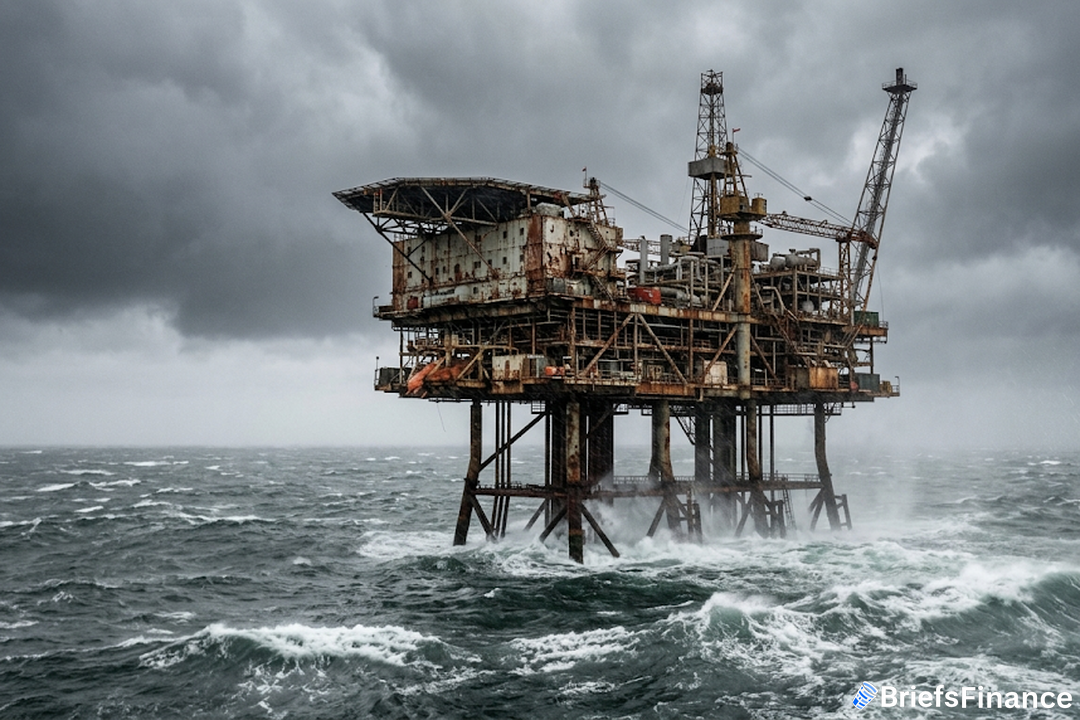
BP Plc is preparing to sell its entire offshore portfolio in British waters, a pivotal moment for the country's shrinking hydrocarbon sector just as Prime Minister Andy Burnham weighs new exploration approvals. As one of the country's largest companies and the last oil major with a separately run North Sea unit, BP is exiting in a move that carries political weight as well as financial consequences.

After replacing Keir Starmer as the country's leader last week, Burnham has indicated he might take a softer line on hydrocarbon exploration in the seas around Scotland. That places him between environmentalists and trade unions, two groups crucial to his Labour Party. Rival parties contend that additional drilling could lower household bills.

BP's move comes after years of friction between North Sea producers and successive governments. In 2022, the Conservatives slapped a windfall levy on North Sea oil and gas output, and producers responded that the tax made investment unviable. The Labour administration, in power for two years, extended that levy and stopped issuing new exploration licences.

BP's departure "should be a defining moment for the new prime minister," said Russell Borthwick, who heads Aberdeen and Grampian Chamber of Commerce. He added that the decision was "another stark reminder that confidence in the UK continental shelf has been badly shaken" after policy instability, high taxes and conflicting signals.

Investors and Activists Watch Closely

Investors and energy executives are waiting to see whether Burnham changes course. President Donald Trump has taken a close interest. During their first call, Burnham told Trump that his approach to drilling would be "pragmatic." Trump welcomed that and said the prime minister had "pledged to open up the North Sea."

Get the market news that matters in a five-minute read with Market Briefs, our free daily newsletter

On Thursday, Burnham defended his position: "There is a resource there. When people are struggling - you can't ignore that."

Trump regularly criticised Starmer for refusing to back new North Sea projects. His decision to attack Iran has also unsettled global oil and gas markets, making the choice between renewables and fossil fuels more politically charged. Wildfires across Europe, including one in Suffolk, have kept climate change high on the agenda.

Whether to approve the Jackdaw and Rosebank fields is the most pressing choice facing Burnham's government. Adura, a joint venture between Shell and Norway's Equinor, operates both. Rosebank, the biggest untapped field in UK waters, is thought to hold between 300 million and 500 million barrels of oil equivalent.

The two projects are now in the public comment phase. Anonymous administration sources said Burnham would probably approve Jackdaw at minimum, while maintaining the freeze on new exploration licences inherited from Starmer.

Andrew Griffith, the Conservative shadow business secretary, said: "This is one of those 'moments' that should serve as a deadly serious wake up call. Britain needs to compete - for energy, capital and talent - but the government carries on putting up taxes and piling on red tape."

A Long Retreat From the Basin

BP's decision is part of a wider exodus. Shell and TotalEnergies have folded their North Sea operations into independent units, while Chevron and ConocoPhillips have already sold out. BP had already been retreating for several years, offloading part of the Shearwater field to Shell and handing the Forties pipeline system to Ineos. It retains a 45% interest in Clair, the UK's largest oilfield, and turns out roughly 100,000 barrels of oil equivalent per day from five hubs, a small portion of its total daily output of 2.3 million barrels.

BP chief executive Meg O'Neill said the UK remained important to the company, but "as we focus our portfolio and direct capital to our highest-value opportunities, we believe our North Sea business will be better positioned as part of another company."

Greenpeace UK political campaigner Angharad Hopkinson cautioned against clinging to a declining basin. "Pragmatism means facing reality, not clinging to a dying basin while communities, the economy and the climate all demand a more secure future," she said.

Join Market Briefs, our free daily newsletter, for a quick daily rundown of the markets
Disclosure

Recent News

1 2 3 46

Get Market Briefs delivered to your inbox every morning for free!

No fluff. No noise. No politics. Just finance news you can read in 5 minutes.

Blogs

June 29, 2026
Portfolio Diversification: Why Putting All Your Eggs in One Basket Destroys Wealth
  • Real diversification means spreading investments across all 11 economic sectors plus bonds, alternatives, and cash so no single bet can sink the portfolio.
  • Different sectors perform at different times, so a diversified portfolio captures upswings while smoothing the brutal drawdowns that wipe out concentrated bets.
  • Total market index funds offer the simplest path to diversification, and annual rebalancing is what keeps the structure working over time.
Read More
June 29, 2026
Non Taxable Income: What It Is and Why It Matters
  • Non taxable income is money you receive that you don't owe income tax on.
  • The tax code treats workers, investors, and business owners very differently, and investors often come out ahead.
  • Learning how income is taxed is a quiet superpower for keeping more of what you earn.
Read More
June 29, 2026
Semiconductor Stocks: A Simple Guide for Investors
  • Semiconductor stocks are companies that design and make computer chips, the brains inside nearly every modern device.
  • The AI boom has turned chips into one of the market's most important and most watched groups.
  • They offer big growth potential, but come with high valuations and a notoriously cyclical history.
Read More
June 25, 2026
How Stocks Work: A Simple Guide for Beginners
  • A stock is a slice of ownership in a company - buy one, and you own a piece of the business.
  • You make money two ways: the share price rising over time, and dividends paid to shareholders.
  • The simplest path for most beginners is buying into the whole market through a low-cost index fund.
Read More
June 25, 2026
Stop Loss vs Stop Limit: What's the Difference?
  • A stop loss order sells your stock once it hits a trigger price, prioritizing getting you out.
  • A stop limit order only sells within a price range you set, prioritizing price over a guaranteed exit.
  • The trade-off: a stop loss almost always executes; a stop limit might not if the price moves too fast.
Read More
June 25, 2026
Energy Stocks: A Simple Guide for Investors
  • Energy stocks are companies that produce and supply the power the world runs on, from oil and gas to newer sources.
  • They make up one of the 11 sectors of the market and tend to move with energy prices and big-picture shifts.
  • Like any sector, the key is diversification and understanding the forces driving demand.
Read More
June 18, 2026
What Is a Stop Loss Order? A Simple Guide
  • A stop loss order automatically sells a stock once it falls to a price you set.
  • It's a tool to cap losses or lock in gains without watching the market all day.
  • It works best for active strategies, and can backfire if used carelessly on long-term holdings.
Read More
June 18, 2026
Best S&P 500 Index Fund: How to Choose One
  • The best S&P 500 index fund for most investors is simply the cheapest, most established one that tracks the index well.
  • Funds like VOO, IVV, and SPY all hold the same 500 companies, so the biggest difference is the fee.
  • Pick one, automate your buys, and let time do the heavy lifting.
Read More
June 17, 2026
What Are Penny Stocks? Risks and Rewards Explained
  • Penny stocks are very low-priced shares of very small companies, often trading for just a few dollars or less.
  • They promise huge gains but carry huge risks: low liquidity, high failure rates, and wild price swings.
  • Most investors are better served by quality companies and funds than by chasing cheap shares.
Read More
June 17, 2026
Best Stocks for Beginners With Little Money
  • The best stocks for beginners with little money usually aren't individual stocks at all - they're low-cost index funds.
  • You can start with $100 or less and use small, regular investments to build wealth over time.
  • Focus on diversification and consistency, not on picking the next big winner.
Read More
1 2 3 24
Share via
Copy link











