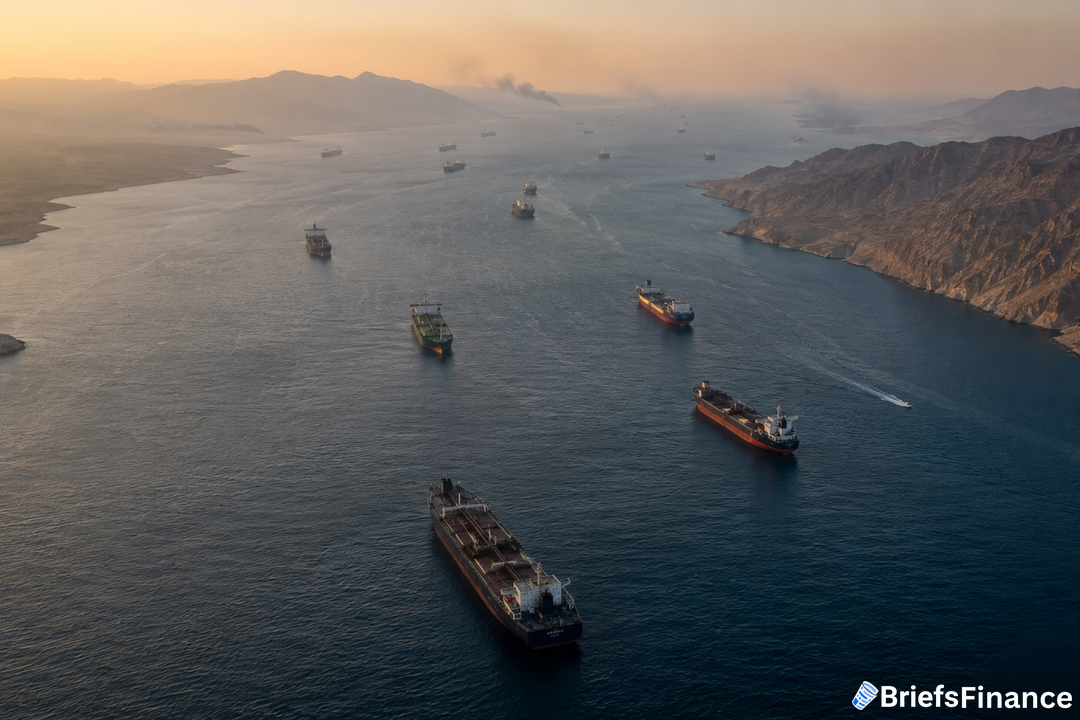
The Latest Strikes and the Strait
The fighting is centered on the Strait of Hormuz. Roughly a fifth of the world's oil moves through it every day. That traffic has now taken a serious hit.
As of Wednesday, the seven-day average of petroleum flows through the strait, including Iranian supplies, had fallen to roughly 5.5 million barrels per day - down from about 9.4 million barrels per day the prior week. A lot of those ships are staying away or getting hit.
Iran has not been shy about its stance. An unnamed spokesman for Iran's army told the Iranian Students' News Agency that "as long as the United States does not accept the Iranian legal system, this strait will remain closed." Iran's parliamentary speaker, Mohammad Bagher Ghalibaf, said Iran has "no reason to remain committed" to the interim peace deal anymore, though he did not formally pull out.
Oil Prices Are Feeling the Pressure
When a major shipping route gets blocked, oil prices tend to climb. That is exactly what has happened.
Get the market news that matters in a five-minute read with Market Briefs, our free daily newsletter
The threats are not just at Hormuz. Since March, 35 ships carrying oil or gas have been attacked in the region. A pair of large tankers hauling crude from Saudi Arabia and Iraq disabled their transponders while in the Gulf and then showed up again near Oman's coast on July 15. Shippers are clearly trying to avoid attention.
In a blunt note, RBC analyst Helima Croft and her team stated that "the ceasefire is over, with vessels under heavy Iranian fire" and that "we do not see Hormuz traffic returning to pre-war levels as long as shippers have to contend with the threat of mines, missiles, drones, and Tehran tolls."
The current confrontation follows months of escalating tensions after the interim peace deal signed in February began to fray. Both sides accused each other of violating its terms, and Iran resumed enriching uranium to higher levels in late June, prompting the U.S. to tighten sanctions and ultimately launch the first airstrikes on July 12.
What This Means for Your Portfolio
The Iranian rial has already taken a beating. It traded at 1.9 million rials per US dollar on Thursday, about 20% weaker than it was before the interim peace deal was signed. Currency trouble in Iran adds more uncertainty to the situation.
President Trump has threatened to expand strikes to include Iranian power plants and bridges if Iran does not let ships through. Meanwhile, Tehran has reportedly requested that its Houthi partners in Yemen block the Red Sea oil passage should the US attack Iran's electrical infrastructure.
US Vice President JD Vance characterized the situation as "a delicate diplomatic dance" that merges economic leverage, military force, and diplomatic talks. He also said that "we're not going to send 150,000 ground troops in order to accomplish a change in a regime unless the people on the ground themselves want to accomplish that outcome."
Join Market Briefs, our free daily newsletter, for a quick daily rundown of the markets