A split market defined by timing
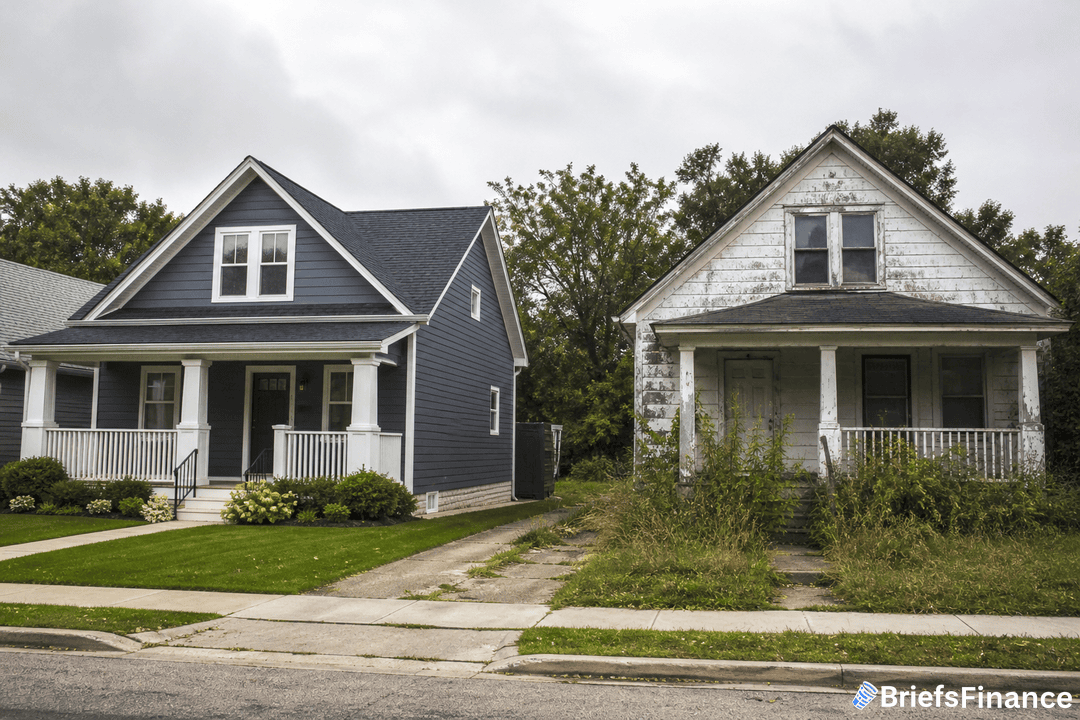
The housing market has sorted owners into two camps, largely based on when they bought.
That divide shows up in the data. Roughly 2.4 million homeowners with mortgages now have at least $1 million in equity, nearly three times the pre-pandemic tally. On the other end, September counts show that over 1.1 million borrowers are upside down, with loan balances exceeding their homes' values. Pending home sales also slid to a record low last month, according to the National Association of Realtors, as borrowing costs bite.
Where equity piled up - and where it thinned out
Geography matters. Intercontinental Exchange reports equity millionaires rose 6% nationwide in September from a year earlier, but the gains were far bigger in some metros: Chicago climbed 31%, New York 22%, Philadelphia 19%, and Houston 16%.
By contrast, in several areas across the South and West, prices have slipped from their highs. In Cape Coral, Florida, 11.2% of mortgaged owners are underwater; it is 8.9% in Lakeland, Florida, and 8.4% in Austin. Dallas stands out for having the most underwater borrowers among large markets, at about 63,000.
Where listings have increased, such as Austin and Denver, higher rates have thinned out buyers even as inventory builds, pressuring prices. Recent purchasers with small down payments are the most exposed.
Because timing often shapes financial outcomes, sign up for the free Market Briefs to get clear daily context.
Hudson Valley snapshots of boom and stall
In New York's Hudson Valley near Kingston, agent Kate Quintard is seeing both sides of the cycle. In 2019, a New Jersey empty-nester pair picked up a 3,800-square-foot house with sweeping Catskills views for $445,000, then added a heated pool and expanded the outdoor entertaining space. Their grown kids stayed there for part of the pandemic.
They listed the property in October for $1.425 million, and it is under contract at a price more than $1 million above the original purchase. "They are over the moon," Quintard said. "They didn't expect it to go like that."
But not everyone is cashing in. Craig Smith, a colleague of Quintard on Compass' Upstate Curious team, said the market has cooled and many sellers now face longer odds. One owner who purchased a home in Hudson for $425,000 in 2019 and invested roughly $400,000 to build an accessory dwelling unit plus a climate-controlled one-car garage has twice reduced the asking price, now at $799,000, which is below the total amount put in. Six comparable listings are on the same street.
The investor angle
Low-rate mortgages have kept many owners in place, curbing listings and helping to support prices and the wealth built during the boom. But where supply is rising into higher rates, values are wobbling. Intercontinental Exchange notes that roughly 2% of mortgage holders are underwater overall - still a small share by post-2008 standards - and nearly nine in ten of those loans were made in 2022 or later.
Dowell Myers, a demographer and urban planner at the University of Southern California, says equity can become a family finance lever: owners can draw on home equity to assist adult children with their down-payment needs or co-sign loans, advantages not available to households with little equity. "There's a class divide," he said. "The American Dream is that everybody has a chance to break through, and that's more and more difficult as houses get more expensive and the entry cost gets higher and higher." The bottom line: even big gains only matter if values hold and there is a buyer.
When housing decisions feel consequential, get a concise daily rundown by subscribing to Market Briefs newsletter for five-minute clarity.