What happened
Inflation picked up to 6.09% in October from 5.54% in September, according to the statistics ministry. That slightly topped the 6% median forecast in a Bloomberg economist poll.
The latest reading pushed inflation beyond the upper edge of the RBI's tolerance band and is the highest in two years. It also marked the fifth month in a row above the RBI's 4% goal. The last time inflation topped 6% was October 2024, at 6.21%.
Core inflation - which excludes food and fuel - was estimated by Bloomberg Economics at 4.5% in October, up from 4.33% a month earlier.
Why inflation climbed
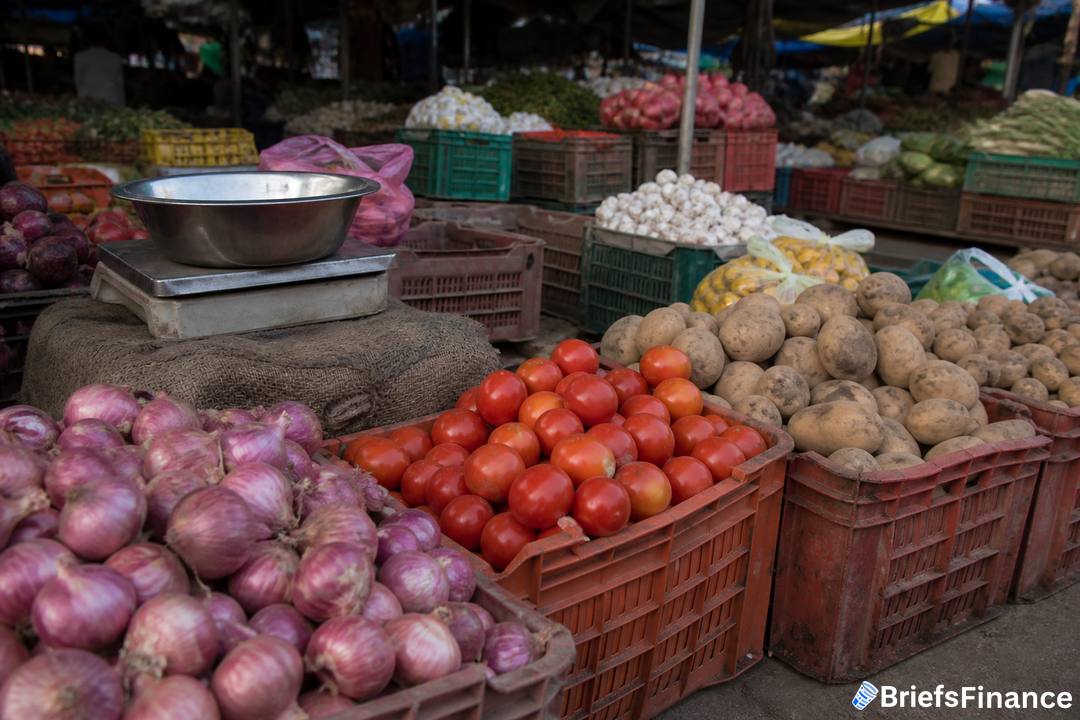
Food did the heavy lifting. Food inflation, a bit over one third of the CPI basket, rose to 8.94% from 7.74% in September. Vegetables led the move, with onion prices surging 116.22%. A weaker monsoon than any since 2023 has threatened harvests across key farm states, and Maharashtra started water rationing in October after an El Niño pattern left reservoirs very low.
Price gains also showed up beyond groceries. Restaurants and hotels, clothing and footwear, and transport costs all increased. "The impact of higher food prices was evident across the board," said Garima Kapoor of Elara Capital. She added, "Notwithstanding the cooling of crude oil prices amid expectations of peace in West Asia, inflation is expected to unlikely cool off immediately."
When economic conditions shift, thoughtful tools can help investors find clearer opportunities. We're hosting our first ever investor livestream on 11/17 to show you how to use ChatGPT and Claude to invest like a pro, hosted by Briefs Finance CEO Jaspreet Singh. Save your seat.
Policy and market signals
Global crude has eased, helping an economy that sources nearly 90% of its oil abroad, though possible disruptions to shipments through the Strait of Hormuz remain a risk. Brent has pulled back markedly from a six-month peak as markets priced in the possibility of easing tensions in the Middle East. As oil cooled, India's 10 year bond yield slipped to 7.24% from 7.44% on Oct. 21, which had been the highest since March 2023.
The RBI's monetary policy committee on Oct. 7 voted unanimously to lift the policy repo rate by a quarter point to 5.5% - the first hike in nearly four years - and adopted a "calibrated tightening" stance. Minutes released two weeks later said the pickup in inflation demands continued vigilance, though members differed on how strongly to flag more hikes.
More tightening bets are building. Economists at Goldman Sachs, Standard Chartered, Deutsche Bank and Morgan Stanley see another quarter point move on Dec. 4, with some projecting an extra half point of tightening into 2027. "The October headline expectedly came in higher," said Upasna Bhardwaj, Chief Economist at Kotak Mahindra Bank. She expects another 50 basis points of hikes in FY27, with the door open to more if food prices spike or oil's recent slide reverses.
In its October review, the Finance Ministry said the effectiveness of the hike will depend on the RBI draining surplus liquidity, with a record $133 billion diaspora inflow among the drivers, and this liquidity has been pushing overnight rates under the policy rate.
The market bottom line
The rupee traded at 94.0375 per dollar, with ongoing structural strains from energy import reliance, fiscal and current account gaps, and choppy capital flows. For your portfolio, that mix - sticky food inflation, a cautious but hawkish RBI, softer oil with geopolitical caveats - points to rate sensitive assets staying jumpy and bond markets keying off both oil and RBI liquidity moves.
Using smarter analysis can give investors a steadier perspective in uncertain markets. On 11/17, our CEO Jaspreet Singh goes live for our first ever investor livestream on how to use ChatGPT and Claude to invest like a pro. Register to join him.