Prices and costs
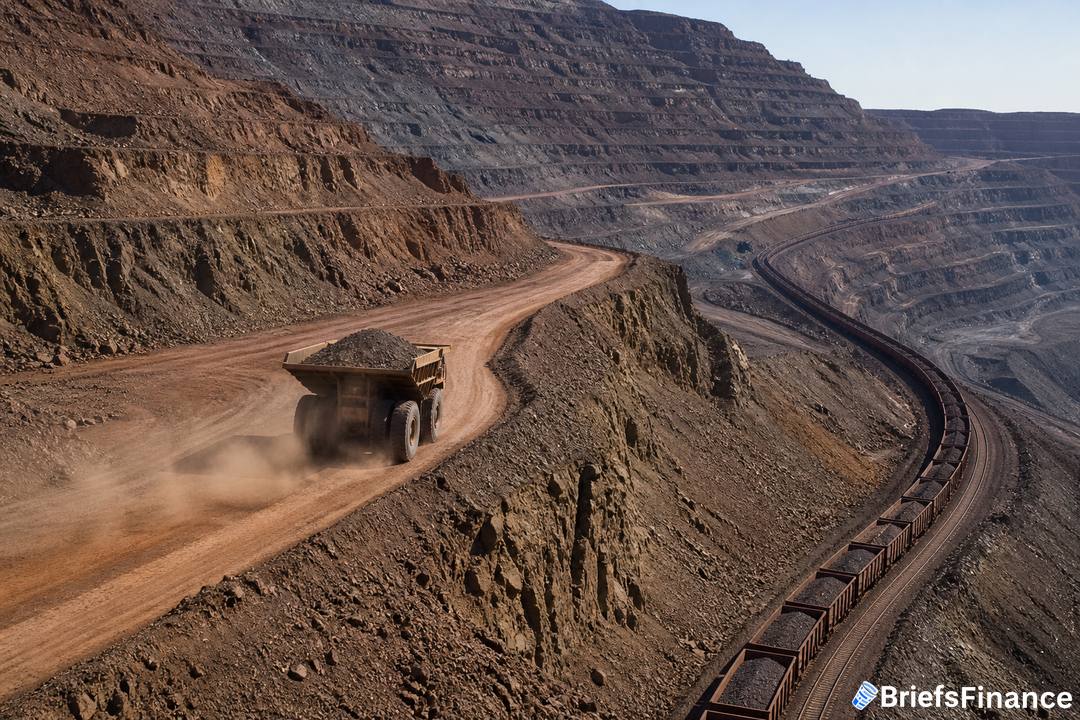
Speaking on Bloomberg Television with Francine Lacqua, Pimenta said the war driven spike in energy has lifted miners' costs, and pricier freight is compounding it.
Those higher costs are biting into marginal producers. He estimates roughly one-tenth of seaborne supply - about 160 million tons - is unprofitable, and notes that approximately 15 million tons is already idled.
Market dynamics and demand
This week, Singapore iron ore futures fell under 90 dollars a metric ton, a threshold last seen two years ago, leaving contracts down about 15% so far in 2026 as Chinese demand falters and global supply stays plentiful, aided by new sources such as Guinea's Simandou. Even so, Pimenta expects a balanced market and steady demand in key regions.
"In China the demand continues to be solid," he said, while pointing to "a lot of growth" in steel makers like India and Vietnam. He also sees production cuts by high cost miners supporting a price recovery as costs squeeze marginal supply.
When costs and supply change, staying informed matters, so sign up for the free Market Briefs newsletter to get market context in five minutes
Brazil policy outlook
Pimenta is upbeat on Brazil's policy path regardless of the presidential runoff at the end of the month. On Oct. 25, Brazilians will vote in a runoff pitting the incumbent, Luiz Inácio Lula da Silva, against Flávio Bolsonaro, a conservative who advocates more relaxed environmental regulations and expanded private-sector roles in developing natural resources.
He said both candidates are likely to support business and policies that speed up mining, such as faster permitting. Although Vale was privatized in 1997, investors remain cautious about the government's influence via a golden share and rules around mine permitting and key railway concessions. Pimenta has advocated for measures to unlock investment, including more geological mapping and a review of cave protection rules that could enable major projects, including a prospective Vale iron ore project designed for 50 million tons of yearly capacity.
Base metals pivot and the investor takeaway
While Vale is the top iron ore supplier, Pimenta expects the base metals arm to grow from 30% of the business today to 40% within a decade as copper ramps. Vale Base Metals aims to double copper to about 700,000 tons by 2035. He ruled out a spinoff for now and sees copper "tighter than now" because projects are harder, slower, and more expensive to bring online, leaving supply under pressure.
Why does that matter? Iron ore is dealing with softer China demand and abundant supply, while cost inflation is sidelining higher cost tons. At the same time, Vale is leaning into copper, where demand is outpacing supply. That mix could mean more earnings balance across cycles for your portfolio exposure to the miner.
In a complex global market, get concise explanations each morning with our free Market Briefs covering the economy, markets, crypto and real estate