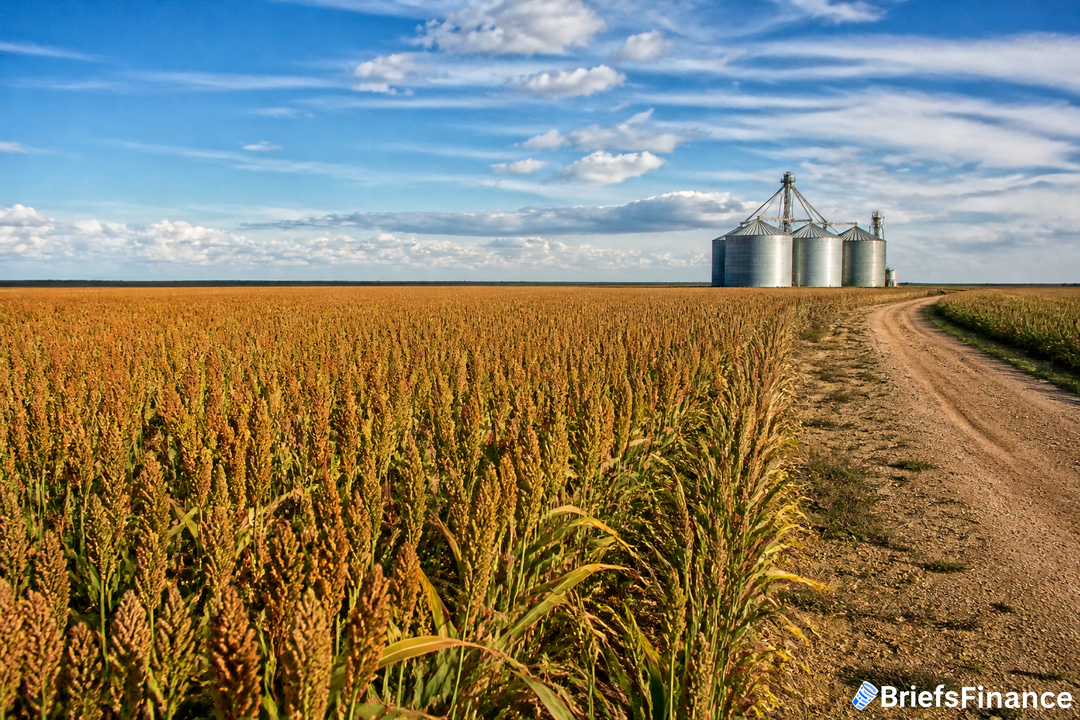
How Brazil muscled into the sorghum lanes
Brazil has cranked up sorghum production to more than twice what it was four years ago and is now courting China in a big way. In August, state-owned Cofco International loaded the first Brazilian sorghum shipment bound for China. According to exporters group ANEC, as much as 2.4 million tons are slated to depart Brazil this year by the end of October, with most cargoes destined for Chinese buyers. There were no meaningful Brazilian sorghum shipments last year.
The runway for more is clear. Sorghum has taken hold as a second crop after soy harvests, the U.S. Department of Agriculture has noted it is well suited to many Brazilian regions, and Inpasa Agroindustrial SA, the country's largest ethanol maker, has brought online plants that can run both corn and sorghum. Rabobank projects Brazil could hit up to 10 million metric tons by 2031, from about 6 million last season. As Embrapa researcher Frederico Botelho put it, "People are already talking about Brazil surpassing the US as the world's top producer in a few years."
Why this stings for U.S. growers
America has already ceded the lead to Brazil in soybeans and cotton, plus other products like beef. Now sorghum is feeling the squeeze. The U.S. faces competition from Australia and Argentina, which both sell to China and occupy the number two and three spots among exporters globally.
China is the swing customer here. It buys sorghum mainly for hog feed and the liquor baijiu, and its purchases of U.S. grain topped $2 billion a little over ten years ago. Then the tide went out, dropping to roughly $186 million in 2019 amid the opening phase of President Donald Trump's trade conflict with China and sliding to just $86 million in 2025.
Today, China's import appetite is soft given comfortable domestic supplies. That yo-yo has left U.S. farmers guessing at planting time, while trade friction and choppy demand have some staring at full bins at harvest.
Tim Lust, CEO of the National Sorghum Producers Association in Lubbock, Texas, sees the field getting tighter. "Brazil is not that much further behind the US these days," he said. "They've certainly been growing rapidly in sorghum, like they have in a lot of crops." He added, "We're obviously in a competitive world, and that's reality," arguing for fresh trade deals "to grow and produce, and meet the market demands of the customers we have."
New supply from one country reshapes export markets for everyone else. Market Briefs covers agricultural trade free every morning.
Policy moves and a scramble to adapt
Lust wrote to Trump last month urging annual Chinese commitments between 5 million and 7 million tons of U.S. sorghum. There is a policy tailwind forming: after a September meeting between Trump and Xi Jinping, both governments released lists indicating China is set to trim duties on U.S. sorghum, wheat and corn.
On the ground, sorghum is losing acres to corn and soy in places like Nebraska, where those crops tend to deliver higher yields and broader demand. U.S. sorghum output is projected to drop 33% this season from last year as reduced plantings and drought in the southern Plains dent yields.
The pivot to domestic demand
Some farmers are stepping off the export roller coaster. In the state's southeast, Nebraska's Brad Dusenbery - who farms about 700 acres - is putting up a small stone-milling facility in Beatrice to produce an all purpose sorghum flour for everything from cookies to hamburger buns. He is shifting to organic methods and wants to keep sales at home. "My whole goal is to be out of the export business," he said.
China's approach will matter. "China has always signaled it doesn't want to depend on one single supplier and wants to diversify," said Marco Castelli, commercial director at Agrobom in Minas Gerais. "To me, this is a market that's here to stay." If Brazil keeps shipping through October at the current pace and Chinese tariffs ease as outlined, the U.S. will be fighting harder for every sorghum dollar. For your wallet, the takeaway is simple: when a key buyer spreads orders around and a new supplier scales up fast, prices and prospects at home can whipsaw, which is why some producers are leaning into local, value added uses over volatile global flows.
Grain trade flows shift faster than most people expect. Get the free Market Briefs daily newsletter and follow it.