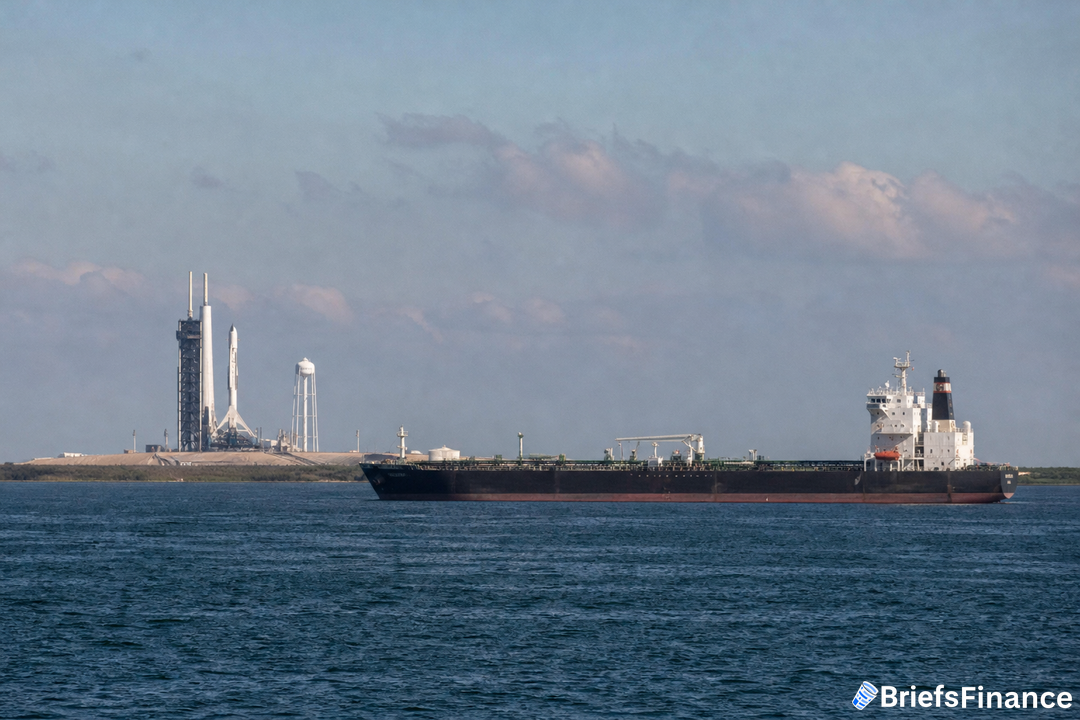
The sticker shock
Here's the shocker: booking an oil supertanker on the US-to-China run now runs about $80 million, versus $74 million for a standard Falcon 9 launch. Earlier this year, that shipping bill could have bought a very similar tanker outright. And buying capacity is not much of a shortcut either. According to Clarkson Research Services, a newly built tanker resold in the secondary market is fetching $240 million - the highest figure on record and over 60% above late last year.
Rates have gone into the history books. Brokerage SSY reports that, after adjusting for inflation, today's levels are the highest since the first supertankers took to sea in the 1960s, surpassing the 1980s tanker-war era, during which Iran and Iraq targeted commercial vessels in the Persian Gulf. Lauren Gallinari, who leads business intelligence at MJLF & Associates, said, "We've certainly seen extraordinary freight markets before, but the speed, magnitude and breadth of this rally are remarkable."
What is choking capacity
Russell Hardy, CEO of Vitol Group - the world's largest independent oil trader - said, "There's really not quite enough shipping to go around." "We've had pretty parabolic pricing." The core problem is simple: not enough tankers to move all the barrels. Middle Eastern producers are increasingly shuttling oil out of the Strait of Hormuz onto other vessels as the Iran war rewires trade routes. Those handoffs can add about a week to a voyage, tying up ships, and the effect has grown as Hormuz flows rebound to about 80% of pre-war levels, industry executives said.
Stop-start traffic has amplified the crunch. When Hormuz traffic collapsed, ships spent weeks in ballast from the Middle East to find work elsewhere. Now that Gulf shipments are picking back up, many vessels must reposition once more - a step that can require weeks.
A near-halt in Iranian shipments to China has added further pressure, forcing Chinese buyers to seek crude elsewhere and boosting demand on major tanker lanes. Capacity is also being clipped by Iranian attacks that send ships to repair yards, while some vessels are taking the long way around Africa to avoid Houthi attacks.
Shipping economics decide which cargoes are worth carrying at all. Market Briefs covers freight markets free every weekday.
Prices, volatility and workarounds
Freight that used to be a rounding error is now a headline cost. One recent US booking worked out to $41 per barrel in transport, versus an average of $4.50 for the same lane last year. That $41 equates to roughly 45% of West Texas Intermediate futures prices; on Friday those contracts traded near $91 a barrel.
"With little additional capacity available, freight becomes increasingly dependent on what charterers can afford to pay," Clarksons Securities analysts wrote. The swings are so sharp that, Hardy said, traders find it hard to pin down shipping costs to within even a few dollars per barrel.
The industry is improvising. West African and South American cargoes that would typically ride a supertanker are being split across two Suezmaxes. Average daily earnings for Suezmax ships have surged beyond $680,000 - roughly five times what they were at the start of the month - and rates for carriers of gases such as propane are near records, more than tripling since the end of last year. Producers are trying to insulate themselves by buying ships or securing long-term hires, with Iraq, the UAE and Kuwait all shopping for tankers in recent weeks.
Who gains, who pays, and how this could break
For oil buyers, freight is now a serious slice of the delivered price, pressuring refinery margins and nudging energy inflation higher. The rally is minting cash for a tight-knit group of shipowners, and the combined market value of the largest listed shipping companies has climbed to a record north of $70 billion. Shell said this week that some third-quarter results will reflect "an increase in variable components of long-term shipping leases in the current macro environment." A comparable notice was issued earlier this year.
Freight is also reshaping where crude can be sold competitively. In West Africa, exporters that rely on refiners roughly 10,000 miles away in China are discounting cargoes to offset the extra cost of getting them there. Refining margins remain supported by a diesel shortage, but that cushion is thinning.
European refiner Repsol reported third-quarter margins of $36 a barrel; RBC estimates those margins slid to about $15 in October, partly due to higher tanker costs. "The market is going from strength to strength," said Tor Svelland, founder of Svelland Capital. He added a warning: "At a certain point, refineries can easily take a breather. When you go from 5% of the value of a cargo to 50%, trade flows will stop."
The bottom line for your wallet: if ships stay expensive, it can show up in fuel, heating and travel costs. The open question is how high freight can go before buyers and refiners decide the math no longer works.
When rates diverge this sharply, capital follows quickly. Join Market Briefs free and follow the rates.