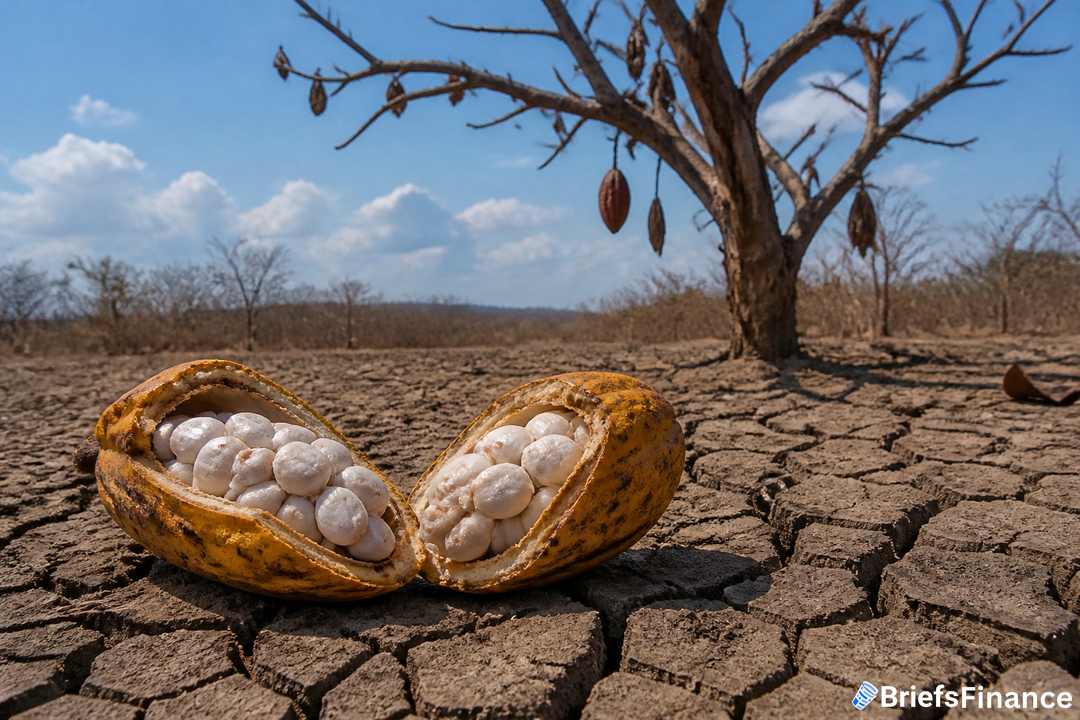
A tougher weather backdrop for the world's cocoa hub
El Niño is gathering steam right as cocoa's supply picture is already stretched. Ivory Coast's state meteorology office says the region faces a rainfall deficit through early 2027, a big deal for a zone that grows more than half of the world's cocoa beans. That kind of shortfall can crimp harvests and keep prices elevated globally.
Not just cocoa: heat, dryness and flood risks
Sodexam's Thursday report warned that dry conditions and heat stress are also weighing on coffee, rubber and oil palm. The setup is not one note, either. While the main theme is less rain, some pockets could see intense downpours that raise the risk of urban flooding. That tracks with El Niño's calling card: drought in some places, heavy rain or flooding in others.
Weather patterns set soft commodity prices a year before you taste them. Market Briefs covers agricultural markets free every weekday.
Output expectations are slipping
Forecasts for the next main crops are already heading lower. StoneX Group Inc. expects Ivory Coast, the top cocoa producer, to harvest 1.8 million tons in 2026-27, an 11% drop. Neighboring Ghana, the No. 2 grower, sees its crop at about 650,000 tons, roughly 13% lower.
Futures stay jumpy as prices climb
In New York, cocoa futures have swung wildly this year as traders assess West Africa's harvest outlook. Prices have climbed since a March low of $2,846 a ton and are trading around $5,600 a ton. If weather risks curb output, that supports the case for prices staying higher for longer. For your money, it is a clear reminder that climate patterns can swing commodity markets, and those swings can ripple into anything tied to crop outcomes.
Cocoa supply risk reaches confectionery prices with a long lag. Join Market Briefs free and follow the crop.