What Microsoft announced
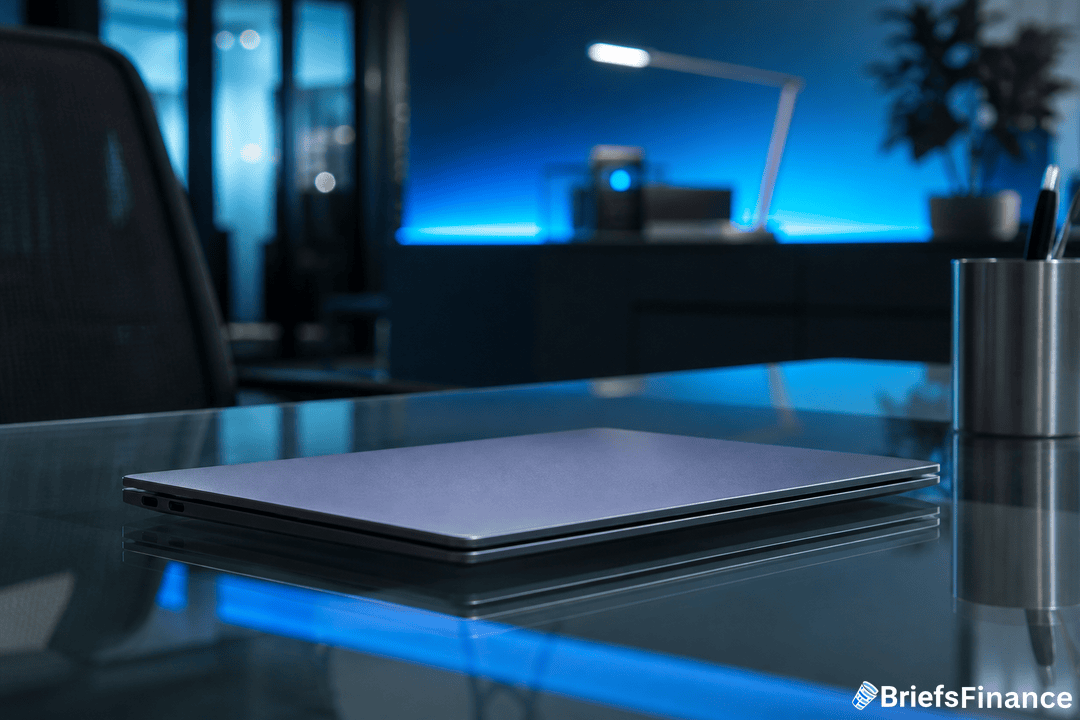
Microsoft's new Surface Laptop Ultra is aimed squarely at on-device AI, starting at $2,599 and built around an Nvidia chip. The company first teased the model in May and is now rolling out the full details while opening preorders. Pavan Davuluri, who oversees Windows and devices, said at a Wednesday event in San Francisco that shipments begin Oct. 16.
Under the hood, the machine can be configured with up to 128 GB of unified memory and deliver as much as one petaflop of compute. It includes a Blackwell RTX Spark GPU, which Nvidia CEO Jensen Huang said matches the processing punch of Nvidia's DGX-1 data center server introduced in 2016, a system he put at $250 million.
"Microsoft might get me back to Windows," Creative Strategies analyst Max Weinbach posted on X after the reveal.
Ports, local AI, and setup
The laptop features what the company bills as the first magnetic USB-C port in the world, echoing the snap-on feel of Apple's MagSafe charger, alongside two more conventional USB-C ports.
A live demo showed apps steering some AI coding tasks to the local GPU, indicated by a green leaf icon, while pushing others to the cloud. Windows 11 also lets developers run coding agents inside Microsoft Execution Containers to block unwanted system access. To speed first use, Microsoft is refreshing the Windows 11 setup flow to help people quickly start using the open-source OpenClaw AI agent software.
Premium hardware pricing tests what buyers will pay for AI features. Market Briefs covers the tech market free every morning.
The on-device AI push and where Microsoft fits
Windows still dominates as the leading PC operating system, but Gartner estimates Microsoft isn't in the top six PC makers by unit shipments. With AI maturing and chips getting more capable, big tech players like Microsoft, Apple, and Google are working to run more AI right on personal devices instead of leaning only on the cloud. In that spirit, Microsoft says users can install and run a range of AI models on the Surface Laptop Ultra without stressing over big recurring fees.
Davuluri also said Meta plans to bring a Windows version of its Muse personal agent, which has surged to the top of Apple's App Store, overtaking ChatGPT. More broadly, Microsoft is still carving out its place in AI: it has its own models, but they trail leaders from OpenAI and Anthropic on popularity and a key performance benchmark, and a recent survey suggests developers have more often tried competing options.
Back in 2024, Microsoft rolled out the Copilot+ PC standard, mandating neural processing units to meet a minimum AI performance level across devices, Surface models included. A spokesperson added that Microsoft has "simplified product naming to lead with the Surface brand, while continuing to deliver premium hardware and hybrid AI experiences."
What this means for your money
Microsoft has been building its own PCs since 2012, and CEO Satya Nadella framed this moment as a turning point. "I think today is the day we'll start talking and thinking about the frontier ecosystem taking maybe slightly different contours two years from now, five years from now, 10 years from now," he said, adding that "that classic edge that distributed computing will always remain distributed will be more true." If on-device AI really is the next normal, this laptop is Microsoft betting your daily machine should handle more of the heavy lifting locally.
Whether people pay up is the real verdict on on-device AI. Get the free Market Briefs daily newsletter and watch the response.