What The Measure Would Do
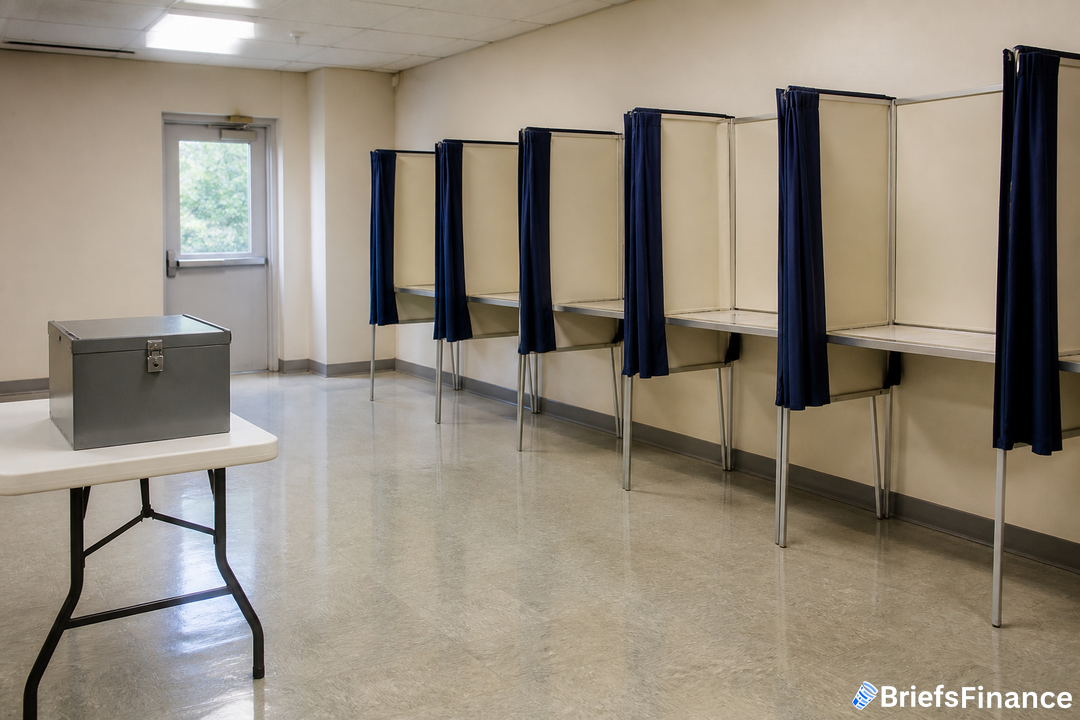
Instead of separate Democratic and Republican primaries, this proposal would place all candidates for Massachusetts state offices and U.S. House and Senate seats on one primary ballot. The two highest vote earners would advance to the general election, regardless of affiliation. California and Washington use versions of this top-two setup, while Alaska and Louisiana run different open formats.
Supporters argue the change would blunt extremes at a moment when democratic socialists and ultra-conservatives are drawing more attention nationally, and they say it could light a fire under a legislature often knocked for its slow pace in a heavily Democratic state. Harvard government professor Danielle Allen is spearheading the push; she founded the Massachusetts-based nonprofit Partners in Democracy, which backs the measure.
Where The Money Is Coming From
This is the most expensive ballot battle this cycle, eclipsing the other eight measures that remain after the state's Supreme Judicial Court threw out initiatives aimed at reducing the income tax and imposing rent caps. Donors have committed $5.6 million to the cause, and the campaign has already laid out close to $4 million, according to filings with the Massachusetts Office of Campaign and Political Finance. Some of that total was pledged last year, when the same organization also led a separate public-records measure that is now being run by a different group.
Private equity figures loom large among the biggest checks. Among the top contributors are Bain Capital Chairman John Connaughton, along with Randy Peeler, who serves as a strategic adviser at Berkshire Partners. Connaughton's giving spans both parties, while Peeler has lately concentrated on Democrats. Charlesbank Capital Partners co-founder Michael Eisenson, based in Boston, has contributed $150,000 and contends that non-partisan primaries favor candidates "who understand the need to build consensus in order to accomplish anything important." He identifies as an independent and has steered tens of thousands of dollars this cycle to Democratic congressional campaigns around the country.
Allen said she kicked off the effort with roughly $50,000 of her own funds. She added that private equity money is prominent in the mix because some of the earliest champions of the idea have deep networks in that industry.
Who's Backing And Who's Pushing Back
A handful of prominent Democrats have lined up in support, including former Governor Deval Patrick, who joined Bain following his time in office and currently serves as a senior partner at Vistria Group. The campaign is also backed by U.S. Representative Seth Moulton and former U.S. Representative Joe Kennedy III. Both Kennedy and Moulton lost Democratic Senate primary battles to progressive favorite Ed Markey - Kennedy in 2020 and Moulton in 2026. Markey opposes the ballot question, with a spokesperson saying parties should select their own strongest nominees in Massachusetts.
Opponents had raised about $150,000 through Sept. 15, but their alliance packs clout, bringing together the state Democratic and Republican parties as well as several of Massachusetts' largest labor unions. Their case is that a top-two format advantages well funded candidates who can afford what could feel like two general-election campaigns.
Political shifts remind us to keep our financial plan steady and adaptable. Join Briefs Finance CEO Jaspreet Singh on September 29th for a FREE live investor workshop, How to Profit From A Dollar That's Losing its Value, where he shows how we're spotting investment opportunities as the dollar falls. Save your spot.
Democratic state senator Lydia Edwards of Boston says there are fairer fixes, like ranked choice voting and lowering the signature threshold to get on the ballot. Similar attempts to consolidate primaries in Arizona and Nevada have fallen short in recent years.
How It Could Reshape Politics In A One-Party State
Although democratic socialists have rarely won office in Massachusetts, some on the left fear the approach could marginalize progressive contenders. Republicans, meanwhile, worry they could be excluded altogether in a state where they contend less than 10% of voters belong to their party. Most Bay Staters aren't registered with any party and can already choose which partisan primary to vote in.
Michael Minogue, the Republican challenging Democratic Governor Maura Healey in November, put it bluntly: Massachusetts has a "one-party system that is pretty corrupt and unethical, and so that one-party system would never allow anyone outside of them." Voters here have picked GOP governors, but only one Republican has made it to Washington from Massachusetts in the past three decades. In California, a Republican sometimes slips into the general when several Democrats split the left-leaning vote, which is what happened in this year's governor's race.
Jerren Chang, chief executive officer of Partners in Democracy, says a nonpartisan primary in a deep-blue state could be healthy for Democrats wrestling with how progressive or centrist they should be. "So many more folks are going to get engaged," he said.
What This Means For Your Portfolio
If voters sign off, who makes November ballots could look different, and that can change how candidates court voters and govern once in office.
When systems change, protecting and growing your savings starts with clear planning. Our CEO Jaspreet Singh is hosting a FREE live investor workshop, How to Profit From A Dollar That's Losing its Value, on September 29th. Sign up free to join him live.