Free NewsletterPro Login

Warning: Undefined variable $stocks in /var/www/briefs.co/htdocs/wp-content/plugins/oxygen/component-framework/components/classes/code-block.class.php(133) : eval()'d code on line 448

Warning: foreach() argument must be of type array|object, null given in /var/www/briefs.co/htdocs/wp-content/plugins/oxygen/component-framework/components/classes/code-block.class.php(133) : eval()'d code on line 448

Warning: Undefined variable $funds in /var/www/briefs.co/htdocs/wp-content/plugins/oxygen/component-framework/components/classes/code-block.class.php(133) : eval()'d code on line 472

Warning: foreach() argument must be of type array|object, null given in /var/www/briefs.co/htdocs/wp-content/plugins/oxygen/component-framework/components/classes/code-block.class.php(133) : eval()'d code on line 472
/* the link was here */
BREAKING
×

Ukrainian Drone Campaign Disrupts Russia's Critical Fuel Infrastructure

Published Aug 28, 2026
[tts_player]
Share:
Summary:
  • August 2026 saw unprecedented attacks on Russian refineries with at least 21 successful strikes
  • National oil processing capacity dropped nearly 30% compared to pre-war levels
  • Major cities experience rationing with prices spiking above 100 rubles/liter at independent stations

Fuel Crisis Deepens Across Russian Regions

Russian consumers are grappling with worsening fuel shortages as Ukraine's sustained drone offensive against oil infrastructure enters its most aggressive phase. In Moscow, where supplies were previously reliable, drivers now queue for hours at stations limiting purchases to 10-20 liters per vehicle. Neighborhood social media groups have become vital for tracking which stations still have inventory.

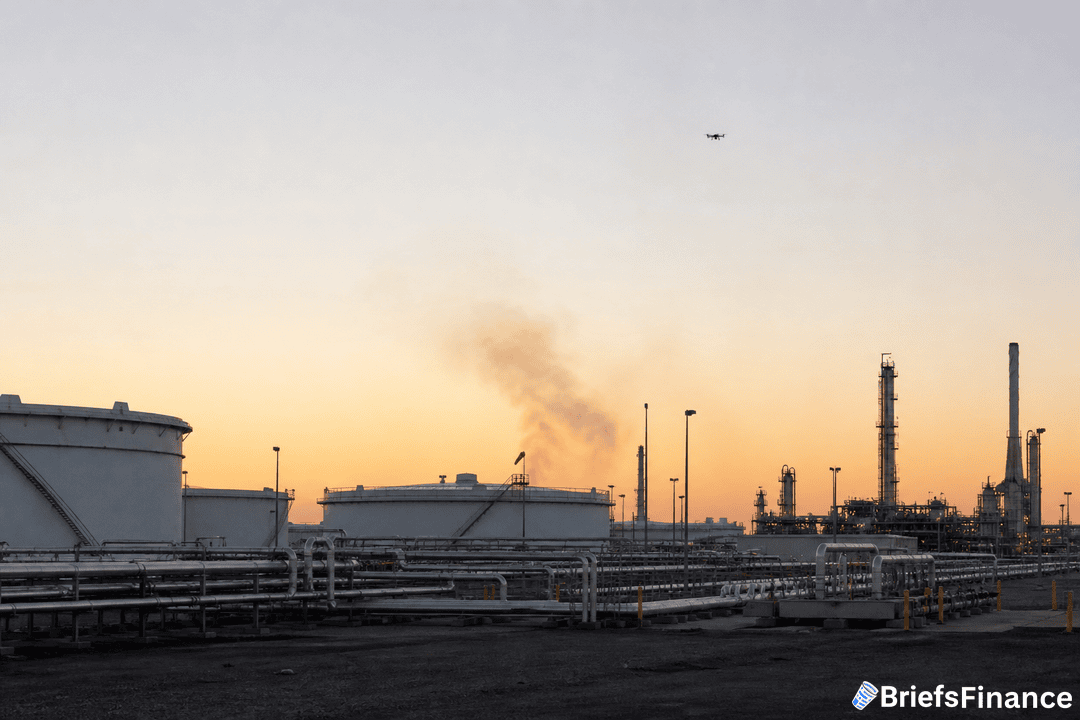
The August 2026 attacks represent a strategic escalation, damaging four of Russia's top ten refining complexes. Energy analysts note these facilities process nearly half of Russia's domestic fuel supply. The strikes appear carefully timed to maximize disruption before winter, when heating oil demand typically surges.

Refinery Attacks Reshape Energy Markets

Industry data reveals Russia's daily fuel production has fallen sharply due to the attacks. Before the conflict, facilities could process between 5 million and 5.5 million barrels daily, but current output struggles to meet even basic needs. One energy consultant explained, "The system is operating at wartime capacity - just enough to keep essential services running but far below normal consumer demand."

Price controls at state-run stations create a two-tier market. While branded outlets sell at 80 rubles per liter when supplies last, independent operators charge 25% premiums. Some rural areas report fuel being diverted to agricultural operations, forcing residents to purchase black market gasoline at triple official rates.

Broader Economic Consequences Emerge

The fuel disruptions now affect most Russian households either directly or indirectly. With private vehicles being the primary transportation mode for millions of workers, productivity losses are mounting. Logistics companies report adding 15-20% fuel surcharges, inflating prices for all goods transported by road.

Market volatility makes steady investing crucial - get your free Always Be Buying E-Book to build wealth through any crisis

Ukraine's energy ministry confirmed the refinery strikes aim to reduce Russia's oil export revenue, which funds nearly 40% of its military budget. A senior advisor stated, "Every day these refineries operate below capacity decreases Putin's ability to finance his war machine."

The situation shows no signs of improving. With refining capacity offline and Ukraine demonstrating an ability to strike targets deep inside Russia, analysts predict sustained volatility. Some regions are stockpiling reserves, exacerbating shortages elsewhere in the country.

Military Strategy Behind the Attacks

By striking distillation units rather than storage tanks, they force months-long repairs instead of weeks. The targeted refineries also supply Russia's military, compounding logistical challenges for frontline units.

The attacks have achieved psychological impact beyond their physical damage. State media, which initially downplayed the strikes, now runs segments teaching citizens fuel conservation techniques. Some regions report panic buying, with drivers keeping multiple jerrycans in their trunks despite fire risks.

The bottom line: Ukraine's precision strikes have achieved what sanctions couldn't - physically constricting Russia's fuel supply chain. With winter approaching and no diplomatic solution in sight, Russia faces difficult choices between civilian needs and military priorities.

Build your portfolio to weather market storms with our free Market Briefs newsletter - essential analysis delivered daily to your inbox.

Disclosure

Recent News

1 2 3 63

Get Market Briefs delivered to your inbox every morning for free!

No fluff. No noise. No politics. Just finance news you can read in 5 minutes.

Blogs

August 23, 2026
How to Get the Most From Your Guideline 401k
  • Guideline is a company that provides low-cost 401k plans, popular with small businesses and their employees.
  • A "Guideline 401k" follows the same core rules as any 401k: tax-advantaged growth, contribution limits, and often an employer match.
  • The biggest results come from capturing the full match, choosing low-cost funds, and picking Roth or traditional to fit your situation.
Read More
August 23, 2026
Principal 401k: What to Know About Your Plan
  • Principal is one of many companies that manage workplace 401k plans, so a "Principal 401k" is simply a 401k where Principal is the provider.
  • The rules of a 401k are the same no matter who runs it: pre-tax or Roth contributions, tax-advantaged growth, and often an employer match.
  • The biggest wins come from grabbing the full match, picking low-cost funds, and knowing whether Roth or traditional fits you.
Read More
August 23, 2026
What a Tariff Dividend Means for Your Money
  • A "tariff dividend" is the idea of taking money the government collects from tariffs and paying some of it back to citizens.
  • To judge the idea, you first need to know what a tariff is: a tax on imported goods, usually paid by the companies bringing them in.
  • Tariffs ripple through prices, businesses, and your investments, so the smart move is understanding those ripples, not just the headline.
Read More
August 23, 2026
No Tax on Overtime: How Overtime Pay Is Taxed
  • "No tax on overtime" refers to a tax break that lets certain workers deduct some overtime pay, lowering the income they get taxed on.
  • A deduction does not mean overtime is truly tax-free. It means part of that pay is subtracted before your tax is figured.
  • The bigger money lesson: how you earn money changes how it is taxed, and investors often get the friendliest treatment of all.
Read More
August 23, 2026
Reading the Silver Price Forecast for 2026
  • Nobody can honestly promise a specific silver price for 2026. Any exact number is a guess, so treat forecasts as opinions, not facts.
  • Silver is unusual because it is both a precious metal and an industrial metal, so its price answers to two very different forces.
  • Instead of chasing a forecast, learn the drivers - inflation, interest rates, recession fear, and industrial demand - so you can judge any prediction yourself.
Read More
August 23, 2026
What to Do When Reddit Stocks Go Viral
  • "Reddit stocks" usually means stocks getting hyped in online communities, where crowds can send a price soaring or crashing fast.
  • These tips can be entertaining and sometimes useful, but they are opinions, not research, and often come loaded with hype.
  • The safe move is to treat every online tip as a starting point, then do your own homework before risking a dollar.
Read More
August 23, 2026
Why Is Bitcoin Dropping Right Now?
  • Bitcoin drops for a mix of reasons: interest rates, big-picture money policy, regulation news, and simple shifts in how much risk investors want to take.
  • Bitcoin has a fixed supply and no earnings, so its price runs almost entirely on supply, demand, and sentiment.
  • Sharp drops are normal for bitcoin. Understanding the drivers matters more than reacting to any single day.
Read More
August 23, 2026
The Fidelity 500 Index Fund, Made Simple for Beginners
  • The Fidelity 500 Index Fund is a low-cost fund that tracks the S&P 500, an index of 500 large U.S. companies.
  • Buying it means owning a tiny slice of 500 businesses at once, which spreads your risk in a single purchase.
  • Index funds like this win over time mostly by keeping fees low and letting compounding do the work.
Read More
August 23, 2026
USA Penny Stocks: Risks and Rewards Explained
  • USA penny stocks are very low-priced shares of very small companies, often trading under $5 and sometimes under $1.
  • They dangle the dream of huge, fast gains, but carry brutal risks: low liquidity, wild swings, and high failure rates.
  • Most investors build wealth faster with quality companies and funds than by chasing cheap shares.
Read More
August 23, 2026
Finding Cheap Stocks to Buy Now Without Getting Burned
  • A low share price does not mean a stock is cheap. Real value compares the price to what the business is actually worth.
  • The best cheap stocks to buy now are quality companies trading below their true value, not the tiniest, riskiest shares on the market.
  • For most beginners, a low-cost index fund is the simplest "cheap" way to own great companies at once.
Read More
1 2 3 25
Share via
Copy link










