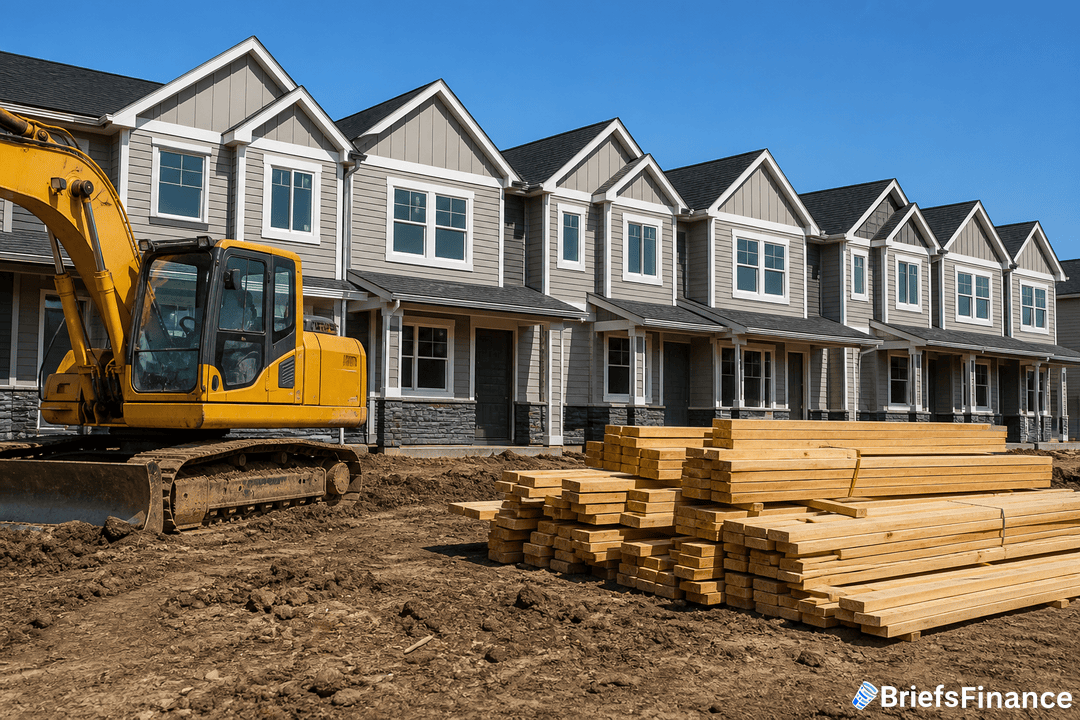
The Housing Crisis Gets Wall Street's Attention
It's no secret that buying a home feels harder than it used to. Prices are high, supply is tight, and many younger people have quietly given up on the idea.
The biggest banks in America have taken notice. They're betting billions that fixing the housing market is good for business.
JPMorgan Chase has a $750 billion investment plan spanning the next decade. The bank says it wants to build or preserve 1 million homes and help 500,000 customers buy a house, with 200,000 of those going to first-time buyers.
They aren't alone. Wells Fargo is in the mix too, with $53 million set aside for homebuilding innovation and $830 million from its foundation going to housing efforts since 2019.
The numbers are staggering. But the reason behind them is simpler than you might think.
Why Banks Are Stepping In
For the past three years, mortgage originations at big banks have been below 500,000 a year. Before the pandemic, that number was over a million. From January to March 2026, about 581,000 home purchase loans were originated - a 19% drop from the prior quarter and a 12-year low.
With housing prices soaring, the free Always Be Buying E-Book shows a simpler path to wealth.
With housing prices soaring, the free Always Be Buying E-Book shows a simpler path to wealth.
Banks generate revenue when people borrow. When the housing market freezes up, their business freezes with it.
Sam Sheets, a strategy executive for Community & Affordable Lending at JPMorgan Chase, puts it plainly: "At the end of the day, it's a function of supply and demand."
He also points to a weird dynamic keeping the market stuck. "It's driven by slower new construction but also just a lock-in effect, which has forced families to stay put when they would have moved and upsized".
In other words, people who locked in low rates are not selling. That keeps inventory low, which keeps prices high, which keeps first-time buyers out.
What Banks Are Doing About It
Financial institutions view this as a problem worth solving. They are backing zoning changes, building code updates, and new construction. JPMorgan has funded research aimed at cutting construction costs and regulatory hurdles. Citi is putting $50 million into housing nonprofits and early-stage development work.
Here is where it gets practical. The U.S. housing market is valued at $49 trillion. That is an enormous piece of the economy, and banks want it moving again.
Edward Skyler, head of Enterprise Services for Citi, frames it as an opportunity: "We need American ingenuity and entrepreneurship to help us build cheaper. We need to apply some of that intellectual capital and allocate some of it to housing."
He also notes that "this is an issue that is really harming Americans across the country, not just in the big cities." And he sees a business case: "We're seeing a lot of money left on the table."
What It Means for Investors
For investors, the message is hopeful but not a promise. JPMorgan's mortgage lending hit $52.8 billion in 2025, up from $40.8 billion the year before. That growth shows demand is there. But the housing market is complicated, and banks cannot fix it alone.
The bottom line: When the biggest banks in America pour billions into housing, they are betting that more homes and more buyers mean more business for everyone. Whether that bet pays off will depend on how fast builders can build and how willing the market is to let go of the old way of doing things.
When banks bet on housing, you can bet on steady investing with the free Always Be Buying E-Book.
When banks bet on housing, you can bet on steady investing with the free Always Be Buying E-Book.