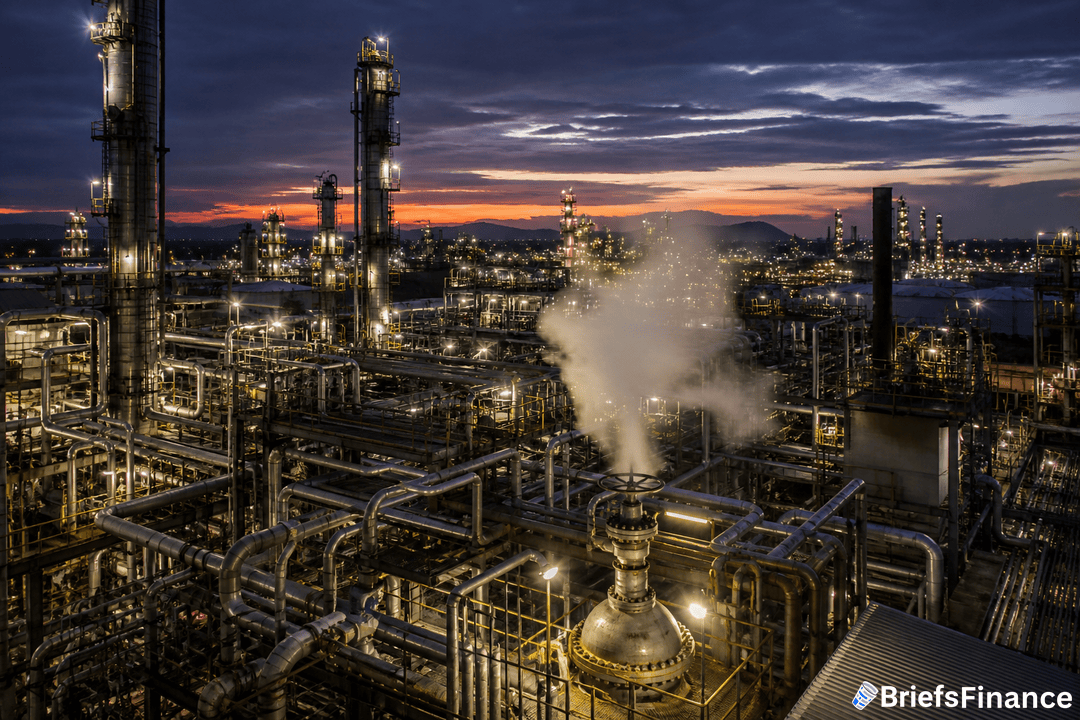
Oil prices have been impossible to ignore this year, and the numbers coming out of China's biggest refiner show exactly why.
Sinopec, the state-owned energy giant also known as China Petroleum & Chemical Corp., reported a 12% jump in first-half profit on the back of much higher crude prices. The company pulled in 26.6 billion yuan, about $4 billion, compared with 23.8 billion yuan in the same stretch of 2025.
The main driver is simple. Brent crude, the global benchmark, averaged roughly $87 per barrel in the first six months of 2026, a big jump from about $71 a year earlier. The rally peaked above $126 in late April, a four-year high, and followed the US-Israeli military campaign against Iran by just two months.
The Two-Sided Oil Coin
Higher prices are a mixed bag for a company like Sinopec. The oil extraction side of the business is feeling great. Revenue from pulling crude out of the ground is up, and the value of the oil Sinopec already has sitting in storage has gone up too.
Markets move every day, and most of it never reaches you in time. Get the free Market Briefs daily newsletter and stay ahead of it.
But the refining side is dealing with a much harsher reality. Turning crude into gasoline and other fuels costs more when the raw material price spikes. And here's the catch: Sinopec can't just pass those costs along to drivers. The government has restricted fuel exports and imposed price caps on domestic fuel to keep inflation in check.
That leaves Sinopec's refining arm squeezed between what it pays for oil and what it's allowed to charge for fuel. It's a tough spot that's been running for the full six months of the conflict so far, and the ongoing war keeps oil prices volatile.
A Company Caught in the Middle
Sinopec's dual role makes it a rare window into how China's state-controlled energy sector is navigating geopolitical turmoil. As both a crude producer and the nation's biggest refiner, the company feels the oil price shock from both directions at once. Its upstream operations benefit from higher sales values, while its downstream fuel business absorbs the sting of pricier feedstock. The government's price caps and export limits are a reminder that fuel is politically sensitive in China, and Sinopec, as a state-owned enterprise, has to carry part of that burden.
What's Next for the Rest of the Year
Sinopec isn't sitting still. The company plans to spend 82.9 billion to 99.9 billion yuan on capital expenditures in the second half of the year. That's a big chunk of change going toward keeping its operations running and expanding.
The company plans to extract 141.8 million barrels of crude this year and produce 746.3 billion cubic feet of gas. Those are the kinds of numbers that show Sinopec expects the current situation to keep going, and it's preparing to meet the demand.
The bottom line: For investors, this is a clear look at how the energy world is working right now. The profit at Sinopec is growing because of the higher oil prices, but the costs of refining are a real headwind. That tension between what it costs to get oil and what it can charge for fuel is the story to watch.
If the conflict with Iran drags on and oil prices stay high, Sinopec's extraction side keeps winning. If prices cool off, refining margins might get some breathing room. Either way, the next six months will be worth watching.
The money story behind the headlines is usually the part that matters. Join Market Briefs free and get it every morning.