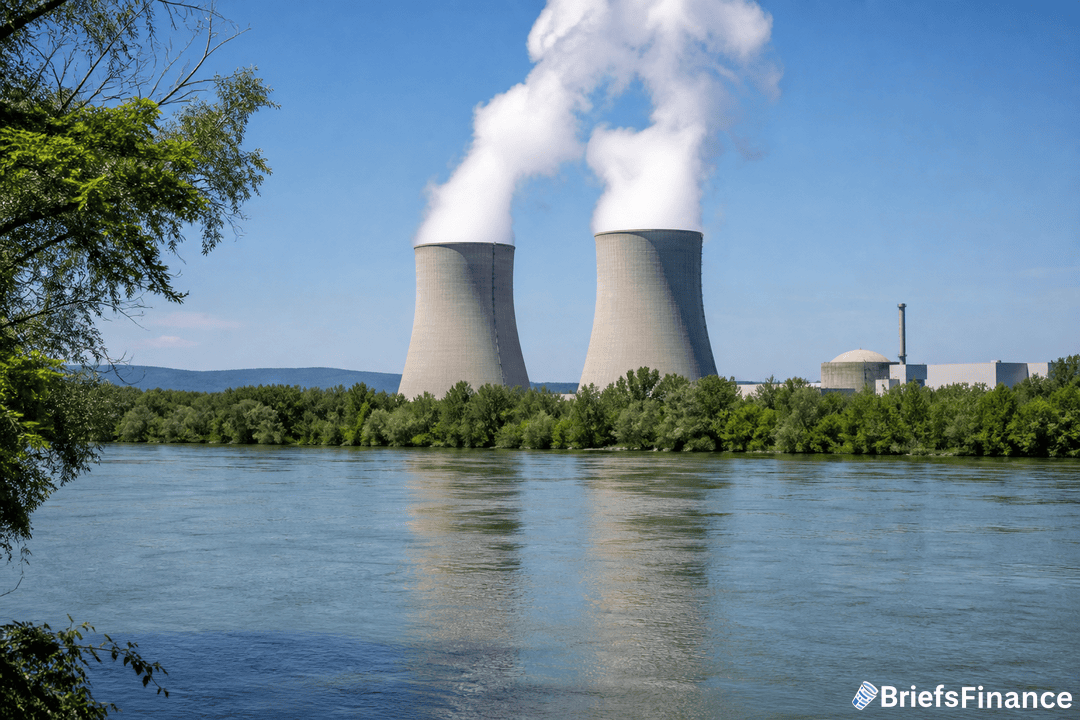
Hungary is switching one of its nuclear reactors back on after weeks of trouble tied to a river that ran dangerously low. The Danube, which cools the reactors at Hungary's Paks nuclear plant, had dropped to record lows this summer. That forced the country to switch off most of its nuclear capacity at the worst possible time. Now, with water levels rising again, the first of those reactors is coming back.
Prime Minister Peter Magyar said block number 3 will restart Saturday evening. The restart, he said, was made possible by higher water in the Danube and an underwater barrier installed to protect the plant's cooling-water intake.
That is welcome news for a country facing what it calls an energy crisis. The Paks plant normally supplies about 40% of Hungary's electricity, so losing most of its output was a serious hit. At the lowest point, only one of the plant's four reactors was still running, and it was producing just a fraction of its normal output.
The plant usually generates up to 2,000 megawatts. During the worst of the crisis, that number fell to roughly 481 megawatts.
The Reactor That Was Too Hot to Run
Nuclear reactors need a steady supply of cool water. When summer heat waves baked Europe, the Danube shrank. Without enough water, the reactors could not be operated safely.
As the Danube recovers, let your wealth grow steadily with the free Always Be Buying E-Book
The result was a stretched power grid. Hungary had to buy more electricity from nearby countries and ask homes and businesses to cut back. Those asks are not easy for a country that relies on one plant for so much of its power.
Getting the plant back to full strength will take time. Only one reactor is coming back online for now, and the others remain down. Still, the restart is a strong signal that the worst of the water shortage may have passed.
What This Means for Your Money
For investors, this is less about a single reactor and more about how fragile energy systems can be when the weather turns extreme. A river that is too low can be just as disruptive as a pipeline that breaks or a generator that fails. That kind of risk can move electricity prices, strain cross-border energy supplies, and raise costs for consumers and companies.
The restart of block 3 is a positive step, but the plant is not back to full strength. Bringing them back safely will take time. Hungary is also preparing for winter, when energy demand across the country typically climbs.
The bigger lesson is that climate is now an operating risk for critical infrastructure. Countries and utilities that depend on river cooling will need to plan for low-water years, not just average ones. The same vulnerability applies to nuclear plants across Europe that rely on rivers in the same way.
The Danube is rising again, and Hungary is turning its lights back on. But this episode shows that the power grid of the future must account for a new variable: how much water remains in the river.
When power returns to Hungary, your savings can too, so grab the Always Be Buying E-Book