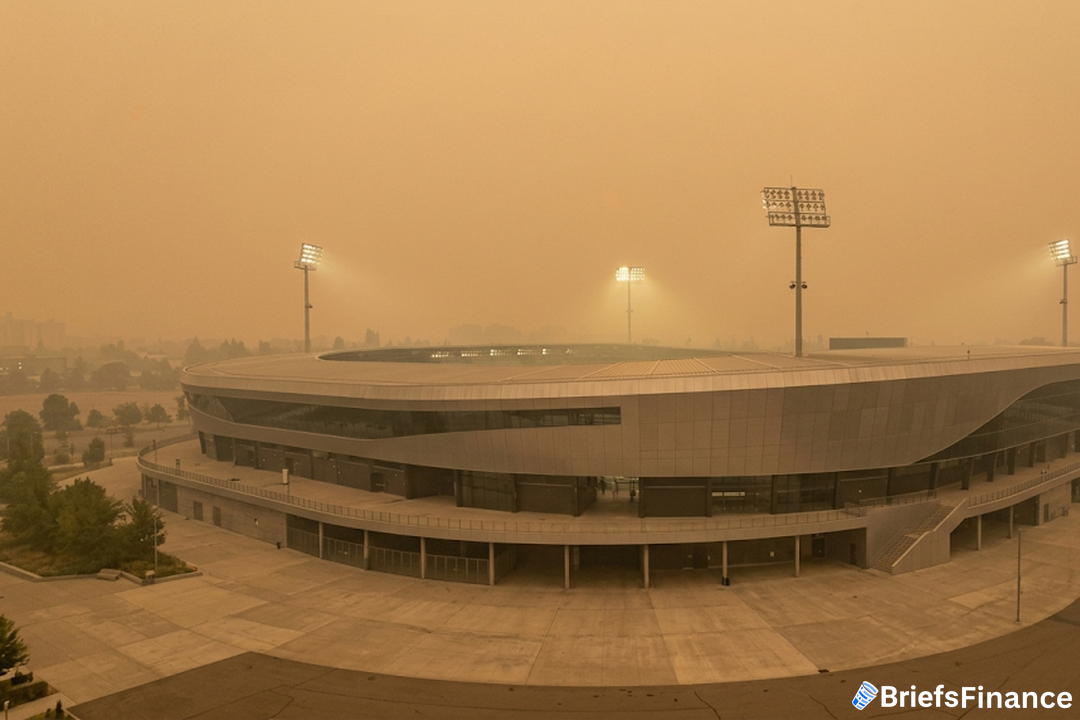
What's Going On
The sky over New York has been hazy for days. Wildfires in Canada, numbering in the hundreds, have produced smoke that has moved southward, causing air quality to deteriorate across the Midwest and East Coast. The U.S. Environmental Protection Agency has issued air quality alerts for several cities, with some readings labeled "hazardous."
But the World Cup final is still on. Andrew Giuliani, who leads the World Cup task force at the White House, has been part of informal discussions about the wildfire situation. No official changes have been announced.
Why the Smoke Is Here and Why It Might Clear
The smoke from these fires becomes a continent-wide issue when wind patterns carry it southward.
Get the market news that matters in a five-minute read with Market Briefs, our free daily newsletter
The big question for Sunday is whether the smoke will linger. Senior forecaster Bob Oravec from the US Weather Prediction Center is hopeful. "Sunday will not be terrible for the World Cup," he said. "Everything we see is that the smoke will be clearing on Sunday."
The National Weather Service has personnel positioned at FIFA's Miami command center for the entire tournament to keep track of conditions.
If the forecast holds, the haze should lift in time for the 3 p.m. kickoff.
Broader Impact on Sports and Fans
Several professional sports have been disrupted by poor air quality; for instance, a Major League Soccer game in Chicago was postponed on Thursday, and a Philadelphia MLB game was moved up by an hour. Several Major League Baseball games on the East Coast were postponed or moved indoors earlier this week, and outdoor concerts in New York and Philadelphia were rescheduled.
Andrew Giuliani confirmed that the White House task force is staying in close contact with local health officials, but so far no contingency plan - such as delaying the match or moving it to a dome stadium - has been announced.
FIFA already has a history of paying attention to air quality: during the 2022 World Cup in Qatar, the organization monitored pollution levels throughout the tournament.
This incident underscores how climate change is increasingly affecting major sporting events, from wildfires to heat waves, forcing organizers to consider new safety measures.
The ongoing wildfires in Canada, which have burned across multiple provinces, have already caused significant disruptions to daily life and outdoor activities in the U.S. The smoke has led to air quality alerts from the Midwest to the East Coast, with some areas experiencing hazardous conditions. While Sunday's forecast offers hope for clear skies, the situation remains fluid, and officials continue to monitor conditions closely.
The smoke drifting from Canada is part of a broader trend: wildfires have intensified across North America in recent years, and the resulting air quality alerts have become more common during summer months. For event organizers, balancing fan safety with the logistical demands of a global spectacle like the World Cup final presents a new challenge that may shape future planning.
Join Market Briefs, our free daily newsletter, for a quick daily rundown of the markets