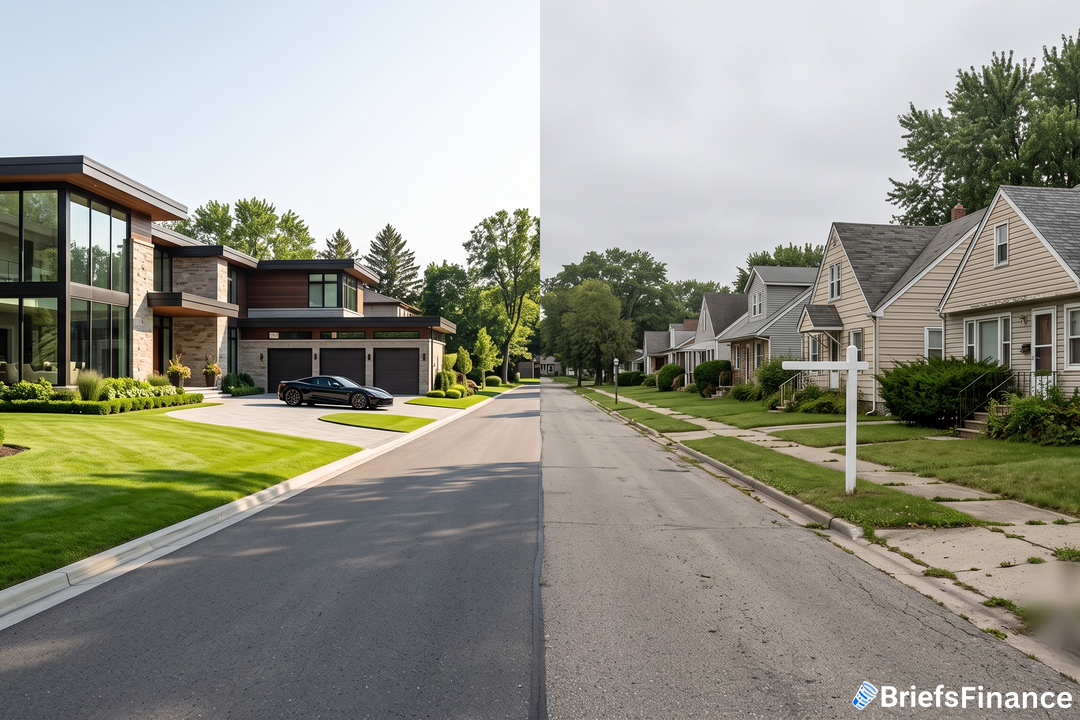
A Market Split in Two
The housing market is telling two completely different stories right now.
Luxury homes - defined as the top 5% of listings by estimated value - are selling fast and getting pricier. Pending sales of those homes rose 5.2%, the biggest jump since December 2024.
Meanwhile, the rest of the market is stuck in neutral. Pending sales grew at 3.6%, a respectable number but well behind the high end.
What is causing the gap? It comes down to who can afford to buy right now. That makes high interest rates a minor inconvenience, not a deal-breaker.
Middle-income buyers face the opposite problem. Stagnant wages, high rates, and tight inventory have put homeownership further out of reach. So while the top end keeps climbing, the middle is just treading water.
Get the market news that matters in a five-minute read with Market Briefs, our free daily newsletter
According to Redfin senior economist Joel Berner, the rise in buyer activity aligns with an influx of capital from AI industry growth and recent Bay Area IPOs.
Where the Heat Is Hottest
The luxury boom is not evenly spread. A handful of metros are seeing outsized gains.
Tampa leads the pack. Pending sales for luxury homes increased by 20.8%, and closed sales rose 27.4% - second only to San Francisco.
New listings actually fell 2.9%, and active inventory dropped 0.5%. Homes are moving fast, with a median of 33 days on market. Among the ten metropolitan areas showing the largest growth in luxury pending sales, three are in Florida: West Palm Beach (18.5% increase), Miami (14.6% increase), and Tampa.
Miami is not far behind. Luxury prices rose 14.2% to a median of $4,855,331. Pending sales went up 14.6%, and closed sales rose 5.2%.
But the number of new luxury listings declined 13%, and active inventory tumbled 17.2%, marking the largest drop among all major metro areas studied. Luxury homes in Miami are taking longer to sell, though, at 150 days median on market, up 24 days from last year. A recent analysis by LuxurySoCalRealty pointed out that deals over $5 million typically require 45 to 60 days to finalize after contract signing.
San Francisco stands out for sheer velocity. Pending sales of luxury homes surged 45.9%, the largest increase nationally. Closed sales rose 46.3%, also the largest.
The median luxury price hit $6,648,922, up 6%. Homes spend just 13 days on market. During June 2026, 44 properties were purchased for $1 million or more above their final list price, resulting in $60 million in excess bids.
Inventory dropped 15.2%. The driving force behind this upswing is artificial intelligence. With over 2,000 AI firms based in San Francisco, the fast growth of companies like OpenAI and Anthropic has produced a cohort of buyers whose pay packages exceed typical tech salaries.
The bottom line: The divergence between luxury and non-luxury is not just a rich-get-richer story. It is a reflection of how different parts of the economy are performing. If your portfolio has exposure to real estate - through REITs, homebuilder stocks, or even your own home - keep an eye on where the cash is flowing. The most significant price gains are limited to a few metropolitan areas where tax policies, technology-driven wealth, and population shifts are boosting demand among the wealthy.
Join Market Briefs, our free daily newsletter, for a quick daily rundown of the markets