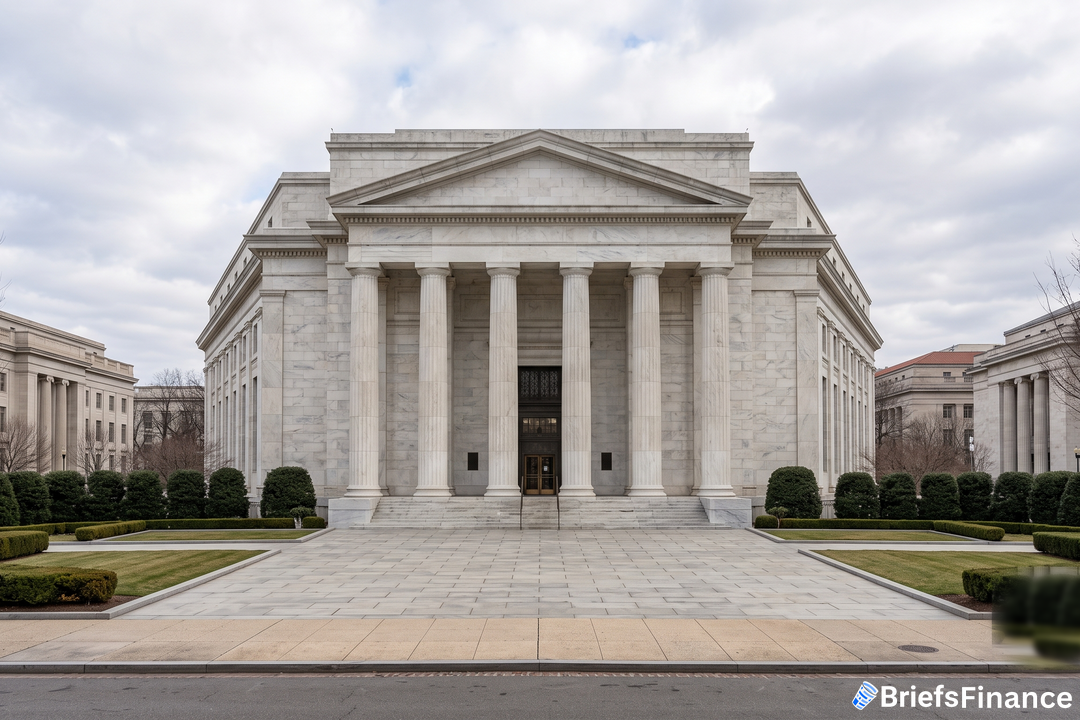
What Warsh Said to Lawmakers
The man in charge of the country's monetary policy took a clear stance at the Senate Banking Committee on July 15: the price spikes tied to the AI boom are not the same as old-fashioned inflation.
Kevin Warsh, the Fed chair, explained that AI investment is creating a crunch in energy, labor, computer chips, and software. Those costs are going up. But he argued that companies will eventually ramp up supply to meet that demand, which should bring prices back down. That makes it different from something like a foreign war, which actually reduces the supply of goods and keeps prices high.
Warsh put it this way: "This is one of the good family fights. I don't view a one-time change in prices as necessarily being inflationary because I think there's a supply response."
Derek Tang, an economist at Monetary Policy Analytics Inc., said Warsh revealed more about how he thinks about inflation. Tang noted that the current price bumps do not worry Warsh unless they start showing up in other parts of the economy - what economists call "second-round effects" like broad wage increases spreading beyond the AI-heavy sectors.
Get the market news that matters in a five-minute read with Market Briefs, our free daily newsletter
Why AI Is a Different Kind of Price Pressure
The logic is simple. When a war cuts off oil supplies, there is no quick fix. But when companies pour money into data centers and chips, they are also building the factories and power plants that will eventually produce more of those things.
A handful of Fed officials have been talking about this lately. John Williams, president of the New York Fed, alongside Governors Christopher Waller and Lisa Cook, has commented on AI's short-term price pressures.
So far, the numbers back up Warsh's view.
Warsh made two things clear during his testimony. First, he made clear he would protect the Fed's autonomy from executive branch influence. President Trump has been pushing for lower rates, just as he did with former Chair Jerome Powell. Warsh said he has never been asked to do anything inappropriate and would not do it if asked.
Second, the Fed is watching closely for signs that the AI-driven price increases are spreading. "We're going to look at our tools in the changing economy, both balance sheet and interest rate, and see whether we need to adjust policy to take it head on," Warsh said.
The bottom line: For investors, the debate comes down to timing. If Warsh is right and supply catches up, the AI boom could boost productivity and wages without triggering a broader inflation spiral. Warsh himself noted that as productivity moves up, "we should see wages move more."
But if those "second-round effects" show up - if rising costs in energy and chips start lifting prices across the board - the Fed may have to raise rates or shrink its balance sheet. That would be a different story for stocks and bonds.
For now, the message is patient. The Fed is not panicking over AI inflation. It is watching, waiting, and betting that the market will sort itself out. Your job is to watch what happens next - especially in wages and consumer prices - to see whether that bet pays off.
Join Market Briefs, our free daily newsletter, for a quick daily rundown of the markets