The raise and the product
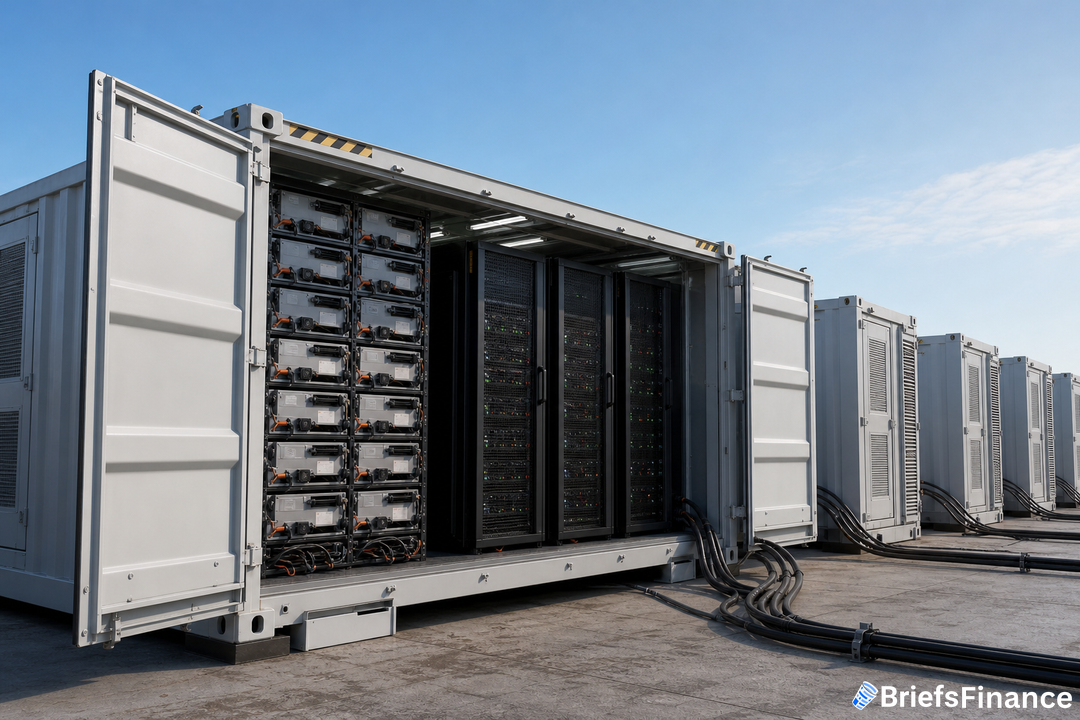
Salt Lake City-based Torus said it secured $500 million in a Series C round led by Magnetar, with Iconiq Capital, Origin Ventures and Trinity Capital also participating. The cash goes to ramp manufacturing of Foundry, a containerized system that blends battery storage with AI computing.
Torus already sells modular battery setups designed to help businesses and factories manage energy use and trim power costs. Foundry extends that pitch by packaging compute with on-site storage.
How Foundry works
Founder and CEO Nate Walkingshaw said the compute containers can be placed at businesses or factories where the grid has unused capacity, helping sidestep pricey infrastructure upgrades that can inflate utility bills. The units focus on AI inference tasks, come in configurations from 1 to 20 megawatts, and can be up and running in about four months.
"The Foundry product is our version of a distributed data-center approach to move the chips to the power that's already there," he said. Torus noted that its clientele includes Hydra Host, which is an AI infrastructure company.
New technologies quietly reshape opportunities for patient investors willing to learn. We're hosting our first ever investor livestream on 11/17 to show you how to use ChatGPT and Claude to invest like a pro, hosted by Briefs Finance CEO Jaspreet Singh. Save your seat.
The market backdrop
The launch lands as US data center developers scramble for enough electricity to run power-hungry AI applications. Developers face tighter reviews and longer timelines when planning large campuses that can draw city-scale loads in states such as Texas and Ohio after Democrats who campaigned on stricter limits for data centers won last week's gubernatorial races in the midterms.
Walkingshaw said the evolving political environment opens doors for providers that can add computing without pushing up local power bills or noise and pollution.
Why investors should care
In plain English: Torus is pitching compute where the power already exists, not the other way around. If that model sticks, it could ease grid bottlenecks while pulling spend from both energy management and AI infrastructure budgets. For your portfolio, it spotlights investor appetite for solutions that bundle batteries with AI hardware and promise faster deployment timelines.
Staying curious about fresh tools can give investors a thoughtful edge over time. On 11/17, our CEO Jaspreet Singh goes live for our first ever investor livestream on how to use ChatGPT and Claude to invest like a pro. Register to join him.