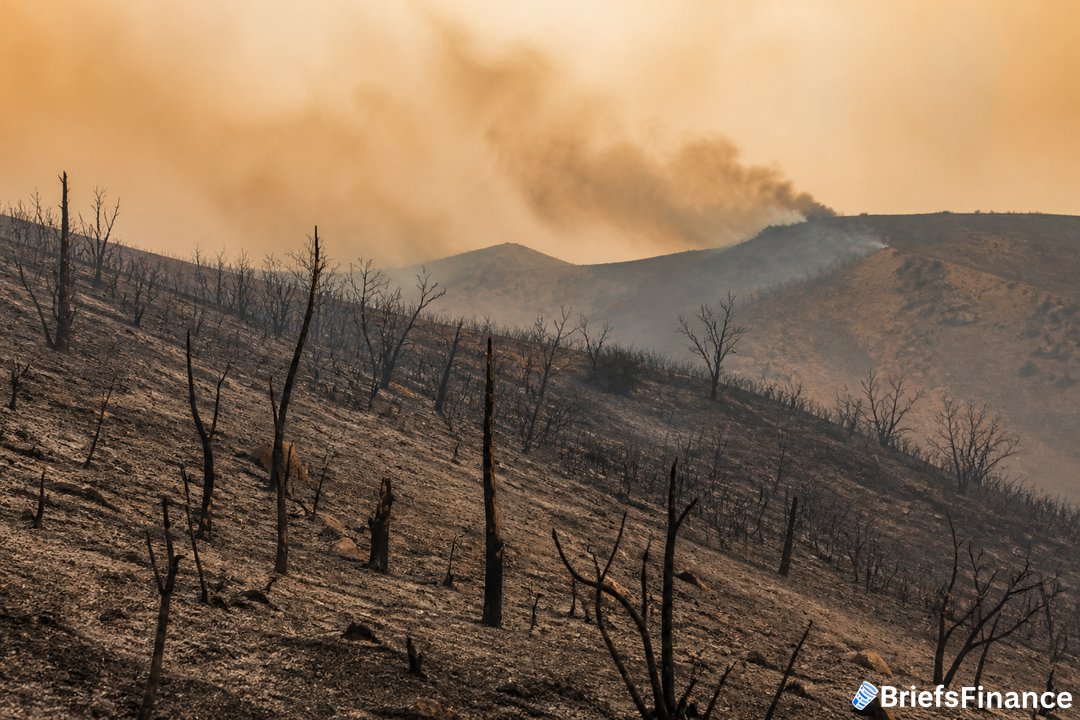
A new lens on wildfire losses
Climate Central, a nonprofit that researches and communicates climate science, re-ran the numbers by counting each major wildfire on its own rather than rolling all fires in a season into one disaster. That change gives a more granular record and a smaller combined bill than the older seasonal approach.
Using the former season-wide method, total wildfire losses came to 221 billion dollars. With the event-by-event approach, the tally is about 186 billion dollars. The analysis includes only single fires with at least 1 billion dollars in damage. On that basis, there have been 31 such fires since 1980, with nearly 186 billion dollars in losses, more than 79,500 structures destroyed, and an estimated 373 lives lost.
Two decades of acceleration
From 2007 through 2026, the US recorded 26 billion-dollar wildfires, compared with five in the previous 20 years. Inflation-adjusted losses climbed to 170 billion dollars from 15.6 billion dollars. Most of these high-cost events have happened since 2016, highlighted by the Palisades blaze in Los Angeles in 2025 costing 36.3 billion dollars, as well as the 6 billion dollar Lahaina fire in Hawaii in 2023.
The others occurred in Hawaii, Colorado, Oregon, New Mexico, Tennessee, Texas, and Washington.
Investors who recognize shifting risks can find better ways to protect and grow capital. We're hosting our first ever investor livestream on 11/17 to show you how to use ChatGPT and Claude to invest like a pro, hosted by Briefs Finance CEO Jaspreet Singh. Save your seat.
Who is keeping score and what is driving the damage
For decades, the National Oceanic and Atmospheric Administration tracked US billion-dollar weather and climate disasters. NOAA ended that project in 2025, and Climate Central assumed the database that October; Adam Smith, the NOAA project's lead scientist for 15 years, continued to oversee the research.
Smith said the jump in losses reflects both a warming climate and where and how communities build. "Either way you look at it, the rise in damages relates to human activities," he said. He added that climate change is adding conditions that make ignition and spread more likely, while higher property values and rebuilding costs at the edges of wildlands mean bigger losses when fires burn.
The investor angle
Climate Central plans next year to extend its work by identifying single fires with at least 100 million dollars in damage dating to 1980, adding more detail to the record. Including the newly separated wildfire events, the group tallies 453 US billion-dollar weather and climate disasters dating back to 1980, with total losses reaching 3.2 trillion dollars.
Why it matters: a clearer, event-level picture shows wildfire damage is concentrated and rising, shaped by both climate and development. That is useful context for how insurers, utilities, housing markets, and local finances may be exposed.
Learning how new tools can sharpen your decision making helps you stay prepared. On 11/17, our CEO Jaspreet Singh goes live for our first ever investor livestream on how to use ChatGPT and Claude to invest like a pro. Register to join him.