The listing plan and why it matters
Alibaba said the Hong Kong exchange has greenlit it to move forward, and T-Head filed its listing application on Sept. 11. The company has not settled on how large the deal will be or how it will be structured, and it expects T-Head to stay under Alibaba's control after the IPO.
The pitch to investors is simple. A separate listing lets the market price T-Head on its own and opens direct access to equity and debt markets - which can make bank financing easier - while appealing to investors who want targeted exposure to chips.
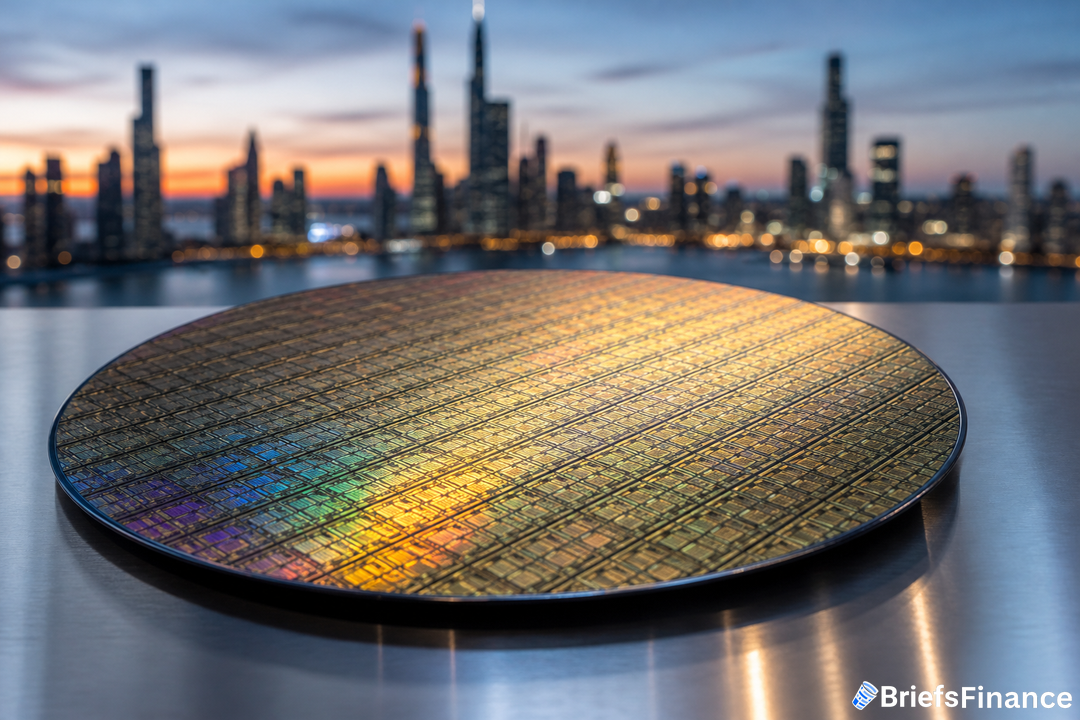
What T-Head builds and its latest silicon
Per Alibaba's description, T-Head supplies end to end data center processors that support complete system-level computing in China. The company has reported delivering 560,000 units from its Zhenwu lineup, with its chips now in use at more than 400 external customers.
In September, the unit rolled out, in its own characterization, China's most powerful AI chip, aimed at supporting a large buildout of data center capacity in the years ahead. The Zhenwu V900 accelerator, which Alibaba said runs at triple the performance of the prior generation, can be networked into clusters reaching up to 500,000 units to train cutting edge models. Alibaba's push into advanced chip development includes work on RISC-V, a chip design architecture, and aligns with Beijing's drive to cultivate alternatives to American chips.
When industries restructure, thoughtful investors look for new tools to gain insight. We're hosting our first ever investor livestream on 11/17 to show you how to use ChatGPT and Claude to invest like a pro, hosted by Briefs Finance CEO Jaspreet Singh. Save your seat.
Competitive race and supply constraints
T-Head is among the leading Chinese chip designers trying to create semiconductors that can stand in for Nvidia accelerators, the most capable of which are restricted from sale in China. It is developing alongside domestic rivals such as Huawei and Hygon, trying to narrow the gap with overseas peers and reduce reliance on imported technology.
Alibaba has not said whether it can produce enough chips in the near term to satisfy rising local demand. Whether it is working with domestic fabs - including the capacity-constrained Semiconductor Manufacturing International Corp. - hasn't been disclosed. US export controls have, to a great extent, prevented Chinese companies from tapping market leaders such as Taiwan Semiconductor Manufacturing Co.
The market backdrop and the investor angle
Hong Kong IPO activity is at a six year high, helped by several notable chip listings, though momentum has cooled recently with bankers indicating some sizable offerings are slipping into next year. Bloomberg News has reported that Baidu's AI chip arm, Kunlunxin, may target a roughly $2 billion listing in 2027.
Alibaba ranks as one of China's largest AI spenders. Chief Executive Officer Eddie Wu has pledged to pour more than $53 billion over three years into expanding the company's AI capabilities. The Hangzhou based firm raised about $10.2 billion in an August share sale and has pledged to step up spending on AI hardware and infrastructure, with Wu elevating the quest for artificial general intelligence to a top priority.
Learning how emerging technologies inform investment thinking can give investors a steady edge. On 11/17, our CEO Jaspreet Singh goes live for our first ever investor livestream on how to use ChatGPT and Claude to invest like a pro. Register to join him.