Why Siemens is buying now
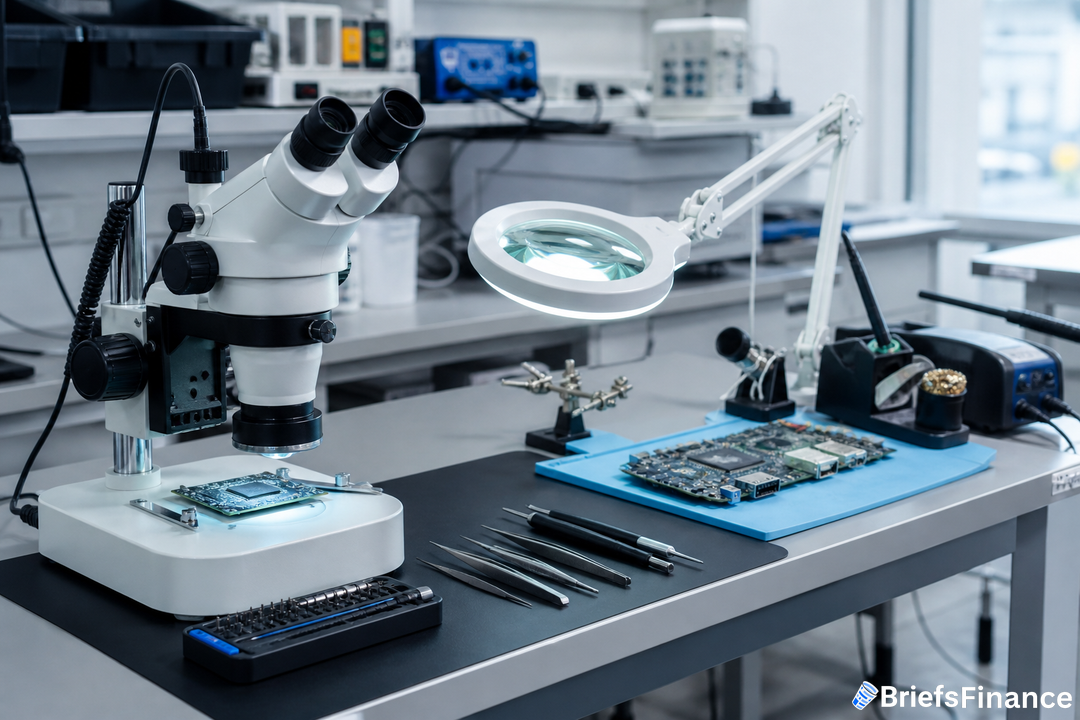
To strengthen its toolset for diagnosing bugs at the boundary between sophisticated chips and their software, Siemens has reached a deal to acquire the family-owned Lauterbach GmbH. The company says the combination should speed development, lift quality and produce revenue synergies, but it did not share a purchase price.
"We continue to expand this portfolio because chips are becoming increasingly complex," said Cedrik Neike, a Siemens management board member who leads the Digital Industries division. He noted that over the past five years, the company completed 14 deals in electronic design automation and "will definitely keep investing."
Where Lauterbach fits
Established in 1979 by two brothers near Siemens' Munich headquarters, the company develops tools that validate software on chips and on smaller prototypes. Neike called the firm a leader in its niche and said Siemens' main EDA rivals provide similar capabilities, making this an important gap to close.
Lauterbach has around 1,200 customers across automotive, semiconductor and telecommunications, and partnerships with Nvidia, Infineon, Advanced Micro Devices and Qualcomm. The company reported about €60 million in revenue last year and has roughly 170 employees.
New tools can quietly change how investors spot long term opportunities and risks. We're hosting our first ever investor livestream on 11/17 to show you how to use ChatGPT and Claude to invest like a pro, hosted by Briefs Finance CEO Jaspreet Singh. Save your seat.
The broader EDA race and the investor angle
EDA software - the tools used to design and verify chips before production - is a concentrated market dominated by Synopsys, Cadence and Siemens. Siemens entered the segment via its $4.5 billion acquisition of Mentor Graphics in 2017 and has been rolling up specialist technology firms to meet swelling demand for cutting edge semiconductors. Neike noted that for particular state-of-the-art programs, debugging can take up 50% to 60% of the total verification effort.
This transaction follows a string of smaller deals. July saw Siemens strike agreements to acquire Precision Innovations and Defacto Technologies, moves aimed at adding more planning and verification capabilities for semiconductors to its lineup. US rivals are also expanding. In 2025, Synopsys finalized its $34.9 billion acquisition of Ansys, bringing simulation software deeper into its chip design stack.
The transaction is expected to close in the first half of 2027, pending closing conditions and regulatory approvals. The bottom line: as chips get more complex and software interactions matter more, Siemens is stacking verification and design tools that could influence the economics of the next wave of semiconductors in your portfolio.
Keeping up with evolving technology helps investors sharpen their perspective and confidence. On 11/17, our CEO Jaspreet Singh goes live for our first ever investor livestream on how to use ChatGPT and Claude to invest like a pro. Register to join him.