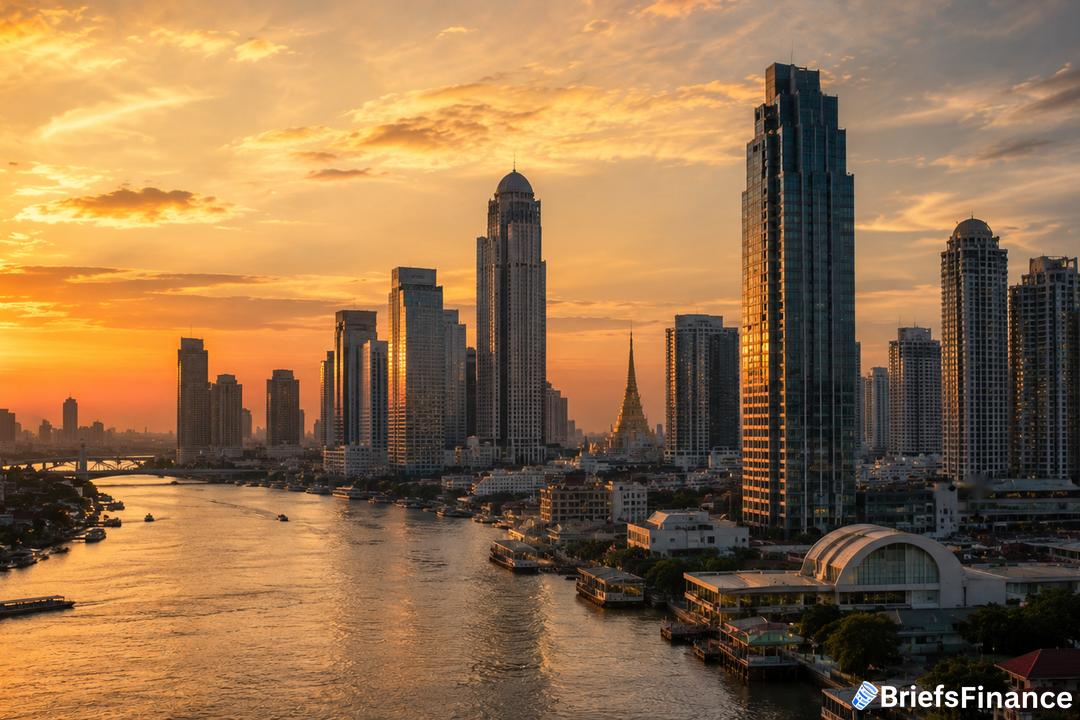
Thailand's economy had struggled for years, averaging only 2% annual growth over the past decade, while foreign investors pulled nearly $13 billion from its stock market over the prior three years. The political instability that caused these outflows seemed to have no end in sight until the February election delivered a rare decisive mandate for Anutin Charnvirakul's conservative party. That victory, the largest for a conservative group in over two decades, signaled a potential end to the constant turmoil that had plagued the country.
From Worst to First
For years, Thailand's stock market was the place money went to leave.
Then came the February general election.
That changed the mood fast. Investors began to believe the country might finally get stable leadership after years of political turbulence. The market turned around, and foreign money started flowing back in.
"It's come out of a very difficult situation into a much smoother environment," Tai Hui, JPMorgan Asset Management's chief market strategist for Asia Pacific in Hong Kong, said. His firm is recommending investors stick with Thailand.
Get the market news that matters in a five-minute read with Market Briefs, our free daily newsletter
What's Driving the Rally
Political stability is only part of the story. Thailand is also becoming a bigger player in the global AI supply chain, which has attracted a wave of new investment. Foreign investment approvals hit about 154 billion baht ($4.6 billion) in the first five months of this year - a 73% jump from a year earlier.
A weaker baht has given exports and tourism a boost too. According to Tokio Marine Asset Management fund manager Hironori Akizawa, "The election held in February has led to the emergence of the view that a stable government can be expected for the time being, and it has become a recipient of funds flowing out from Indonesia and the Philippines."
One stock in particular is powering the index. Delta Electronics (Thailand) Pcl has jumped 76% this year and currently commands a price above 100 times its forward 12-month earnings. That is expensive by any measure, but investors are betting on AI-related demand. According to BNP Paribas's Zhikai Chen, who focuses on Asian and global emerging market equity strategies, "We are overweight the IT sector in Thailand due to the scarcity value and fundamental upside from robust AI-related capex."
Still, some fund managers are cautious. Aberdeen fund manager Xin-Yao Ng commented, "We are not getting hyper-excited because the broader economic growth of Thailand in the medium to long term is still nothing to shout about despite growth in some areas."
What It Means for Your Portfolio
The big question now is whether the rally can last. That gap shows investors are betting on a real improvement in profits, not just a sentiment bounce.
But the road ahead has bumps. Risks include global economic headwinds, weak domestic spending, uncertainty in tourism, and the effects of a strong El Niño.
Still, the mood has shifted. A Bank of America survey found that fund managers are slowly reducing their underweight position on Thailand and gradually increasing exposure. "The market is actually catching up after investors had an overly pessimistic view of the outlook last year," said Erica Tay, an economist at Maybank.
For investors, the lesson is not about jumping in headfirst. It is about watching where political change opens the door for money to flow - and understanding that yesterday's worst market can become today's best when the conditions shift.
Join Market Briefs, our free daily newsletter, for a quick daily rundown of the markets