Deal Details
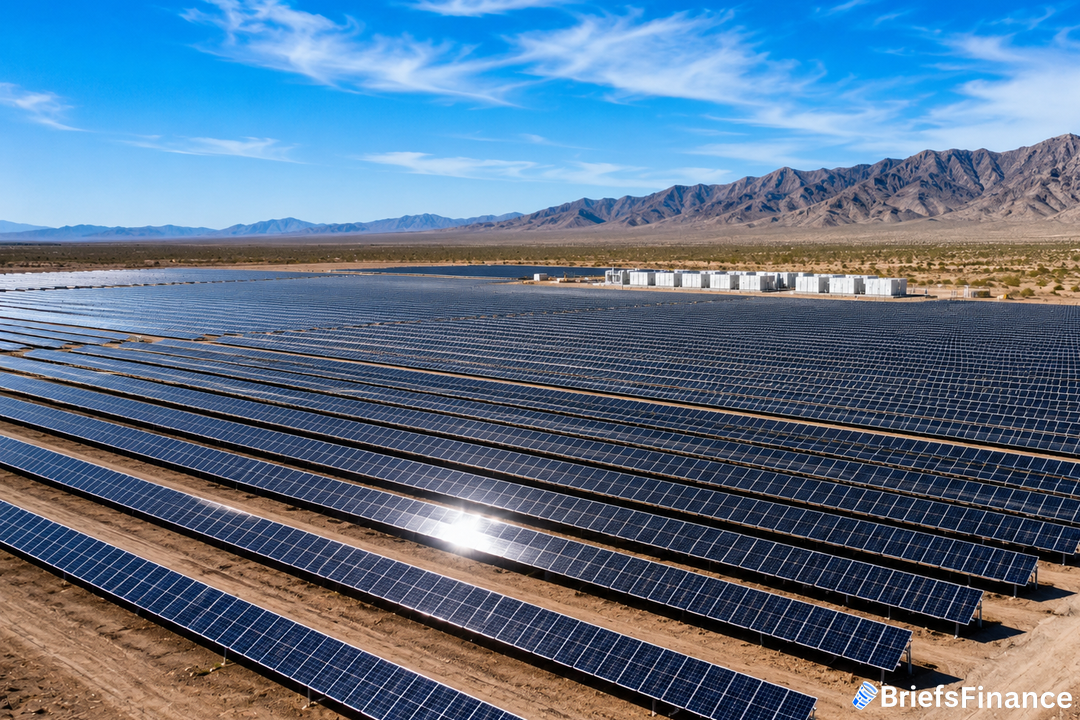
ContourGlobal, the project developer, announced that Tesla Inc. has entered into a lengthy agreement to purchase power from an Arizona solar and battery facility backed by KKR & Co. The financial details of the agreement were not made public.
This kind of long-term electricity purchase is unusual for Tesla, underscoring the increasing pressure to secure power purchase contracts as surging AI-related data center construction strains U.S. electricity supplies. For years, other major technology companies have been signing similar agreements, helping to fuel the expansion of solar and wind energy over the last ten years. Combining renewable generation with battery storage has emerged as a rapid method to add new power capacity, especially in areas where utility companies face challenges keeping up with increasing consumption.
Tesla, which normally sources its electricity from local power providers, did not reply to inquiries made after regular business hours. In addition, Tesla holds ownership of certain electricity generating facilities.
Get the market news that matters in a five-minute read with Market Briefs, our free daily newsletter
Project Sterling will link into the grid managed by the Western Area Power Administration, which provides connectivity to California. Power grids nationwide are experiencing extraordinary demand increases because the rapid construction of data centers has heavily burdened regions that previously enjoyed abundant spare capacity.
This is the first time Tesla and ContourGlobal have entered into such an agreement. Power purchase deals of this nature generally last from 10 to 15 years, offering customers stable electricity expenses and granting developers the assured income required to fund construction.
Implications for Tesla
Tesla's decision to sign a PPA reflects broader trends in the energy market. As the company's vehicle and energy storage production scales up, its electricity consumption grows. Meanwhile, tech giants like Google, Amazon, and Microsoft have long used PPAs to meet sustainability targets and lock in low-cost renewable energy. Tesla's move into this market signals a maturation of its energy strategy, leveraging third-party projects to power its operations without direct capital outlay for new generation.
Industry Context
The deal highlights a broader shift among large electricity consumers toward securing long-term renewable energy supplies. As data center electricity demand surges, companies like Tesla are following the path of cloud giants, which have signed contracts for over 100 gigawatts of renewable energy in the past decade. Battery storage is a critical component because it allows these projects to deliver power even when the sun is not shining, making them more reliable for continuous operations. This combination of solar and storage is increasingly seen as a fast-track solution to add new capacity in areas where utilities struggle to keep pace with consumption growth.
A ContourGlobal spokesperson said, "Project Sterling will be the biggest renewable energy installation within our portfolio." ContourGlobal purchased the project in late 2024 and plans to market the remaining 10% of its generation independently.
Join Market Briefs, our free daily newsletter, for a quick daily rundown of the markets