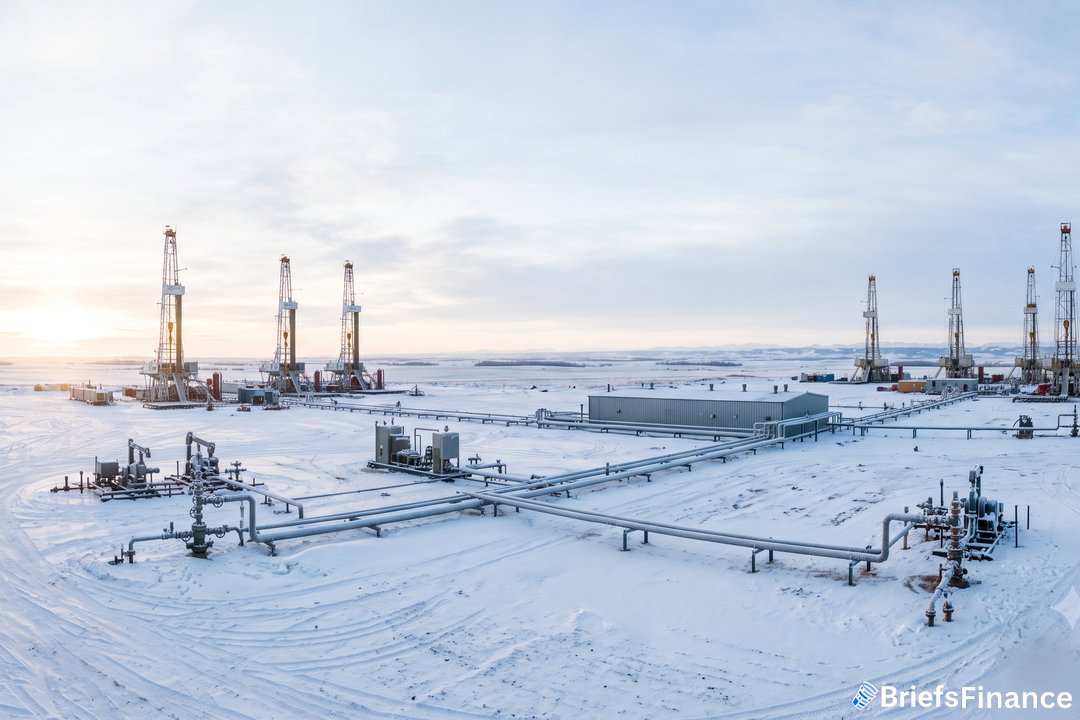
A Former Gas Play Turns Liquid
The Basel Belly River formation in Alberta used to be all about natural gas. Back in 2005, companies drilled more than 1,000 wells there, and 95% of them were chasing gas.
That was then. Today, the same rock is drawing a very different crowd.
Drillers are now targeting oil, and the numbers show the shift is real.
One of the biggest names jumping in is Obsidian Energy. The land already produces roughly 2,500 barrels of oil equivalent per day, and about 75% of that is light oil. That production makes up about 9% of Obsidian's total output.
Get the market news that matters in a five-minute read with Market Briefs, our free daily newsletter
CEO Steve Loukas said the company started testing the formation with a well back in late 2024 and has seen good results ever since. "We've had constructive results that have carried through into 2025 and ultimately 2026," he said.
Why Gas Lost and Oil Won
The reason for the switch comes down to price - and not just any price, but a stubborn gap between Canadian natural gas and what it sells for in the United States.
Over the past five years, Western Canadian natural gas has traded at an average discount of $1.70 per million British thermal units compared to US gas. That is a huge hit when the absolute price is already low. Two decades ago, gas prices hit a record of $16 per million British thermal units. Those days are gone.
The US shale boom that began around 2009 unleashed a torrent of low-cost gas, sending prices into a tailspin. Drilling for gas in Alberta stopped making sense for a lot of companies. But oil held up better, thanks to two things: the war in the Middle East kept global crude prices supported, and new export pipelines - particularly the expanded Trans Mountain system - gave Canadian oil a way to reach buyers beyond the US.
The result is that companies are now hunting for liquid-rich zones in Western Canada, and the Basel Belly River is one of them. Yangarra Resources is also drilling for oil there, and the total estimated production from the formation area in Willesden Green is already between 10,000 and 13,000 barrels of oil equivalent per day.
What Obsidian Has Planned Next
Obsidian is not done yet. Each well costs roughly C$5 million. The target is to get the acquired assets up to 3,000 barrels of oil equivalent per day from that program alone.
In its peak year of 2005, companies drilled over 1,000 wells in the Basel Belly River formation, with 95% targeting gas. That era has ended, as persistent low gas prices have made oil the more attractive target. The formation's history as a gas powerhouse is well known, but the shift to oil reflects a broader trend across Western Canada where drillers are pivoting away from dry gas plays toward liquids-rich zones. With Obsidian's new program and others following suit, the Basel Belly River is once again a focus - this time for crude rather than methane.
Join Market Briefs, our free daily newsletter, for a quick daily rundown of the markets