Free NewsletterPro Login
S&P 500 6,287 +0.42%
DOW 44,521 -0.18%
NASDAQ 21,103 +0.71%
S&P 500 +12.4%
Briefs Finance Fund +24.8%
JOIN THE FUND →

National Diesel Average Breaks $5 as Fuel Inventories Hit Seasonal Lows

Published Jul 16, 2026
[tts_player]
Share:
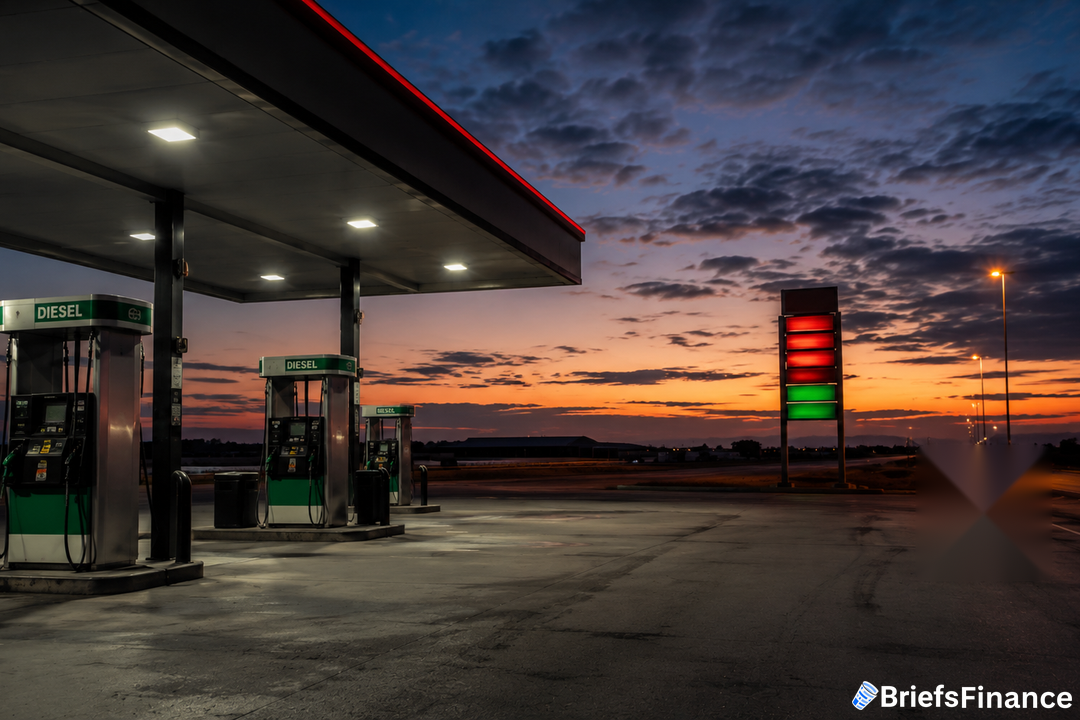
Highway diesel fuel station at dusk
Summary:
  • The national average diesel price reached $5.005 per gallon on July 16, according to AAA.
  • Prices have risen about one-third since the end of February 2026, when the war started.
  • Inventories of diesel and similar fuels are at the lowest level for this time of year and continue to drop during a period when they normally increase.

Back Over $5

Diesel crossed $5 again.

Regular gasoline is nearing the $4 threshold that many monitor closely, during the typical peak of summer demand.

Fuel markets are being squeezed from multiple directions at once. A recent escalation in tensions between the United States and Iran led to a sharp reduction in fuel availability across both American and European markets this week.

The Broader Picture

Diesel serves as the essential fuel for the majority of heavy trucks transporting goods nationwide, along with farming and construction machinery, making it vital to the U.S. economy. The current inventory shortfall is particularly alarming because stockpiles normally build during spring and early summer to prepare for winter heating demand. Instead, they are shrinking amid geopolitical turmoil.

Get the market news that matters in a five-minute read with Market Briefs, our free daily newsletter

The current crisis highlights the precarious nature of global fuel supply chains. With the United States and Iran locked in a new confrontation and Russia restricting exports, diesel markets are facing simultaneous supply shocks that have not been seen in decades. The lack of spare refining capacity means that even a minor disruption can have outsized effects on prices, as seen in the rapid increase over the past few weeks.

The combination of the Iran conflict and Russia's export restrictions has exposed a fragile supply chain that depends on steady refining output and global trade flows.

Normally, U.S. distillate inventories build during spring and early summer to prepare for winter heating demand. This year, they have been shrinking instead, due to a confluence of factors: reduced Russian exports after refinery attacks, robust economic activity, and the latest escalation with Iran threatening crude flows through the Strait of Hormuz. With limited spare refining capacity globally, the market remains vulnerable to further supply disruptions.

Adding to the pressure, the ongoing conflict between the United States and Iran has escalated over recent months, with military engagements disrupting shipping in the Persian Gulf. At the same time, Ukraine's continued strikes on Russian refineries have forced Moscow to curtail diesel exports, compounding the supply crunch. These twin crises have created a perfect storm for fuel markets, leaving little room for error in an already strained system.

Two Shocks in Two Weeks

A fresh round of fighting between the US and Iran caused fuel availability to plummet across American and European markets this week. A week earlier, Russia's government halted diesel exports following increased Ukrainian attacks on its refineries.

These shocks pushed wholesale prices upward, and retailers are now transferring those increases to consumers at the pump.

What This Means for Your Wallet

Consumers are feeling the pinch from higher prices, fueling expectations that the Federal Reserve may raise interest rates to control inflation. These price increases additionally highlight the difficult position of President Donald Trump, who faces midterm elections in November while trying to conclude a conflict he once predicted would be brief.

Join Market Briefs, our free daily newsletter, for a quick daily rundown of the markets
Disclosure

Recent News

1 2 3 37

Get Market Briefs delivered to your inbox every morning for free!

No fluff. No noise. No politics. Just finance news you can read in 5 minutes.

Blogs

June 29, 2026
Portfolio Diversification: Why Putting All Your Eggs in One Basket Destroys Wealth
  • Real diversification means spreading investments across all 11 economic sectors plus bonds, alternatives, and cash so no single bet can sink the portfolio.
  • Different sectors perform at different times, so a diversified portfolio captures upswings while smoothing the brutal drawdowns that wipe out concentrated bets.
  • Total market index funds offer the simplest path to diversification, and annual rebalancing is what keeps the structure working over time.
Read More
June 29, 2026
Non Taxable Income: What It Is and Why It Matters
  • Non taxable income is money you receive that you don't owe income tax on.
  • The tax code treats workers, investors, and business owners very differently, and investors often come out ahead.
  • Learning how income is taxed is a quiet superpower for keeping more of what you earn.
Read More
June 29, 2026
Semiconductor Stocks: A Simple Guide for Investors
  • Semiconductor stocks are companies that design and make computer chips, the brains inside nearly every modern device.
  • The AI boom has turned chips into one of the market's most important and most watched groups.
  • They offer big growth potential, but come with high valuations and a notoriously cyclical history.
Read More
June 25, 2026
How Stocks Work: A Simple Guide for Beginners
  • A stock is a slice of ownership in a company - buy one, and you own a piece of the business.
  • You make money two ways: the share price rising over time, and dividends paid to shareholders.
  • The simplest path for most beginners is buying into the whole market through a low-cost index fund.
Read More
June 25, 2026
Stop Loss vs Stop Limit: What's the Difference?
  • A stop loss order sells your stock once it hits a trigger price, prioritizing getting you out.
  • A stop limit order only sells within a price range you set, prioritizing price over a guaranteed exit.
  • The trade-off: a stop loss almost always executes; a stop limit might not if the price moves too fast.
Read More
June 25, 2026
Energy Stocks: A Simple Guide for Investors
  • Energy stocks are companies that produce and supply the power the world runs on, from oil and gas to newer sources.
  • They make up one of the 11 sectors of the market and tend to move with energy prices and big-picture shifts.
  • Like any sector, the key is diversification and understanding the forces driving demand.
Read More
June 18, 2026
What Is a Stop Loss Order? A Simple Guide
  • A stop loss order automatically sells a stock once it falls to a price you set.
  • It's a tool to cap losses or lock in gains without watching the market all day.
  • It works best for active strategies, and can backfire if used carelessly on long-term holdings.
Read More
June 18, 2026
Best S&P 500 Index Fund: How to Choose One
  • The best S&P 500 index fund for most investors is simply the cheapest, most established one that tracks the index well.
  • Funds like VOO, IVV, and SPY all hold the same 500 companies, so the biggest difference is the fee.
  • Pick one, automate your buys, and let time do the heavy lifting.
Read More
June 17, 2026
What Are Penny Stocks? Risks and Rewards Explained
  • Penny stocks are very low-priced shares of very small companies, often trading for just a few dollars or less.
  • They promise huge gains but carry huge risks: low liquidity, high failure rates, and wild price swings.
  • Most investors are better served by quality companies and funds than by chasing cheap shares.
Read More
June 17, 2026
Best Stocks for Beginners With Little Money
  • The best stocks for beginners with little money usually aren't individual stocks at all - they're low-cost index funds.
  • You can start with $100 or less and use small, regular investments to build wealth over time.
  • Focus on diversification and consistency, not on picking the next big winner.
Read More
1 2 3 24
Share via
Copy link











