Free NewsletterPro Login

Warning: Undefined variable $stocks in /var/www/briefs.co/htdocs/wp-content/plugins/oxygen/component-framework/components/classes/code-block.class.php(133) : eval()'d code on line 448

Warning: foreach() argument must be of type array|object, null given in /var/www/briefs.co/htdocs/wp-content/plugins/oxygen/component-framework/components/classes/code-block.class.php(133) : eval()'d code on line 448

Warning: Undefined variable $funds in /var/www/briefs.co/htdocs/wp-content/plugins/oxygen/component-framework/components/classes/code-block.class.php(133) : eval()'d code on line 472

Warning: foreach() argument must be of type array|object, null given in /var/www/briefs.co/htdocs/wp-content/plugins/oxygen/component-framework/components/classes/code-block.class.php(133) : eval()'d code on line 472
/* the link was here */

Maine Senate Race Turns On Heating Bills, Housing Pain and a Tumultuous Nomination

Published Oct 6, 2026
Share:
Summary:
  • Four weeks out, the conversation in Maine keeps coming back to two things: surging housing costs and record heating oil that averages $5.96 a gallon.
  • The campaign trail has been messy, with Nazi imagery, sexual assault allegations and months of Democratic turmoil ending in Troy Jackson's July nomination.
  • Polling is a photo finish: a New York Times/Siena survey found voters split 47% to 47% on cost-of-living chops and showed Susan Collins up by 3, while a Marist poll has Jackson ahead 51% to 47%.

What's driving the conversation

Voters are zeroed in on affordability, and Maine's price spikes are standing out even in a midterm year full of cost-of-living angst. Democrat Troy Jackson - who comes from five generations of loggers and previously served as state Senate president - faces Republican Senator Susan Collins on Tuesday night in their first debate, a contest both parties deem pivotal to control of the chamber. With four pickups required to claim the majority, Democrats see Maine as attainable since President Donald Trump has been defeated there three times.

The nomination got chaotic. Progressive oyster farmer Graham Platner bowed out in July amid a string of scandals that featured sexual assault allegations and a tattoo that looked like a Nazi skull-and-bones, which opened the door for Jackson. Bernie Sanders, the independent senator from Vermont and progressive standard-bearer, is slated to join Jackson on the trail for two days later this week.

Collins, 73, has nearly three decades in the Senate and a habit of beating the polls, but the electorate looks different than when she last won. Over the five years through June 2025, Maine added nearly 55,000 residents from other US states. Adjusted for population, that ranks among the biggest inflows nationally in a state of roughly 1.4 million.

Prices are biting at home

More people means more demand for a limited housing supply. Since 2021, Maine's home prices have climbed faster than in all but three states as newcomers chase coastline and a slower pace. Rents in greater Portland are rising at more than twice the national rate, per CoStar Group.

The sticker shock is not confined to the coast. In several of the most rural counties, prices have risen even more quickly than around Portland, the Maine Association of Realtors data show. Aroostook County - home to the childhoods of both Collins and Jackson - saw the median sale price reach almost $180,000 this spring, more than 50% higher than in 2021. Buyers are reeling, said Lehrle Kieffer, a Caribou-based agent.

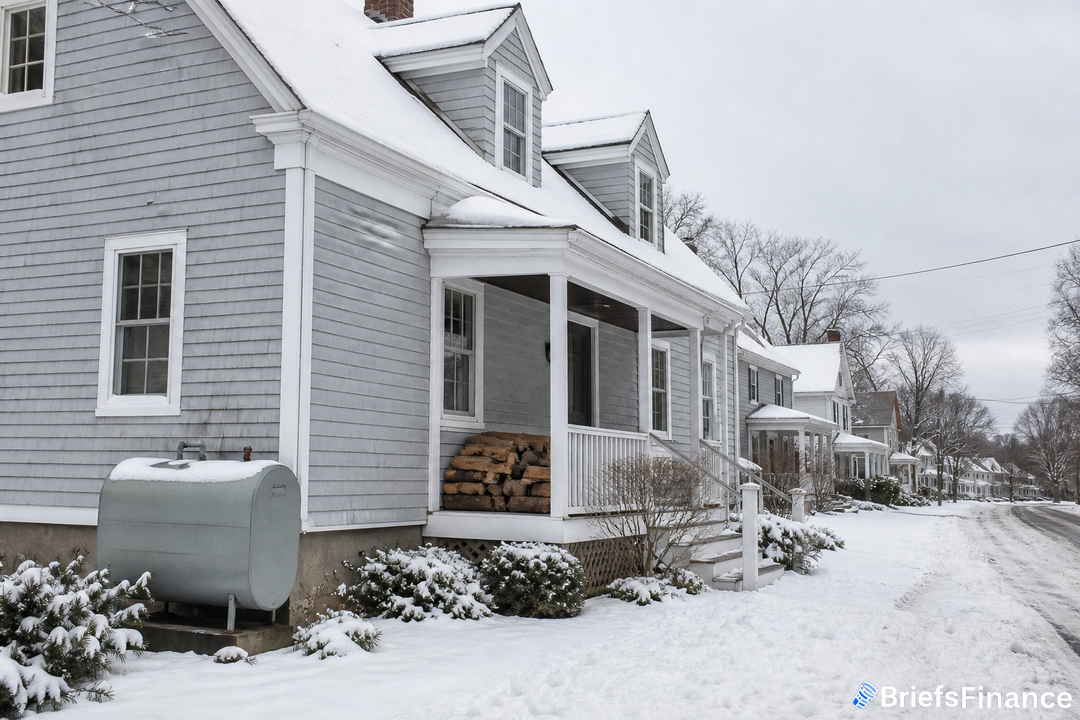
Heating season is adding to the squeeze. Nighttime lows across much of Maine are nearing freezing just as heating oil hit a record, now averaging $5.96 per gallon, about 80% higher than a year ago amid broader inflation tied to the war in Iran. Filling a typical home tank would run around $1,500 at current prices, and most households will need multiple refills to get through winter.

The math is punishing for renters and homeowners alike. Steve Brown, 35, who helps run partnerships for Portland's minor-league soccer team and owns a sports memorabilia shop, shells out $3,600 a month for a one-bedroom downtown. He said that is "way more" than he paid in Atlanta a few years back. He is leaning toward Collins, but admits he has not followed the race closely.

Her new two-bedroom costs $1,250 a month. With wages just over $20 an hour, even that feels like a stretch with grocery and gas prices where they are. "How is somebody supposed to survive?" she asked.

"I don't understand why it's the way it is, and why we're worried about everything else." She said she is ready for Collins to go, arguing the senator could have done more to keep investors from snapping up homes for short-term rentals aimed at vacationers. "Somebody in Congress should be making sure people are being held accountable for that," she said. "At the end of the day, you're screwing the hardworking Maine people."

Others are persuaded by attacks on Jackson's record. "I'm not really particularly thrilled with Susan Collins, but Troy Jackson raised taxes for everything, and now he's like, 'Oh, the state's unaffordable,'" said William Bradford, 62, of Saco. "It's like, dude, you were the people in power and you raised all the taxes!"

Election issues reveal which costs households actually feel most. Market Briefs covers the cost of living free every weekday.

How the candidates are framing it

Jackson, 58, leans into his Allagash roots, his thick northern Maine accent and a Boston Red Sox cap that rarely leaves his head. He casts himself as a labor champion from the logging woods who, as a lawmaker, helped deliver paid family and medical leave and ensured public schools provide free breakfast and lunch.

"It's about prioritizing what we do in this country," Jackson said at a late September event in Portland.

Jackson has also hammered Collins over a ProPublica story from September alleging she received campaign contributions in exchange for steering defense contracts. Collins has denied any bribery.

Collins's allies lean on her bipartisan branding. They point out she opposed Trump's tariffs on Canada, an important trading partner for Maine, and pressed the administration to free up heating assistance funds. Only three Senate Republicans opposed last year's One Big Beautiful Bill Act, and she was one of them; the measure included Medicaid cuts, although she backed a procedural step that let it advance. She also joined Democrats on a resolution to curb Trump's war powers in Iran that ultimately failed.

Citing the funding she has steered to local projects, Collins said, "They help communities address critical needs without raising property taxes, which means real savings for the people who live there."

The state of the race and what it means for your wallet

Ads are everywhere. With a $37 million edge in spending tracked by AdImpact, Collins and an allied PAC are unloading spots accusing Jackson of hiking costs such as property taxes during his time in the state Senate. Jackson's team says he helped push through property tax relief for seniors and others.

Voters are torn on who would better handle the squeeze. A New York Times and Siena University survey last month found a 47% to 47% split on cost-of-living competence. That same poll put Collins up 3 points among likely voters, while other recent surveys show a narrow Jackson lead.

A Marist University poll published Tuesday had Jackson ahead 51% to 47%. Only 25% in the Times/Siena poll approved of Trump's handling of cost-of-living issues.

For household budgets, the stakes are straightforward. Higher home prices and rents are reshaping what it costs to live in Maine, and heating oil at $5.96 a gallon means bigger winter bills. However the politics land, those line items are what many voters will be weighing between now and Election Day.

Heating and housing are becoming the economic issues that decide races. Join Market Briefs free and follow the debate.

Disclosure

Recent News

1 2 3 … 94

Get Market Briefs delivered to your inbox every morning for free!

No fluff. No noise. No politics. Just finance news you can read in 5 minutes.

Blogs

October 5, 2026
What Is the Briefs Connector? A Simple Guide
  • The Briefs Connector lets your favorite AI read Briefs research, like Pro reports and the Briefs Score.
  • Without it, an AI asked about investing can give answers that sound right but aren't backed by that research.
  • It explains the research, but it won't tell you what to buy or sell.
Read More
October 5, 2026
Is a Recession Coming? What the Last Five Rate Hiking Cycles Say
  • The Fed has started raising rates again, and in the last five hiking cycles going back to 1994, a recession never started while the hikes were underway.
  • The pain showed up where there was a bubble to pop - housing in 2008, dot-coms in 2000, the pandemic money-printing boom in 2022 - and usually after the hikes ended.
  • Private equity and private credit are feeling this cycle first, and how far the pain spreads depends on how high rates go and how long they stay there.
Read More
October 2, 2026
Fed Interest Rates May Rise Again in 2026 - and the Newest Culprit Is AI
  • Fed Governor Barr told a meeting our head of investing research attended that higher rates are likely in 2026, lower inflation may not come soon, and AI is now pushing prices up.
  • The same week, President Trump asked the biggest AI companies to police themselves under an accord that's morally but not legally binding, because the White House sees AI as a race with China.
  • Higher rates put downward pressure on asset prices and squeeze borrowers, but the way through hasn't changed: own investments, buy on a schedule, and treat downturns as discounts.
Read More
October 1, 2026
Housing Market 2026: Why Office Buildings Are Cracking Before Houses Do
  • Office buildings are selling for 80% to 95% off because their five-year loans are resetting at much higher rates while half-empty floors have gutted the income those buildings are valued on.
  • Housing is under pressure, not cracking: a $400,000 mortgage costs $975 more a month than at 3%, but six of every seven mortgages are still under 6% and those owners are staying put.
  • Whether pressure turns into cracks is a race between unaffordability and the economy, and either way Jaspreet's rule is to treat your house as a liability and buy only what you can afford.
Read More
September 30, 2026
Dividend Investing vs. Growth Investing: Why the Slower Portfolio Can End Up Bigger
  • "What stock should I buy?" is the wrong first question. Growth, income, or wealth preservation comes first, and the goal changes which stocks even make sense.
  • At $500 a month for 30 years, 13% growth builds about $1.75 million. 10% growth plus a reinvested 4% dividend builds a little more than $2.2 million and pays a little more than $80,000 a year.
  • Income investors have US dividend ETFs, REITs, and international dividend funds to study. Growth investors have the Nasdaq 100, AI and chip funds, and small caps. None of it is a recommendation.
Read More
September 29, 2026
Why Is Gold Going Down? A 5.2% Treasury Yield Just Took Its Job
  • President Trump rejected Iran's deal to reopen the Strait of Hormuz, oil prices jumped back up, and gold fell instead of rising.
  • Treasury yields hit their highest level in more than 20 years, so investors sold gold and bought Treasuries that pay interest.
  • Higher Treasury yields make the national debt, mortgages, car loans, and credit cards more expensive, with the Fed's next rate decision due October 28.
Read More
September 28, 2026
The Strategic Bitcoin Reserve: Why the Government Wants Bitcoin to Explode
  • The US government holds about 328,000 Bitcoin, worth roughly $25 billion, and since a 2025 executive order it keeps seized coins instead of selling them.
  • Washington wants a bigger pile of assets so its $40 trillion national debt looks smaller next to them, which lets it keep borrowing and spending.
  • Bitcoin's wild price swings, and a government holding a coin built to escape governments, are the two risks investors need to watch.
Read More
September 25, 2026
BRIEFS EXCLUSIVE: 43% Of Respondents Say Bills Outran Their Income Over Past Two Years
  • 43% of the 494 Market Briefs readers surveyed said their bills grew faster than their income over the past two years, even though 79% could cover a surprise $5,000 expense tomorrow.
  • Half of readers own gold or crypto, the two classic bets against a weaker dollar, and only 13% bought nothing at all in the last 12 months.
  • The median reader says it takes $150,000 a year to feel financially secure, about $62,000 above the U.S. median household income.
Read More
September 25, 2026
The Economy Is Booming. So Why Did Stocks and Bonds Fall Together?
  • S&P Global says the US economy is growing at its fastest rate since 2021, with corporate profits up 28.9% in a year, almost four times the historical average.
  • Stocks and bonds fell at the same time, which is not how the two markets normally behave, because Treasury yields above 5% now compete with stocks for investors' money.
  • Jaspreet Singh lays out three ways to invest through a shift like this: always be buying, buy the crash, or follow the money before it hits the headlines.
Read More
September 24, 2026
The 2026 Economic Reset Is Starting: Are We in a Recession, or Is the Pain Still Ahead?
  • The Federal Reserve has flipped from stimulating the economy to fighting inflation with higher interest rates, while the White House still wants growth at almost any cost.
  • The national debt tops $40 trillion, has outgrown the entire U.S. economy, and its interest payments are now the government's fastest-growing expense.
  • Higher rates bring pain for private equity, private credit, and speculative assets, but they open opportunities for investors holding cash, treasuries, and value assets.
Read More
1 2 3 … 28
Share via
Copy link










