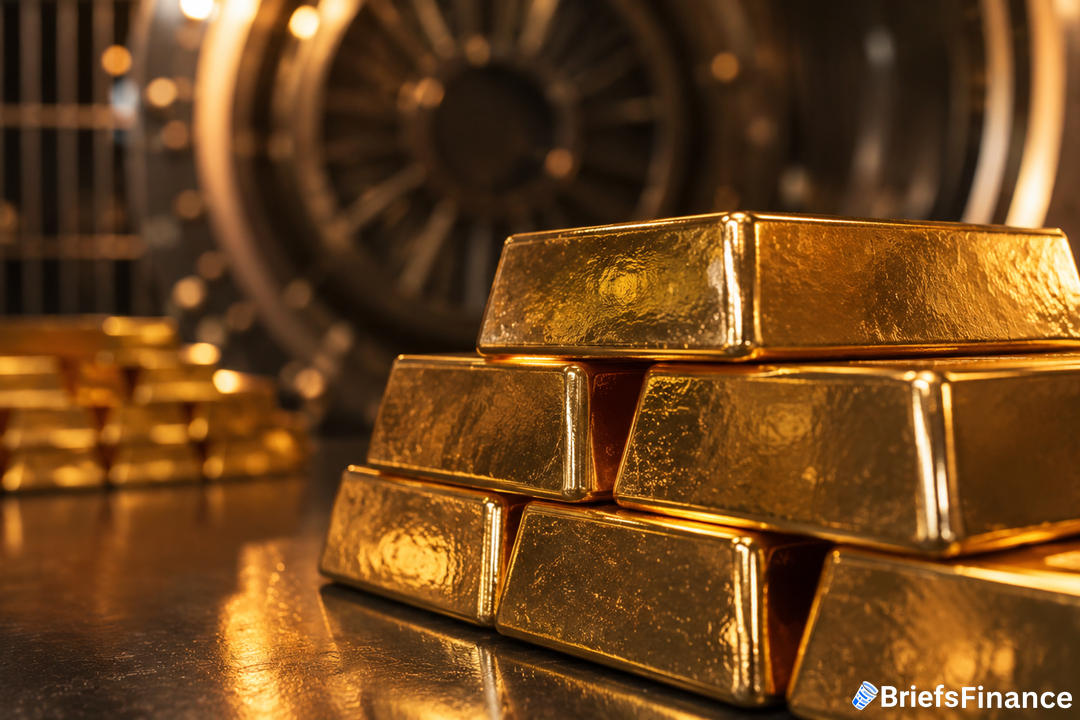
Gold stabilized on Thursday as investors balanced unexpectedly mild inflation figures with rising military action in the Middle East, looking for signals on the Federal Reserve's next move.
It had gained 0.2% in the prior session. Silver remained unchanged at $57.78 per ounce.
Both platinum and palladium saw slight declines. The Bloomberg Dollar Spot Index held steady after falling 0.3% during the previous session.
The June inflation numbers were softer than expected. A core measure of U.S. producer prices indicated that inflationary pressures were weakening ahead of the recent escalation in the Iran conflict. According to a chart in the Bloomberg article, the weaker-than-expected inflation data reduces the likelihood of the Fed raising rates.
A truce that was signed last month has almost completely collapsed. Washington has conducted airstrikes for five straight days, and President Donald Trump vowed to ramp up the bombing until Tehran ceases assaults on vessels and reopens the Strait of Hormuz. Oil prices rose for a fourth consecutive day on Thursday.
Get the market news that matters in a five-minute read with Market Briefs, our free daily newsletter
The Strait of Hormuz is a vital waterway for global energy supplies, and any sustained disruption could send crude prices soaring and worsen inflationary pressures worldwide.
In recent weeks, gold has been trading near $4,000 per ounce. The decline was fueled by expectations that the central bank would raise borrowing costs to curb inflation stemming from the conflict, making the non-income-generating metal less attractive.
The surprisingly steep drop in June inflation may have given the U.S. central bank additional breathing room to weigh its policy options. Yet with the conflict intensifying once more, any relief could be temporary.
Fed Chair Kevin Warsh has stated unequivocally that raising interest rates remains one tool available to keep inflation at its 2% target, but he has balanced that stance with a readiness to wait. During a Wednesday exchange with lawmakers, he dismissed the notion that massive investments in artificial intelligence are fueling inflation and also reiterated that he has repeatedly told Trump he operates independently.
Fed Governor Lisa Cook offered a contrasting view on AI's influence, saying in remarks Wednesday that she would not hesitate to tighten policy if inflation remains elevated. Meanwhile, New York Fed President John Williams stated that current interest rates are "well positioned" to guide inflation back to the Fed's 2% objective.
The Bloomberg Dollar Spot Index fell 0.3% in the previous session and was flat at the time of this report.
The price of silver held at $57.78 an ounce, unchanged from the prior session.
Background: Gold's recent volatility reflects a tug-of-war between two powerful forces. Historically, bullion thrives during geopolitical crises but suffers when central banks signal tighter monetary policy. The Q2 2026 sell-off - the steepest in over a decade - was driven by hawkish Fed bets that surged as the Iran conflict initially pushed oil and inflation higher. Now, with June's inflation surprise giving policymakers pause, and with airstrikes threatening global energy flows, the metal is once again caught between a falling dollar, safe-haven inflows, and the lingering risk of rate increases.
Join Market Briefs, our free daily newsletter, for a quick daily rundown of the markets