The Fed's preferred inflation gauge is about to show more damage from the Iran war.
Economists expect the Personal Consumption Expenditures price index, or PCE, to come in hot when April's reading drops, with the Bloomberg consensus putting it close to 4% year over year.
The Fed's target is 2%.
What PCE Is And Why It Matters
PCE is the inflation measure the Federal Reserve actually uses to set policy, so think of it as the Fed's main thermometer for the economy - when it runs hot, the Fed leans toward higher rates and tighter conditions.
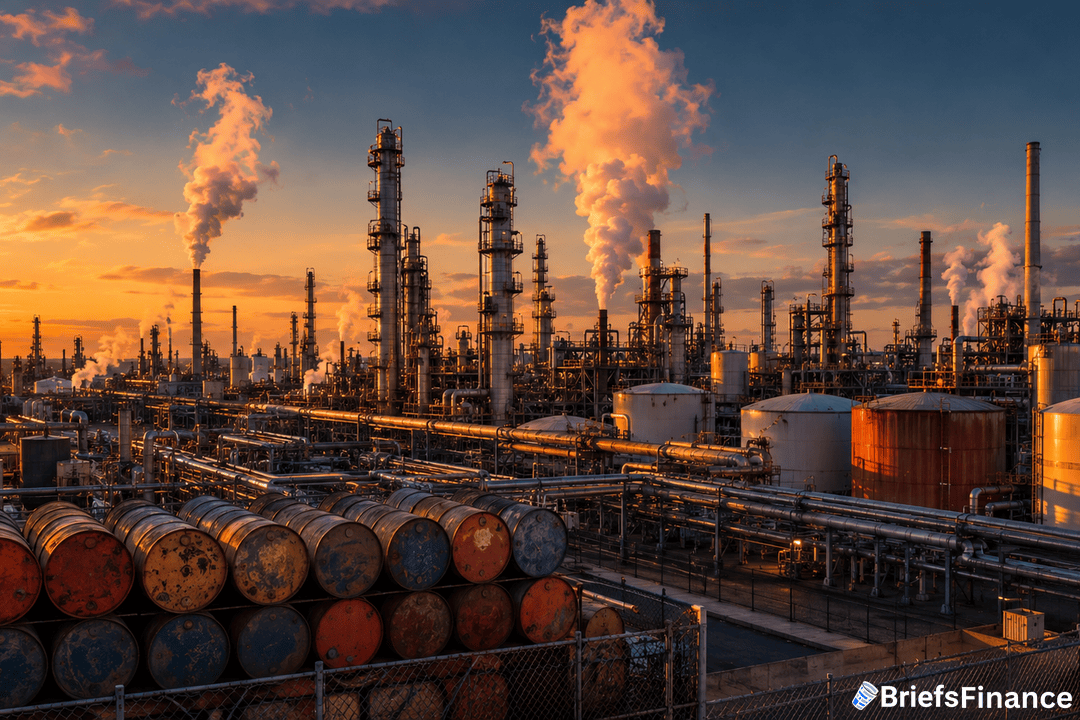
Energy is doing most of the heavy lifting on this print, because oil prices spiked when the war started in late February, and the Strait of Hormuz, which normally moves about a fifth of the world's oil, is still mostly closed.
Federal Reserve Bank of Dallas economists modeled the impact and projected West Texas Intermediate crude would peak around $94 per barrel through April and May, with April CPI - a related inflation measure - coming in at the highest annual reading in three years.
We break down what inflation data actually does to your portfolio every morning in Market Briefs, and a free investing masterclass comes with the signup.
Why This Is Worse Than A Spike
A one-off jump in energy prices is uncomfortable, but it usually washes out of the data within a couple of months.
The concern this time is that it does not. Scott Lincicome, vice president at the Cato Institute, told CBS News that PCE could hit 4% by year-end.
The International Energy Agency said in a recent report that the war will keep global natural gas supplies tight for two years, which moves the conversation from "transient" to something stickier.
Higher energy prices also seep into everything that runs on a truck, with diesel feeding grocery costs, fertilizer prices, and airfare - each of which feeds back into the broader inflation picture over time.
Worth Noting
Treasury Secretary Scott Bessent has called the spike "transient" and said it should subside when the war ends.
Bond markets disagree, with 30-year yields at their highest since 2007 and 10-year yields near 4.67%, while two-year yields, which track Fed expectations, sit at a one-year high.
A 4% PCE print would put the Fed exactly where it does not want to be, with prices running double its target and a labor market that is still mostly intact.
If you want a daily five-minute take on what the next PCE release means for your money, sign up for Market Briefs, and you also get a 45-minute investing course as a bonus.