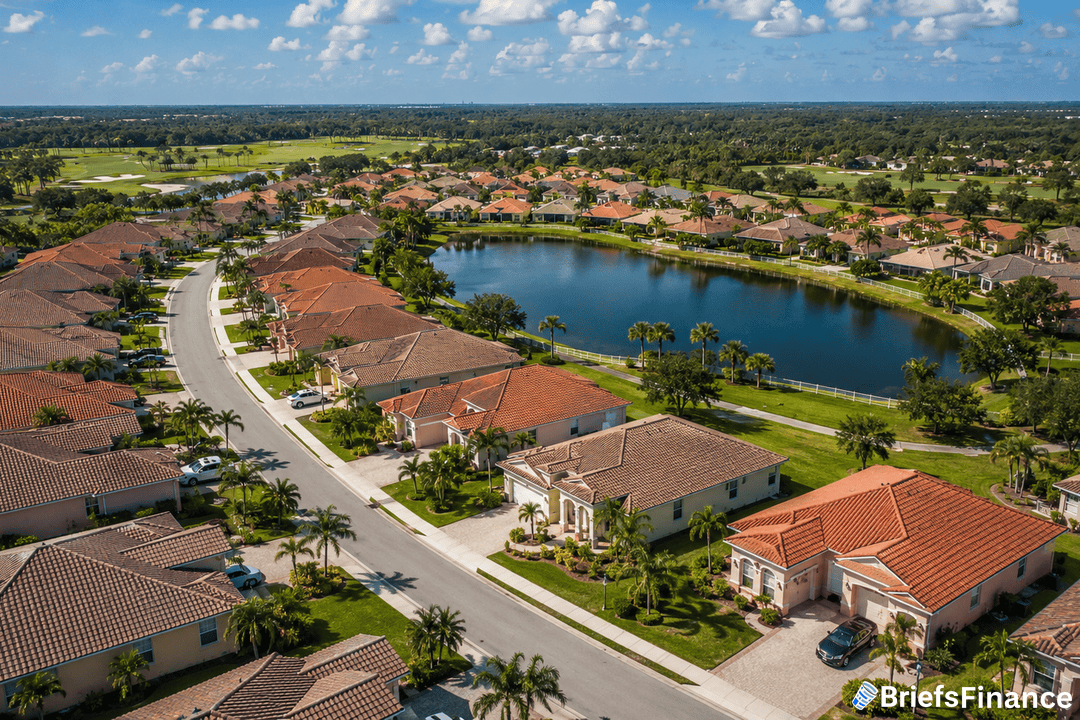
Florida's governor wants to scrap property taxes for most of the state's homeowners, but the catch is figuring out who pays for the schools, hospitals, and police those taxes have been funding.
Ron DeSantis announced the plan in Tampa Wednesday, and he is calling lawmakers back to Tallahassee on Monday for a three-day special session to vote on it.
What The Plan Actually Does
The proposal raises Florida's homestead exemption, the dollar amount homeowners can shave off their home's value before property tax kicks in, from $50,000 to $250,000.
For 60% of Florida homeowners, that math zeros out their property tax bill, and DeSantis wants the cap to eventually move to $500,000.
At that level, according to a Florida Office of Economic and Demographic Research report, 76% of homestead parcels would qualify for the full exemption.
Small businesses would get a sweetener too, with the annual assessment growth cap on their property dropping from 10% to 5%, which means commercial property tax bills can only rise half as fast as before.
If you want a daily breakdown of policy moves like this and what they mean for your money, Market Briefs delivers it every weekday morning, with a free investing masterclass when you sign up.
The $60 Billion Question
Property taxes brought in close to $60 billion for Florida local governments and schools last year, according to the Florida Chamber of Commerce, up from about $35.7 billion in 2019.
Local governments pay close to half of all school funding, and counties chip in hundreds of millions a year toward Medicaid.
Hospital districts like Broward Health and Halifax Health run on property tax revenue too.
DeSantis says a new state trust fund would replace the lost local revenue with grants for "core services," which he loosely defined as public safety, education, infrastructure, and natural resources.
The details have not been written yet.
Florida is also one of a small group of states with no state income tax, which means property taxes carry a much heavier share of local funding than in most states, and cutting them without a clear replacement plan worries credit rating agencies and municipal bond investors.
House Democratic Leader Fentrice Driskell pushed back, with her view being that the governor said he wants to protect school funding but did not show how.
"I think there's a reason why the governor didn't want to show his work," she told reporters.
What To Watch
The proposal has to clear three hurdles, starting with three-fifths approval from both the Florida House and Senate, then 60% of Florida voters in November as a constitutional amendment.
A University of North Florida poll in March showed 56% support and 35% opposition, close but not over the line yet.
Senate President Ben Albritton is on board, while the Florida Chamber of Commerce is waiting to see the bill text before taking a position.
New residents would have to live in Florida for five years after January 1, 2027 to qualify, which kills any plan to game the rule by moving in late.
The bill text and the math behind that trust fund land sometime next week.
For more reads like this every morning, sign up for Market Briefs. Your sign-up comes with a free 45-minute investing course on finding opportunities.