What Just Happened
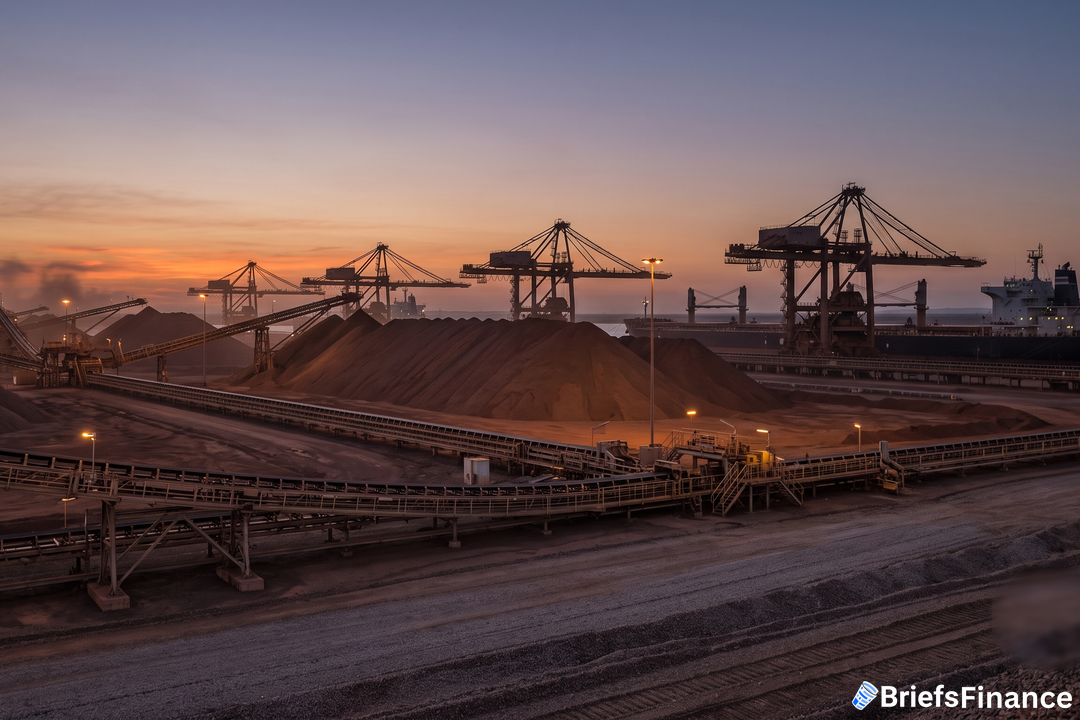
China Mineral Resources Group (CMRG) worked with traders, steel producers, and port terminals to impede Fortescue's shipments, hold back select product categories from July 15 onward, and deter additional purchases.
The move came after talks over a new supply agreement stalled. CMRG demanded that Fortescue maintain the price reductions it had previously granted to separate Chinese steelworks once those transactions were shifted to the centralized channel. Fortescue said no. The company argued those discounts were based on direct customer relationships and should not automatically apply under the new central buying system.
This is not a small skirmish. China imports well over 1 billion tons of iron ore every year.
A Two-Decade Relationship Sours
Fortescue and China's steel industry have grown up together for roughly two decades. In 2009, Chinese steelmaker Hunan Valin acquired a stake in Fortescue, and it is still a major shareholder.
Get the market news that matters in a five-minute read with Market Briefs, our free daily newsletter
But Beijing created CMRG in 2022 to centralize iron ore purchasing. The idea was to give the country more leverage when negotiating with the big miners. The strategy worked with BHP. After similar pressure, BHP signed a one-year supply deal with CMRG.
According to Shaun Browne, who serves as executive chairman for Australian commodity consulting firm AME Group, "CMRG is evolving from a centralized purchasing platform into a more active coordinator of procurement, contract terms and domestic marketing."
Fortescue's executive chairman, Andrew Forrest, has not held back. He criticized CMRG for trying to create a cartel. The faster escalation against Fortescue compared to BHP suggests CMRG now has a repeatable playbook.
The push for centralized purchasing reflects Beijing's broader desire to reduce reliance on a handful of foreign suppliers and stabilize costs for its steel sector. For decades, hundreds of Chinese mills negotiated separately, giving miners like Fortescue room to offer preferential deals based on long-term relationships. CMRG's creation upended that dynamic, forcing miners to deal with a single state-backed entity. Fortescue's refusal to extend its previous discount structure into this new system is the latest test of how far Beijing is willing to go to enforce its buying model.
What It Means for Your Portfolio
This is not just about one miner. Rio Tinto and Vale have not yet concluded long-term supply agreements with China either. Minimally, this new strategy signals a harsher stance toward those other companies.
The pressure on Fortescue already shows up in stock prices. Fortescue shares sit at 18.88, down 1.05% on the day. BHP is at 59.23, up 2.20%.
Rio Tinto trades at 6,867.00, up 1.27%. The moves are small so far, but the uncertainty could grow.
A longer-term question is how this affects China's ability to push its centralized buying strategy into other commodities.
At the same time, China's property sector has been in a prolonged downturn, which makes steel mills even more cost-conscious. That gives CMRG more reason to squeeze suppliers.
For investors, the main takeaway is that the cozy relationship between Australian miners and Chinese buyers is getting a lot less comfortable. Watch how Fortescue navigates this.
Join Market Briefs, our free daily newsletter, for a quick daily rundown of the markets