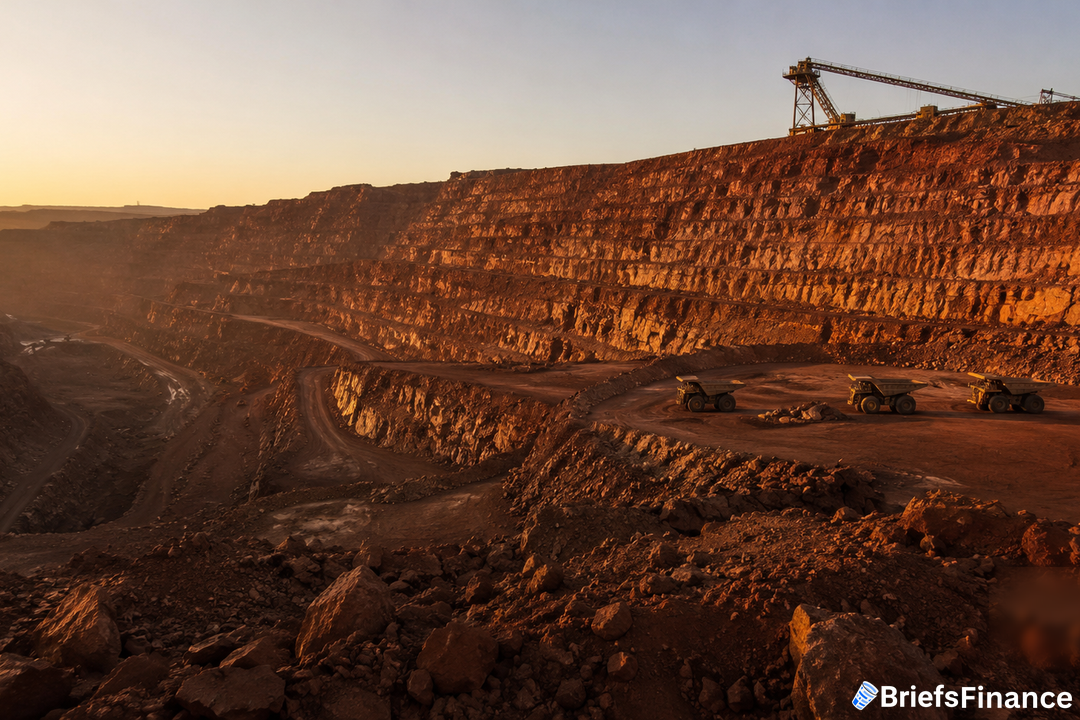
Employees of BHP Group at the Port Hedland facility in Western Australia are set to launch the company's first work stoppage at its Pilbara iron ore hub in over two decades, following unsuccessful last-minute discussions to prevent industrial action.
Starting at 2 p.m. local time Thursday, roughly 200 operators and maintenance workers who are members of the Combined BHP Ports Unions will walk off the job for eight hours. The unions announced that workers and their relatives will assemble for a community gathering.
This strike represents one of the most significant union efforts at BHP's iron ore sites in recent years.
Get the market news that matters in a five-minute read with Market Briefs, our free daily newsletter
Market participants will be monitoring the situation closely to determine if it escalates into a prolonged dispute that could substantially interrupt exports from the largest bulk-export terminal globally. Earlier this week, futures for the raw material used in steelmaking reached $102 per ton in Singapore, the most elevated level since July 2.
A BHP spokesperson stated on Tuesday that the mining giant has contingency measures in place to maintain safe operations. In the previous year, approximately 575 million tons of iron ore were transported through Port Hedland, a facility also utilized by other mining firms that are not impacted by Thursday's strike.
A five-hour negotiation session on Tuesday, overseen by Australia's Fair Work Commission, did not achieve a resolution. The BHP spokesperson remarked at the time that it was "disappointing" that the strike would proceed even though the company had noted advancement in the discussions. Negotiations are scheduled to continue on July 21.
Any prolonged disruption at Port Hedland, which handles more than half of Australia's iron ore exports, could tighten global supply and further boost prices. Unions have indicated they are prepared for further action if no collective agreement is reached, raising the stakes for both sides.
The unions assert that they have been attempting to engage with BHP for over half a year. At the heart of the dispute is BHP's use of personal employment agreements, which the unions say create unpredictable wages and terms that the company can change unilaterally.
BHP reported a 3% decline in iron ore output for the three months ending June compared to the same period last year. Despite the weaker final quarter, full-year production remained steady.
The impending strike adds to a history of labor tension in Western Australia's resource sector. The current dispute underscores ongoing friction between unions seeking collective bargaining and the company's preference for individual contracts, a trend that has reshaped labor relations across Australian mining in recent years.
Join Market Briefs, our free daily newsletter, for a quick daily rundown of the markets