The end of an era and what replaces it
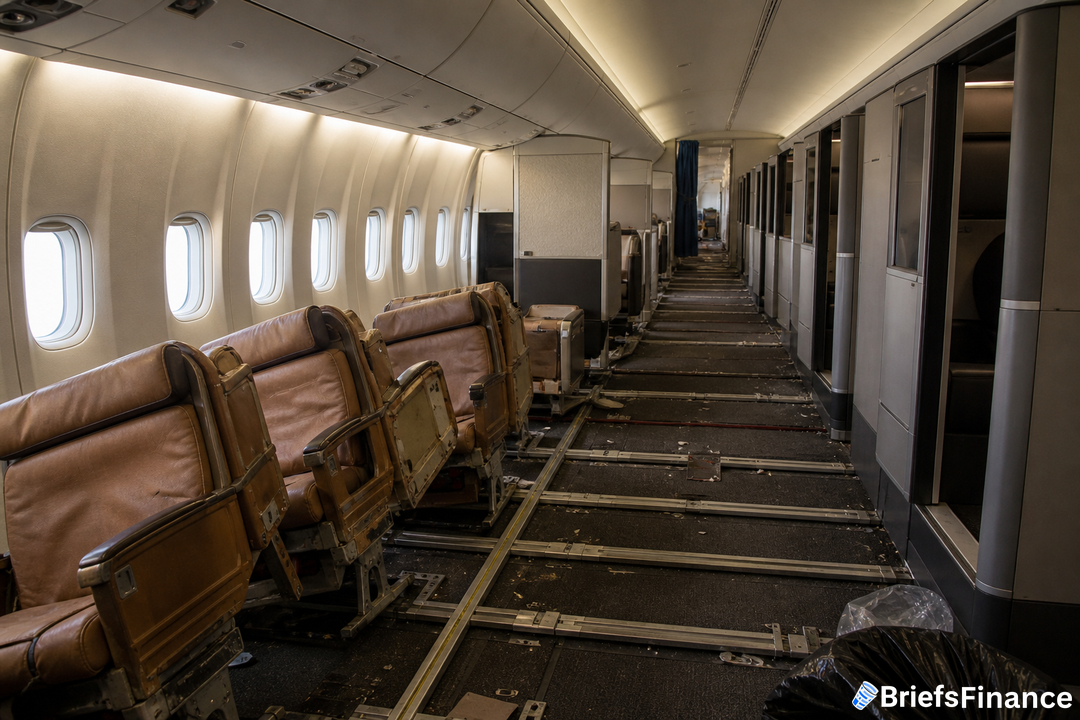
American closed the book on long-haul international first class this week when its final flight with that cabin touched down, ending a jet-age run that once showcased chateaubriand carved at your seat and fine bone china. The 777-300ERs that flew eight first-class suites alongside 52 business pods are being refitted to seat 70 business-class suites, the largest such cabin among U.S. airlines, with the overhaul still underway.
That last international first-class departure left Sydney on Friday morning local time for Los Angeles. American says it is growing business-class capacity across the fleet and is evaluating an increase in suites on its smaller long-haul Boeing 787-8s from 20 today to somewhere in the 30s.
What changed in the premium cabin
U.S. carriers have traded international first class for bigger, upgraded business cabins built around private suites with sliding doors. Delta and United have already replaced first class on long-haul routes with Delta One and Polaris lie-flat suites, and both are getting refreshed. Investments have centered on business class: redesigned suites, larger screens, device-charging pads, and better bedding.
Premium economy now fills the middle ground between business and coach, with recliner-style seats often with foot rests, meals on plates, larger screens than economy, and earlier boarding. The fare menu is also getting chopped more finely. This year, United and Delta each said they would market their priciest cabins with a new Basic-style tier that is more restrictive and excludes perks such as advance seat selection or special lounge access.
Airlines are slicing inside business class too. Examples include American's Flagship Suite Preferred and United's Polaris Studio, and United differentiates guest seating in its suite as "standard and companion ottomans," with the latter outfitted with a seatbelt so you can ask "another Polaris passenger to visit you between takeoff and landing for a drink, chat or game," the airline says. "I don't think we found the limit on segmentation," United CFO Mike Leskinen told CNBC on Thursday. "We have a few things on the drawing board. We're not done."
Why the strategy shifted - and what stayed different
Airlines are betting on mass luxury because customers are paying more for comfort, helping revenue as fuel and landing fees climb. There is also a corporate-policy nudge: some companies allow employees to book business class but not first, pushing demand toward those upgraded business suites.
The price gap was still real. A one-way ticket this week between Los Angeles and London on American's 777-300ER ran $12,994 in business class and $15,669 in first. The soft-product divide had narrowed to minutiae: first class received olives with warm nuts to begin the service, a soup course, and a hot dessert served a la mode, plus the same cold dessert or fruit-and-cheese plate available in both cabins.
When industries evolve, staying informed matters, so sign up for the free Market Briefs to stay current daily.
First class also included a memory foam lumbar pillow; business did not. Otherwise, both premium cabins shared bigger seats, early boarding, lounge access, and better food than economy.
Henry Harteveldt - the founder of Atmosphere Research Group and formerly an airline executive - said, "When you've got individual pods in biz class, and you've got a comfortable enough seat and bedding and decent wine, for a lot of people this is good enough." Early first class doubled as entertainment before laptops, seat-back screens, Wi-Fi, or lie-flat beds, but dining still matters. "People say they want to sleep but then they stay up and they eat every morsel," he said. "They're hypocrites." And seats? "It's not like the bed can go any flatter than 180 degrees," he said, though thicker bedding and nicer food still differentiate.
The global picture and the investor angle
American says it will keep a dedicated first-class cabin with fully flat beds on its Airbus A321T for coast-to-coast domestic flying through early 2027. It also flies a 787-9 subfleet with 51 business suites, and United is adding 64 new suites to that same 787-9 model. International first class is not disappearing everywhere: Singapore Airlines, Lufthansa, British Airways, and Air France are unveiling updated first-class cabins and service.
British Airways also plans a record 106-suite business cabin on its A380 while upgrading first. On March 18, 2025, in Paris, Air France-KLM introduced its latest La Premiere first-class suite.
Closer to home, JetBlue, Frontier, and Allegiant are adding domestic or short-haul first-class seats. Last month, Frontier Chief Commercial Officer Bobby Schroeter said, "We're going to be able to do that at a really low price comparatively to what you're used to out there in the marketplace."
The bottom line: airlines are swapping a handful of ultra-premium seats for many more high-yield business suites, then segmenting those seats further. For your portfolio, watch capacity shifts into premium cabins, new basic-style restrictions at the top end, and where corporate travel policies steer demand.
Changes in travel and consumer choices highlight the value of context; get the free Market Briefs newsletter in minutes each morning.