Free NewsletterPro Login

Warning: Undefined variable $stocks in /var/www/briefs.co/htdocs/wp-content/plugins/oxygen/component-framework/components/classes/code-block.class.php(133) : eval()'d code on line 448

Warning: foreach() argument must be of type array|object, null given in /var/www/briefs.co/htdocs/wp-content/plugins/oxygen/component-framework/components/classes/code-block.class.php(133) : eval()'d code on line 448

Warning: Undefined variable $funds in /var/www/briefs.co/htdocs/wp-content/plugins/oxygen/component-framework/components/classes/code-block.class.php(133) : eval()'d code on line 472

Warning: foreach() argument must be of type array|object, null given in /var/www/briefs.co/htdocs/wp-content/plugins/oxygen/component-framework/components/classes/code-block.class.php(133) : eval()'d code on line 472
/* the link was here */
×
Free investor livestream — Nov 17

How To Use ChatGPT & Claude To Research Stocks Like A Pro

01
The prompt we use to break down any stock
02
How to fact-check what AI tells you
03
How to compare two stocks in minutes

Data centers face rising power tabs as voters and utilities tighten the screws

Published Nov 14, 2026
Share:
Summary:
  • A Democratic sweep, fueled by frustration over home electricity bills, is set to speed rules that make data centers fund more grid upgrades.
  • Applied Digital is seeking multibillion dollar guarantees from big tenants to secure power, while utilities push parent guarantees to shift risk.
  • Indiana's Nipsco built a GenCo structure to fence off big tech power costs, signing 5 GW with room for 4 GW more and projecting $1.75 billion in savings.

Politics meets the power bill

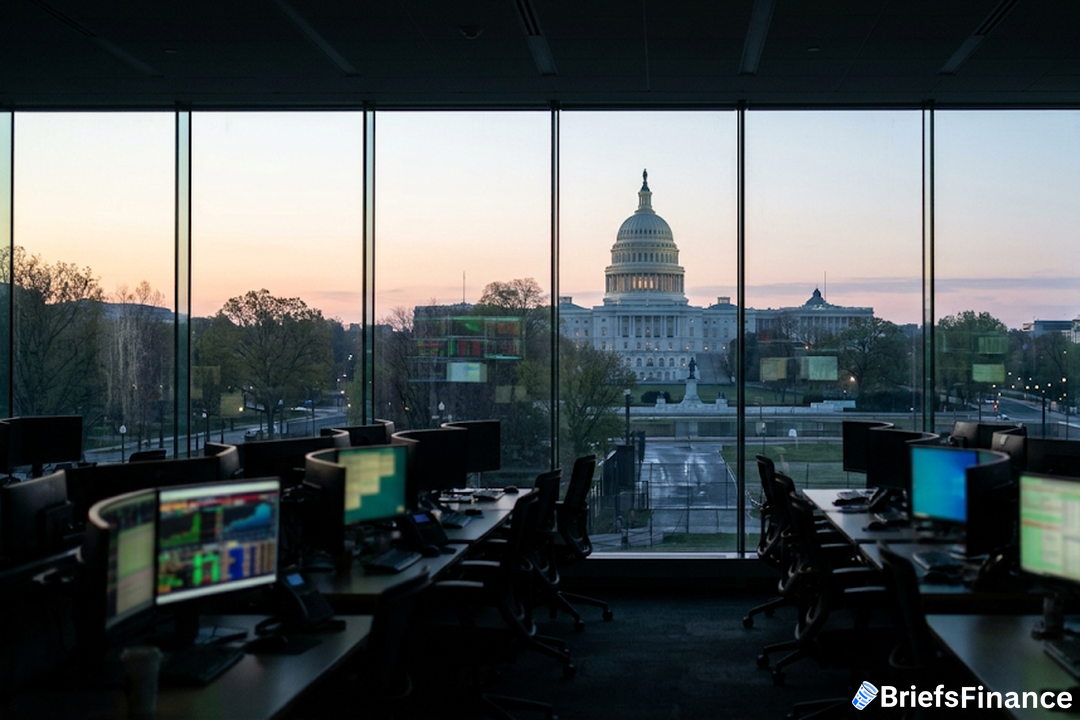
Voters angry over rising electricity costs backed Democrats from Ohio to Texas, and those wins came with vows to shield households from data centers' swelling power needs. That momentum points to tougher financial requirements for firms like Oracle and Amazon.com to underwrite grid buildouts.

"The 2026 midterm elections demonstrate that electricity has become a force in our new politics," said PowerLines founder Charles Hua. Texas Governor elect Gina Hinojosa campaigned on a statewide data center moratorium, and Ohio's incoming senator Sherrod Brown told supporters he does not "work for" data centers or utilities. In Congress, Democratic Senators Elizabeth Warren, Chris Van Hollen and Richard Blumenthal sought details from Amazon, CoreWeave and others on how they pay for energy.

Utilities shift risk - and who gets the lease

For years, utilities funded new wires and plants, then recouped spending through approved rate hikes. Now they want the heaviest users to guarantee the bill if a project unravels, often by extracting a parent guarantee that covers substations and gas plants tied to the load.

If an independent developer signs with a utility, that developer may in turn require guarantees from tech tenants because the liabilities are too large for its own balance sheet. Since at least last year, Applied Digital started requesting multi-billion-dollar guarantee commitments from major tenants such as Oracle and Meta Platforms to lock in power prior to executing leases, according to a person familiar.

The person added that Applied has been seeking case-by-case guarantees from Nvidia and Advanced Micro Devices to support utility interconnections. "With most new sites, you have to build the power and transmission lines yourself," said Applied Digital President Jason Zhang. Representatives for Nvidia and AMD had no comment.

These terms are changing who wins capacity. Applied has set an upper limit on the capacity it will rent to non-investment-grade neocloud firms such as CoreWeave to avoid extra utility requirements. "Applied Digital prefers to do business with investment-grade tenants, with a preferred mix of 70% investment-grade to 30% non investment-grade," said Chief Executive Officer Wes Cummins.

Meta had no comment. Oracle declined to comment. A CoreWeave representative said the company and Applied have a strong partnership and want to expand it.

Barclays estimates that, this year, hyperscalers will float between $300 billion and $320 billion in new debt. Raj Joshi, a senior vice president at Moody's Ratings, said, "If all the components of an AI project - whether it's chips or data center construction or power or the materials going into the data center - go up in pricing, we could see some impact on the ratings."

Indiana's GenCo and Wisconsin's credit bar

Utilities are redesigning structures to protect standard ratepayers. In 2024, Amazon requested power from Northern Indiana Public Service Company in an amount that topped Nipsco's entire existing system load, and it wanted it quickly. The answer was a new unit, NiSource Generation Company, to hold generation assets serving Amazon and other tech giants.

Branded GenCo, the entity effectively functions as a standalone utility serving Nipsco's biggest customers. Under that arrangement, those customers cover the infrastructure and any new generation built for their load, with the intent of keeping such expenses out of future consumer rate cases. "So we asked: What if we did it another way?"

Savvy investors often look to new tools to sharpen their decision making. We're hosting our first ever investor livestream on 11/17 to show you how to use ChatGPT and Claude to invest like a pro, hosted by Briefs Finance CEO Jaspreet Singh. Save your seat.

Amazon had many questions but ultimately agreed. Alphabet's Google also reached an agreement using the GenCo construct. The result was greater speed. Google started receiving power in recent months, Amazon is slated to get electricity next year, and Microsoft signed a large agreement and is expected to be served in 2028.

To date, Nipsco has executed contracts for five gigawatts associated with GenCo and envisions as much as another four gigawatts, enough to power about 6.5 million households. Part of the proceeds return to regular customers in the form of bill credits, and the utility forecasts $1.75 billion in savings. For extra protection, Nipsco requires parent guarantees and other safeguards from large tech customers.

Wisconsin shows the credit angle. Oracle had already agreed to fund electricity service and generation resources for its $15 billion Lighthouse project in the state, developed with Vantage Data Centers and OpenAI. Then in May, Wisconsin's utility regulator, the Public Service Commission of Wisconsin, signed off on new rates from Wisconsin Electric and lifted the minimum credit threshold that lets large customers avoid posting financial security to A- at S&P Global Ratings and A3 at Moody's.

Oracle's rating was below that bar, creating a large obligation. The company sued the regulator in June. "The Commission's decision imposes one of the most stringent - if not the most stringent - credit support requirements I have seen," said Julia Robin, identified on her LinkedIn profile as Oracle's head of infrastructure planning, in an affidavit.

She said a letter of credit would have to exceed $7 billion, with annual costs of more than $100 million. In June, lawmakers also unveiled the Ratepayer Protection Act aimed at shielding consumers from data center electricity costs. Oracle dropped the lawsuit in August.

Spokesperson Michael Egbert said Oracle will keep working with power regulators and the community, adding the "suit had no bearing on our unwavering commitment to pay for our own power needs."

The investor angle

In plain English: grid costs once buried in rate cases are moving into corporate guarantees and contracts. That reshapes who lands leases, when projects energize, and how much borrowing capacity hyperscalers have left for everything else.

Understanding how markets adapt can help investors find an enduring advantage. On 11/17, our CEO Jaspreet Singh goes live for our first ever investor livestream on how to use ChatGPT and Claude to invest like a pro. Register to join him.

Disclosure

Recent News

1 2 3 … 127

Get Market Briefs delivered to your inbox every morning for free!

No fluff. No noise. No politics. Just finance news you can read in 5 minutes.

Blogs

November 14, 2026
Nvidia News: Jensen Huang Is Out, and the "Bank" Behind American AI Just Lost Its Founder
  • Jensen Huang is out at Nvidia over affairs with multiple people, and the company he founded has been the bank of American AI, with about $30 billion into OpenAI and $10 billion into Anthropic.
  • A hotter-than-expected inflation report has Fed officials talking about a possible 0.5% hike in December, and gold, silver, and bitcoin fell on the news.
  • President Trump said the US may not need a deal with Iran, keeping oil prices and inflation risk high. Jaspreet Singh breaks down what it all means for AI stocks and your portfolio.
Read More
November 14, 2026
Record Highs, a 57-Year Low in Jobless Claims, and a Stock Market Bubble: Inside the Weirdest Market in History
  • Stocks are booming at the fastest pace in years, jobless claims just hit a 57-year low, and most investors still feel like nobody is hiring.
  • The Fed is protecting the dollar over the economy, oil swings on every Iran headline, and a few AI companies are carrying an S&P 500 where four of five stocks sit in a correction.
  • Jaspreet Singh explains why circular financing between Nvidia, OpenAI, Anthropic, and SpaceX rhymes with 2008's house of cards, and how his three investing pillars handle a stock market bubble.
Read More
November 14, 2026
Is a Recession Coming? The Fed Just Made a U-Turn It Has Only Made Twice in 60 Years
  • The Fed has raised rates, cut them, then raised them again only twice in the last 60 years, and both times the economy fell into a recession and stocks crashed.
  • The same stop-and-go cycle is playing out now, with one big difference: US debt is 125% of GDP today versus about 30% in 1980.
  • In the 1970s gold rose roughly 24x, real estate 157%, stocks lagged, and cash lost half its value. Jaspreet Singh lays out five assets to consider before the next flip.
Read More
November 14, 2026
The 2027 Tax Brackets Are Out: How Some Investors Can Earn $135,300 and Pay $0
  • The IRS 2027 tax plan keeps the same seven rates but widens every bracket and lifts the married-filing-jointly standard deduction to $33,200.
  • The 0% long-term capital gains bracket rises to $102,100, so a household living on $135,300 of investment income could owe $0 in federal income tax.
  • C corporations still pay 21%, small businesses keep the 20% QBI deduction, and the 401(k) limit climbs to $25,500 with an $8,500 catch-up for investors over 50.
Read More
November 14, 2026
Rare Earth Stocks: Why China's January 2027 Ban Could Be the Opportunity of the Decade
  • China plans to block rare earth exports to the US on January 10, 2027, and the US produces effectively zero of the 17 metals that go into phones, cars, dishwashers, and missiles.
  • When China cut off Japan in 2010 and squeezed Germany from 2015, some rare earth prices jumped 18x and 15x, and one rare earth company went bankrupt while another soared.
  • Washington is already putting billions into MP Materials, Vulcan, and a stockpile called Project Vault, and Jaspreet Singh walks through how investors can get exposure to rare earth stocks and ETFs.
Read More
November 14, 2026
Divided Government Just Changed Where the Money Moves: 5 Market Shifts After the Midterms
  • Democrats took control of Congress, setting up a divided government with a Republican White House, and the biggest spender in the economy is about to change where it spends.
  • The day after the election the market had one of its best days of 2026 while AI stocks, Tesla, and SpaceX fell and clean energy, healthcare, treasuries, gold, and silver rose.
  • Jaspreet Singh maps the five places money is already moving and the history that says stocks rose in the 12 months after each of the last 19 midterms.
Read More
November 14, 2026
Buy the Dip or Run? What the Market's Worst Day in Years Is Telling Investors
  • The stock market posted its worst day in years one day after its best day of 2026, splitting investors into a buy-the-dip camp and a this-time-is-different camp.
  • The Fed rescued markets in 2000, 2008, and 2020, but inflation is already a problem and the Fed has committed to protecting the dollar instead of the stock market.
  • Jaspreet Singh explains why nothing material changed in 48 hours and lays out a phased way to buy the dip without betting everything at once.
Read More
November 14, 2026
The AI Bubble Isn't Jamie Dimon's Biggest Worry. The Credit Crisis Behind It Is.
  • Jamie Dimon, CEO of America's biggest bank, told Bloomberg his real concern isn't the AI bubble but the borrowing behind it, because the market "will ask for more and more and more."
  • Credit spreads sit near 1.5%, a level last seen in February 2007 and January 2000, right before the last two bubbles burst.
  • Credit crises move in five stages, from boom to pullback, and Briefs Finance CEO Jaspreet Singh maps where 2026 sits and how investors can prepare.
Read More
November 3, 2026
How to Budget Every Payday: 5 Moves So You Never Worry About Money
  • A median earner could make about $4.7 million over a career, yet most retire with closer to $13,000 in the bank because of a keeping problem, not an income problem.
  • Audit your money, save $2,000, pay off credit card debt, then automate a 75/15/10 split across three bank accounts.
  • Earn more only after your system is in place, then protect what you build with an accountant, attorneys, the right insurance, and an estate plan.
Read More
November 3, 2026
How to Invest in Stocks: 5 Things to Do Before You Invest Your First Dollar
  • Paying off credit card debt at around 22% interest beats the stock market's roughly 10% average, and even Warren Buffett's 19%.
  • Save $2,000 in a separate emergency fund, learn to research with AI, and decide whether you're a growth, income, or wealth preservation investor.
  • Write down a plan for buying during market crashes, which have happened 25 times in the last 100 years.
Read More
1 2 3 … 32
Share via
Copy link