What is being discussed
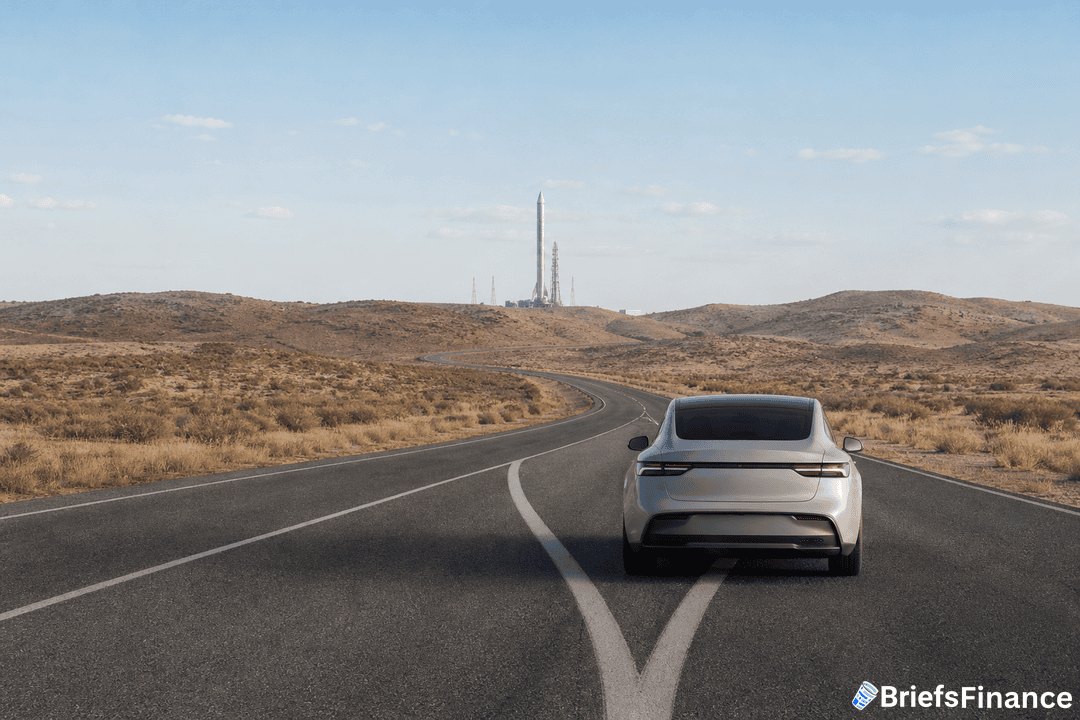
Musk has publicly backed the idea of folding SpaceX into Tesla and asked directors to study it last month. People familiar with the talks say an agreement could be revealed as early as next month. The aim is to centralize his businesses under one roof to wring out synergies while he pursues costly, speculative projects that range from humanoid robots to space-based data centers and Mars plans.
Another clear motivation is index math. Being in the S&P 500 would require roughly $16 trillion tied to index trackers to own the combined company's shares regardless of shifting outlook or profits. An S&P spokesperson declined to comment, pointing to its longstanding rule against commenting on market chatter. Tesla and SpaceX did not answer emails seeking comment.
Why the index angle matters and how big it could be
SpaceX listed in June and quickly reached a valuation of up to $2.6 trillion, even though it brought in $32 billion over the twelve months through September. Based on Friday's prices, Tesla plus SpaceX would be worth nearly $3.5 trillion, which would slot the merged outfit as the S&P 500's fifth largest member.
Index inclusion is mechanical. Steve Sosnick, who is the chief strategist at Interactive Brokers, said, "If you hold an S&P index fund or ETF in your 401(k) or investment account, the manager of that fund is compelled to buy every stock in the index in proportion to its weight." "As a result, you own all those stocks whether you knowingly intended to or not." Reid Noch at TD Securities estimates a combined company's addition could spark roughly $100 billion of index-fund buying.
The IPO also forced a split response from index providers. Nasdaq revised its rules to fast track SpaceX's entry into the Nasdaq 100, a gauge followed by about $800 billion. S&P Dow Jones Indices chose not to alter its criteria for so called megacap IPOs such as SpaceX.
Big shifts in how companies organize can open fresh opportunities for thoughtful investors. We're hosting our first ever investor livestream on 11/17 to show you how to use ChatGPT and Claude to invest like a pro, hosted by Briefs Finance CEO Jaspreet Singh. Save your seat.
The roadblocks and possible paths into the S&P 500
SpaceX does not yet meet all S&P 500 entry requirements, which include at least one year of trading history and profitability over the prior four consecutive quarters, though current estimates suggest it could meet that profitability test by the middle of next year. Index inclusion after a merger is not automatic either. If a merged Tesla-SpaceX is not added, passive funds would need to sell shares they likely receive in the deal.
The simplest legal path would be Tesla acquiring SpaceX, even though SpaceX is the larger company, but few expect it to be structured that way. Analysts also argue there is a solid case to let the merged entity keep Tesla's current S&P 500 seat even if Tesla is the company being acquired, since that would support continuity, representativeness and limit unnecessary churn in the index.
Campbell Harvey, a finance professor at Duke University, said, "This one really raises the stakes." "This could soon be the largest company in the world, and it's difficult to make the case for it to be excluded from the most important index in the world."
What this means for your portfolio
Both Tesla and SpaceX have been spending billions in cash and say they plan to keep investing heavily in new ventures, while worries about how durable the AI boom will be are weighing on stocks. Last month, SpaceX logged its first profitable quarter. Tesla has wrestled with uneven US demand and tougher competition abroad, and it just discontinued the Cybertruck, which had become a flashpoint tied to Musk's right-wing politics as he took on a key adviser role to US President Donald Trump following Trump's return to the White House.
Valuation risk is part of the story. Tesla shares are down 13% this year and still change hands at more than 180 times expected earnings, versus 18 for the S&P 500 overall. A merged giant would tilt the benchmark even more toward technology, which already carries a heavier weight than at the dot com peak, with more AI names likely on the way as Anthropic PBC prepares to go public and expectations are that OpenAI will follow next year. Brent Leadbetter, who heads RAFI distribution at TMX Group Ltd.'s VettaFi, said, "Our large cap indexes are moving a little bit more down the road of becoming effectively AI investment instruments." "You're becoming more concentrated and that concentration brings risk."
For index investors, the mechanics are straightforward. If the combined company gets into the S&P 500, passive funds will have to buy it. If it does not, they will have to sell what they receive. That flow alone can move prices around the edges.
Learning to use smarter tools helps investors make clearer decisions over time. On 11/17, our CEO Jaspreet Singh goes live for our first ever investor livestream on how to use ChatGPT and Claude to invest like a pro. Register to join him.