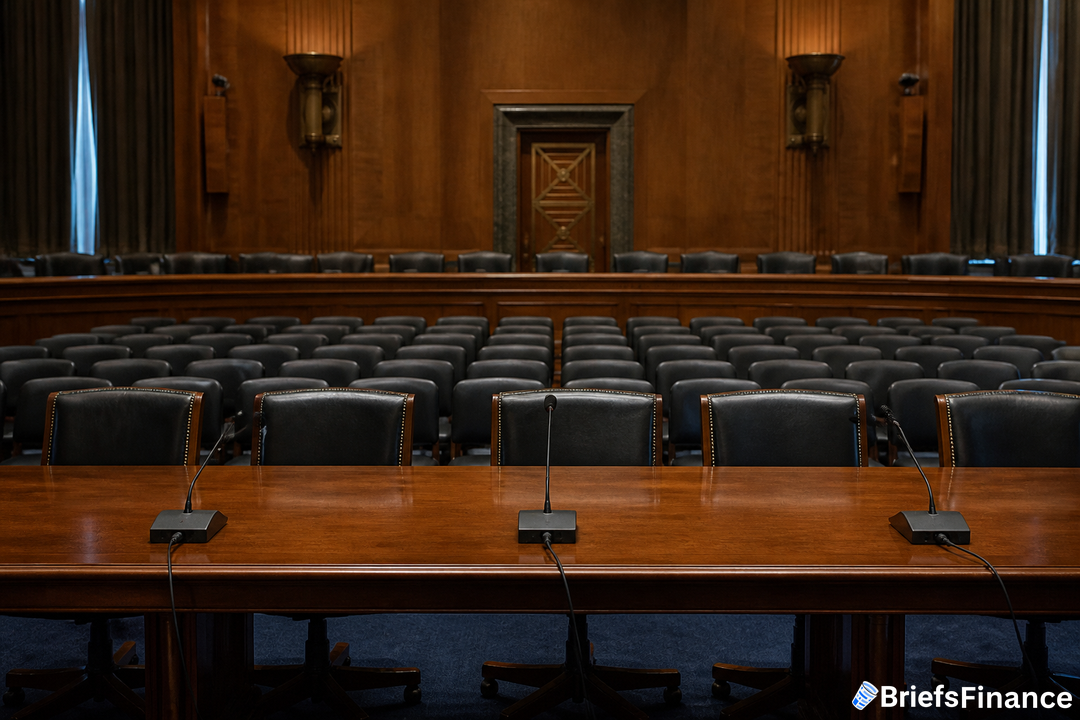
What the White House announced
On Friday, the White House said President Donald Trump created a special committee to dig into allegations that Federal Reserve Governor Lisa Cook lied about aspects of "one or more mortgage instruments." The directive, signed Wednesday, appeared on the White House's site and was amplified on social platforms the same day it was announced.
No outside arbiters are part of the setup. The memo states that the panel will "investigate the allegations against Governor Cook and report to me whether there is 'cause' for Governor Cook's removal" consistent with the Supreme Court's guidance. Trump, addressing Attorney General Todd Blanche in the document, also wrote, "As President, it is my job to ensure the laws are faithfully executed, including by firing subordinates who cannot be trusted to tell the truth and follow the law."
Who is on the panel and what comes next
The appointees are:
- Kevin Hassett, portrayed as Trump's senior economic adviser and one of the administration's foremost champions of its economic performance.
- Keith Sonderling, labeled as the Labor secretary and the interim leader of the Office of Government Ethics.
- Andrea Lucas, the chair of the Equal Employment Opportunity Commission.
According to the notice, the panel can consult the Department of Justice along with other agencies "to aid in its inquiry." The memo sets an in-person meeting for Nov. 5 at the White House, which falls two days after the midterm election.
Pressure on central bank independence has measurable costs in bond yields. Market Briefs covers that tension free every weekday.
How we got here, and why this is unusual
Trump has been pushing to oust Cook, a Biden nominee, while pressing the Fed to cut rates. He recently said his chosen chair, Kevin Warsh, has not lowered rates because the board is "hostile." Last year, after officials claimed Cook had lied on at least one mortgage-related document, she forcefully denied it and sued to stop her removal. A federal court issued a temporary block, and in June the Supreme Court narrowly upheld that pause.
The high court did not foreclose a second try. Rather, the justices found the first try fell short on due process and said any renewed bid must go through further procedural hurdles. The Federal Reserve Act permits a president to oust a governor solely "for cause." In August, White House aide Dan Scavino wrote to Cook that Trump was again "considering" firing her over the mortgage allegations.
Trump's new committee is extraordinary. Similar presidential panels have not been used in nearly 100 years. There is no modern parallel, though President William Taft in 1912 formed a committee to examine the Board of United States General Appraisers, and in 1931 President Herbert Hoover convened one to look into remarks made by the head of the Navy League. The Supreme Court, in its June decision temporarily blocking Trump's first attempt to fire Cook, pointed to Taft's committee.
Pushback from Democrats and Cook's legal team
Democrats blasted the move. Sen. Elizabeth Warren, D-Mass., said Trump is "convening an illegitimate show trial in his dangerous quest to illegally take over our nation's central bank." She added, "Instead of playing judge in a kangaroo court of his own making, Trump should end the war in Iran and cancel his chaotic tariffs." Senate Minority Leader Chuck Schumer, D-N.Y., wrote on X that Trump "is escalating his smear campaign against Lisa Cook while turning the presidency into a personal ATM: crypto schemes, taxpayer-funded propaganda ads, cash for his family - the list could go on forever." He said this is "about Trump trying to seize control of the Fed," which he argued would mean more turmoil for households.
Cook's attorneys, Abbe Lowell and Norm Eisen, were blunt: "In light of the President's repeated statements that he has already decided to fire Governor Cook - regardless of the facts and evidence - we have grave doubts that this 'hearing' is a legitimate one that would conform to the law." They added, "But if it is anything close to objective, the conclusion will be that Governor Cook did not commit mortgage fraud, leaving no cause to remove her from the Federal Reserve Board." They also said, "We have engaged with the White House to evaluate whether the process proposed has a possibility of being a genuine one and not simply a box checking exercise. Governor Cook welcomes the opportunity to present the facts so she can clear her name and demonstrate there is no legal basis to fire her."
The Fed declined to comment and directed CNBC to Cook's attorneys.
Why it matters for your money
This fight is not about a single official as much as it is about who steers monetary policy. Challenges to the Fed's independence can unsettle rate expectations, which filter into mortgage costs, savings yields, and the broader economy. With a hearing on the calendar, fresh legal steps in play, and open political crossfire, the governance of the rate-setting body is in the spotlight again. However it resolves, the path of rates and the perception of central bank autonomy are what hit your wallet.
Markets price political risk to the Fed the same as any other risk. Join Market Briefs free and follow it.