Agents change the workload mix
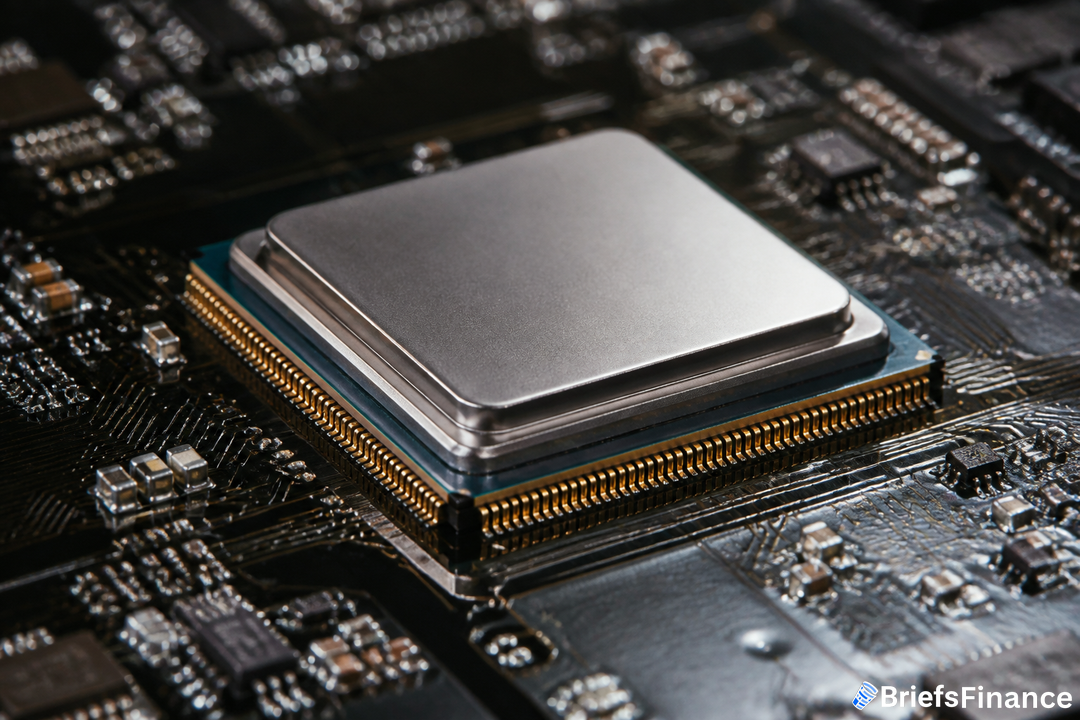
Remember when CPUs were the default engine of a server? That changed when GPUs took over after ChatGPT jump-started the generative AI boom. Now the pendulum is swinging back as long-running AI agents shine a spotlight on CPUs again.
OpenAI rolled out its agent Dots last week. Meta got there earlier with Muse in early September, and it climbed to the top of the Apple App Store in under two weeks. Those launches are not just hype. They are steering certain jobs away from GPUs and toward CPUs. As Ryan Shrout of Signal65 put it, "As more agents are created and developed, and more people start to use them for more tasks, it's going to start to shift the workload away from GPUs and onto CPUs."
How agents run - and why CPUs are key
Agents such as Muse and Dots, and tools like OpenAI's Codex, set plans and run autonomously. They need a computer that can keep working for hours or days in the background, said Futurum Group CEO Daniel Newman. His take: "CPUs are actually performing the workflows while GPUs are doing the thinking."
Users have been asking these agents what powers them. Muse tells people it runs on an AMD-based system. Dots said it operates on a virtual machine using an AMD EPYC CPU. Meta and OpenAI lean on virtual machines to slice a single server into many smaller ones, letting a lot of users share the same hardware. Some AMD EPYC chips pack up to 192 cores, and according to benchmarks and the agents, Muse's VM uses two cores while Dots uses nine.
On the cost front, CPUs come cheaper than GPUs. Benchmarks and queries point to Dots using an AMD EPYC 9V74 that resellers list for under $3,000. Reports say Meta uses an EPYC 9D25 for Muse that goes for less on secondary markets. Nvidia's GPUs can run at more than ten times the price for a single unit, and they are commonly deployed in bunches of hundreds or thousands.
The chip that wins the AI agent era may not be the one winning training. Market Briefs covers semiconductors free every weekday.
Who buys what - and who is winning
Most servers inside the biggest clouds - Amazon, Google, Meta and Microsoft - run on CPUs from Intel or AMD. Meta told CNBC it avoids locking into one vendor. "We take a diverse approach to our hardware and are largely CPU-agnostic by design, which gives us the most flexibility in acquiring capacity," a spokesperson said. OpenAI also uses more than one CPU supplier.
Nearly every major cloud is working on custom silicon too, often using Arm designs. In March, Arm unveiled a CPU built for agents, naming Meta as its inaugural customer, and its share price has more than doubled since. Nvidia is not sitting out either. Earlier this year it introduced Vera, a redesigned CPU, and showed off a rack filled only with those processors.
According to the company, Vera is aimed at agent workloads, and it projects CPUs could reach a $200 billion market size by 2030. Even so, analysts say this category is not Nvidia's home turf right now.
The money math and the market reaction
Demand is showing up in the numbers. In the quarter that ended in June, AMD's data center revenue rose to $6.7 billion - more than double year-ago levels - and accounted for nearly 60% of company sales. Dan McNamara, an AMD senior vice president who leads the compute and enterprise AI group, said, "The conversation has changed quite a bit over the last eight to 10 months in terms of agentic usage." He also noted that CPU sales are set to "really ramp."
Investors are watching the costs of serving these agents. Sensor Tower data shows Muse downloads have climbed past 5 million since its launch last month. Morgan Stanley pegs Muse's monthly serving cost between $3 and $130 per user depending on how much inference is needed, with an average of $37. The firm believes Meta's agent may make up 20% of AMD's chip sales in 2026.
Forecasts are getting bigger. Futurum's latest view puts total CPU sales at $118 billion in 2027, nearly twice its May forecast. In July, AMD said it sees the CPU market reaching $220 billion in 2030, up from a previous forecast of $60 billion for 2025, and that it expects to capture more than half.
Mercury Research reported in August that AMD holds about 46% of x86 CPU units, while Intel is also experiencing strong demand. AMD's position with hyperscalers - where lots of these agent VMs will run - and its x86 compatibility help, since agents can use older software without compatibility headaches.
Meanwhile, markets have taken notice. Year to date, AMD and Intel have been strong performers, and in the last month AMD jumped 32% and Intel rose 21%, topping tech's megacaps. AMD's growing presence across CPUs and GPUs has lifted it into the trillion-dollar club.
What it means for your money
AI agents are changing how work gets done under the hood, and that is shifting real dollars. The rise of Muse and Dots, the move to virtual machines, and the price gap between CPUs and GPUs are driving more CPU-heavy deployments. With serving costs under the microscope and forecasts being revised upward, chipmakers from AMD and Intel to Arm and Nvidia are building product roadmaps around agents. If you are tracking where the next wave of AI spending lands, the action is tilting toward CPUs - and that is showing up in revenue, shipments and stock performance already.
A shift back toward CPUs would reshuffle the entire chip trade. Join Market Briefs free and watch the turn.