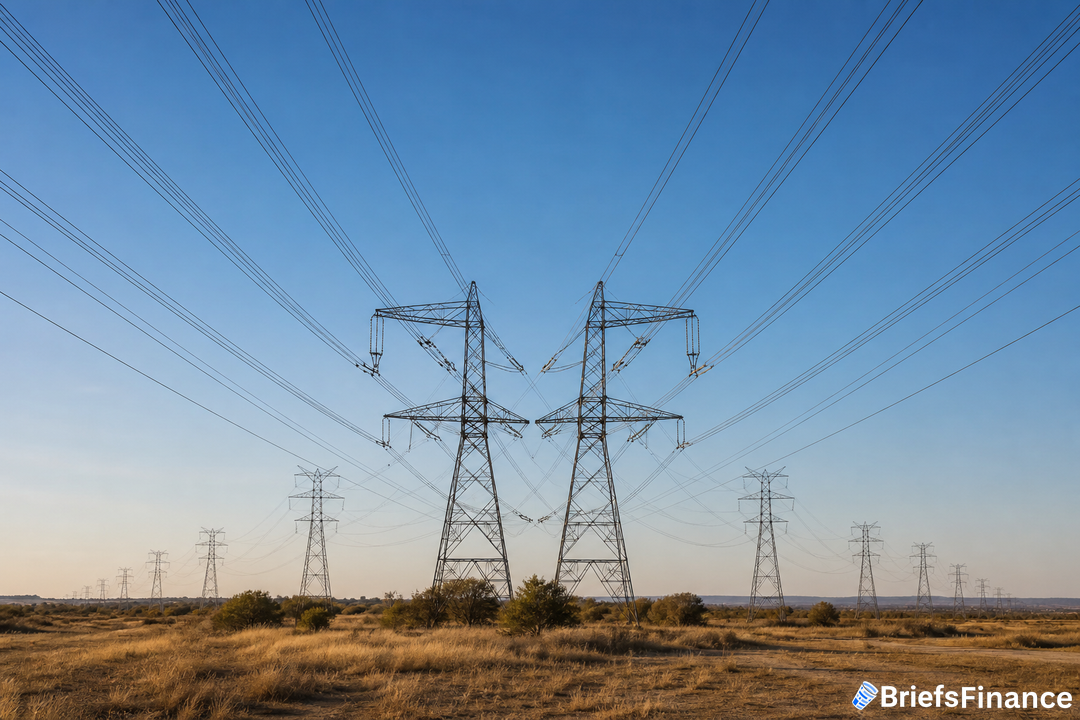
The pitch: bigger scale for a power-hungry decade
Electricity demand is rising as everything from heat pumps to data centers plugs in, and AI's appetite is a big part of that story. Emera Inc. and Canadian Utilities Ltd. say joining forces gives them the heft to chase large-load customers and go after major expansion projects. Roughly 60% of the new entity will be held by Emera's investors, and the company will keep the Emera name with its headquarters remaining in Halifax.
What the combined company looks like
On day one, the pair expect to field an enterprise value around C$72 billion and serve approximately six million customers from Florida to Alberta. The partners bill this as the biggest one-time tie-up of two Canadian corporations, adding that the combined utility should place within North America's top 20.
Utility mergers decide what households pay for power for a decade. Market Briefs covers these deals free every morning.
Where the customers and assets are today
Emera operates four electric and natural gas utilities serving over 2 million customers in Canada, the US, and the Caribbean. About 70% of Emera's earnings come from Florida, where it also maintains a US headquarters. Canadian Utilities supplies transmission and distribution infrastructure for electricity and natural gas, serving more than 3 million customers across North America.
ATCO Ltd., the parent company, operates Puerto Rico's power system via LUMA, its joint venture with Quanta Services. Under the agreement, ATCO will carve out the rest of Canadian Utilities' businesses into an independent public entity focused on industrial services, with activities spanning housing, defense, port investments, and retail energy.
Investment plan, timing and advisors
The companies outline a C$32 billion capital program through 2030 aimed at large-scale electrification, gas and transmission development, and other big infrastructure builds. They aim to close the merger during Q3 or Q4 of 2027. Emera's lead financial advisor is Lazard, with Scotiabank also providing advice, and Osler, Hoskin & Harcourt LLP acting as legal counsel. For ATCO and Canadian Utilities, the lead financial advisor is Gordon Dyal & Co., and Blake, Cassels & Graydon LLP serves as legal counsel.
What this means for your portfolio
If you pay an electric bill, this is the kind of mash-up that can reshape where utilities pour money next: think bigger grid projects, more transmission, and service built for high-demand customers. For investors watching from the sidelines, the takeaway is simple: utilities are scaling up to meet a power cycle that looks a lot more intense than the last one.
Regulated assets are attracting capital precisely because they are predictable. Get the free Market Briefs daily newsletter and follow the consolidation.