Free NewsletterPro Login

Warning: Undefined variable $stocks in /var/www/briefs.co/htdocs/wp-content/plugins/oxygen/component-framework/components/classes/code-block.class.php(133) : eval()'d code on line 448

Warning: foreach() argument must be of type array|object, null given in /var/www/briefs.co/htdocs/wp-content/plugins/oxygen/component-framework/components/classes/code-block.class.php(133) : eval()'d code on line 448

Warning: Undefined variable $funds in /var/www/briefs.co/htdocs/wp-content/plugins/oxygen/component-framework/components/classes/code-block.class.php(133) : eval()'d code on line 472

Warning: foreach() argument must be of type array|object, null given in /var/www/briefs.co/htdocs/wp-content/plugins/oxygen/component-framework/components/classes/code-block.class.php(133) : eval()'d code on line 472
/* the link was here */

Turkey and U.N. set early-October Black Sea talks to steady grain flows

Published Oct 1, 2026
Share:
Summary:
  • Turkey and the U.N. are arranging early-October meetings in Russia and Ukraine to explore a Black Sea ceasefire aimed at safeguarding grain shipments.
  • The push began in September with backing from major powers, using Swiss NGO Center for Humanitarian Dialogue envoys as go-betweens, and looks to revive the 2022 shipping framework that later unraveled.
  • Intensifying strikes on Black Sea ports by Russia and Ukraine, which supply over a quarter of global wheat, propelled wheat futures to their highest level in three years in August.

Why negotiators are gathering

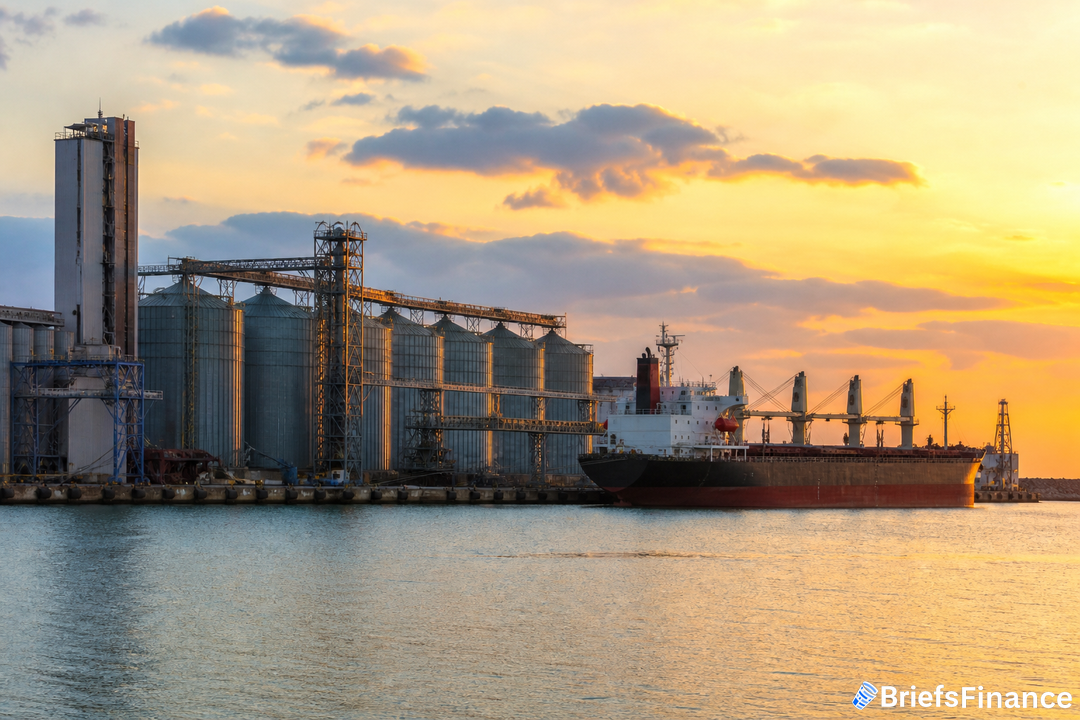
With food costs stretching household budgets, Turkey and the United Nations are rebooting a diplomatic track they kicked off in September to mirror the corridor that moved grain in 2022 before collapsing a year later. The next round is slated for early October and will be held in Russia and Ukraine, with mediators from the Center for Humanitarian Dialogue, a Swiss non-profit, facilitating.

Turkey and the U.N. have credibility here: they also guided the 2022 arrangement that kept grain, fertilizer and food moving out of Ukrainian ports. That narrow truce was one of the rare pauses that stuck for a time during Russia's more than four years of full-scale war on Ukraine. Since it fell apart, countries have struggled to line up any fresh ceasefire plan.

Who showed up and what they discussed

The initial closed-door session convened alongside the U.N. General Assembly toward the end of September. Representatives from the US, Europe, India and Egypt - joined by Turkish officials - attended, with Egypt particularly strained by grain turmoil.

According to a document reviewed by Bloomberg, participants weighed a "narrowly defined and reciprocal arrangement" that would secure free commercial navigation and shield ports and energy infrastructure. The coming talks will elevate the concerns of countries squeezed by rising food prices, with the bet that states further from the battlefield can help move the effort forward. September saw a modest dip in wheat prices as well.

When headlines touch global trade and food security, staying steady matters; get the free Always Be Buying E-Book to learn consistent investing

The obstacles and the market backdrop

Port strikes have intensified on both sides of the Black Sea, and those attacks helped lift wheat futures to a three year peak in August. At the same time, adverse weather is curbing output elsewhere, a strong El Niño is underway, and global food prices are still hovering near multi year highs. The Bloomberg Agriculture Spot Index just notched its strongest quarter since 2022.

Still, the path to a deal looks rough. President Vladimir Putin rejected ideas for a reciprocal pause on Black Sea strikes, arguing at the Valdai Discussion Club on Thursday that proposals to stop attacks on Russian refineries while Moscow pledges not to hit Ukrainian vessels are unbalanced because Russian diesel remains under sanctions. In September, Foreign Minister Sergei Lavrov called a return to the 2022 Black Sea deal "completely unacceptable and unrealistic," alleging Ukraine misused it.

What this means for your portfolio

Together, Russia and Ukraine account for over one-quarter of the world's wheat, and the recent volatility underscores how exposed the market is to Black Sea security and diplomacy. Earlier in September, Turkish President Recep Tayyip Erdogan said he had received a "positive" reply from Ukrainian leader Volodymyr Zelenskyy regarding restoring a grain corridor. Even so, Ukrainian Agriculture Minister Taras Vysotskyi, speaking to Bloomberg News, said he finds no positive indications that shipments will restart in the coming months. The Turkish government's spokesperson did not respond to a request for comment.

As attention shifts between international developments and markets, focus on long-term discipline and download our free Always Be Buying E-Book now

Disclosure

Recent News

1 2 3 … 90

Get Market Briefs delivered to your inbox every morning for free!

No fluff. No noise. No politics. Just finance news you can read in 5 minutes.

Blogs

October 1, 2026
Housing Market 2026: Why Office Buildings Are Cracking Before Houses Do
  • Office buildings are selling for 80% to 95% off because their five-year loans are resetting at much higher rates while half-empty floors have gutted the income those buildings are valued on.
  • Housing is under pressure, not cracking: a $400,000 mortgage costs $975 more a month than at 3%, but six of every seven mortgages are still under 6% and those owners are staying put.
  • Whether pressure turns into cracks is a race between unaffordability and the economy, and either way Jaspreet's rule is to treat your house as a liability and buy only what you can afford.
Read More
September 30, 2026
Dividend Investing vs. Growth Investing: Why the Slower Portfolio Can End Up Bigger
  • "What stock should I buy?" is the wrong first question. Growth, income, or wealth preservation comes first, and the goal changes which stocks even make sense.
  • At $500 a month for 30 years, 13% growth builds about $1.75 million. 10% growth plus a reinvested 4% dividend builds a little more than $2.2 million and pays a little more than $80,000 a year.
  • Income investors have US dividend ETFs, REITs, and international dividend funds to study. Growth investors have the Nasdaq 100, AI and chip funds, and small caps. None of it is a recommendation.
Read More
September 29, 2026
Why Is Gold Going Down? A 5.2% Treasury Yield Just Took Its Job
  • President Trump rejected Iran's deal to reopen the Strait of Hormuz, oil prices jumped back up, and gold fell instead of rising.
  • Treasury yields hit their highest level in more than 20 years, so investors sold gold and bought Treasuries that pay interest.
  • Higher Treasury yields make the national debt, mortgages, car loans, and credit cards more expensive, with the Fed's next rate decision due October 28.
Read More
September 28, 2026
The Strategic Bitcoin Reserve: Why the Government Wants Bitcoin to Explode
  • The US government holds about 328,000 Bitcoin, worth roughly $25 billion, and since a 2025 executive order it keeps seized coins instead of selling them.
  • Washington wants a bigger pile of assets so its $40 trillion national debt looks smaller next to them, which lets it keep borrowing and spending.
  • Bitcoin's wild price swings, and a government holding a coin built to escape governments, are the two risks investors need to watch.
Read More
September 25, 2026
BRIEFS EXCLUSIVE: 43% Of Respondents Say Bills Outran Their Income Over Past Two Years
  • 43% of the 494 Market Briefs readers surveyed said their bills grew faster than their income over the past two years, even though 79% could cover a surprise $5,000 expense tomorrow.
  • Half of readers own gold or crypto, the two classic bets against a weaker dollar, and only 13% bought nothing at all in the last 12 months.
  • The median reader says it takes $150,000 a year to feel financially secure, about $62,000 above the U.S. median household income.
Read More
September 25, 2026
The Economy Is Booming. So Why Did Stocks and Bonds Fall Together?
  • S&P Global says the US economy is growing at its fastest rate since 2021, with corporate profits up 28.9% in a year, almost four times the historical average.
  • Stocks and bonds fell at the same time, which is not how the two markets normally behave, because Treasury yields above 5% now compete with stocks for investors' money.
  • Jaspreet Singh lays out three ways to invest through a shift like this: always be buying, buy the crash, or follow the money before it hits the headlines.
Read More
September 24, 2026
The 2026 Economic Reset Is Starting: Are We in a Recession, or Is the Pain Still Ahead?
  • The Federal Reserve has flipped from stimulating the economy to fighting inflation with higher interest rates, while the White House still wants growth at almost any cost.
  • The national debt tops $40 trillion, has outgrown the entire U.S. economy, and its interest payments are now the government's fastest-growing expense.
  • Higher rates bring pain for private equity, private credit, and speculative assets, but they open opportunities for investors holding cash, treasuries, and value assets.
Read More
September 23, 2026
Are We in a Recession? Without AI, America Might Already Be in One - and Washington Knows It
  • The White House attributes about three quarters of U.S. economic growth to AI, and many believe the economy would already be in a recession without it.
  • Washington has three reasons it cannot let the AI boom slow down: staying the world's superpower, outgrowing $40 trillion in national debt, and protecting a government stock portfolio worth billions.
  • Every market goes through booms and busts, and investors who understand the cycle get to buy the downturn instead of panic-selling with the crowd.
Read More
September 22, 2026
Will Interest Rates Go Down in 2026? Where the Money Moves Either Way
  • The Fed is leaning toward higher rates to fight 4% inflation, while the White House and a cracking job market push the other way.
  • If rates rise, money has tended to move toward short-term Treasuries, floating-rate loans, energy, banks and dividend payers.
  • If rates fall, it has tended to move toward gold, silver and Bitcoin, real estate, small caps, the S&P 500 and speculative bets.
Read More
September 21, 2026
How the Federal Reserve Makes Money - and Why It Just Posted Its Biggest Loss Ever
  • For 109 years the Federal Reserve created money, lent it to the U.S. government and handed the interest it collected back to Washington - almost $1 trillion in the decade starting in 2011.
  • Pandemic-era lending locked the Fed into earning about 2% on trillions of dollars while it now pays banks around 4%, producing a record loss of hundreds of billions in 2026.
  • The Fed covers its losses by creating money and the government covers its lost revenue by borrowing, and both feed the inflation that eats at the dollars in your account.
Read More
1 2 3 … 28
Share via
Copy link










