Prices and market moves
Brent pushed past $95 a barrel, with the November contract up 1% at $95.60 as of 8:06 a.m. in Singapore. October WTI added 1% to $91.12 after a 5.2% surge the previous day, its biggest one-day gain in five weeks.
This is the third straight advance as traders price in the chance of supply snarls through Hormuz. As MST Marquee senior energy analyst Saul Kavonic put it, "The rapid escalatory changes over the last 36 hours is driving oil prices higher as the scope for more disruption through the strait, or attacks on wider oil infrastructure, are pricing in as a risk premium."
What just escalated
According to President Donald Trump, the U.S. acted in response to Iran's effort to plant mines in the strait and an assault on an American base, and he warned he would authorize additional strikes if Tehran responded.
Hours later, Iran struck back at Jordan, Bahrain, and Kuwait, which host U.S. bases. IRIB reported that the Islamic Revolutionary Guard Corps said the renewed clashes have "only tightened the lock" on Hormuz. U.S. Central Command said forces "successfully completed a wave of strikes against Iranian military targets Sept. 1," adding that the objectives hit included air-defense sites, radar systems, and mine-laying capabilities.
Flows, policy signals and the backdrop
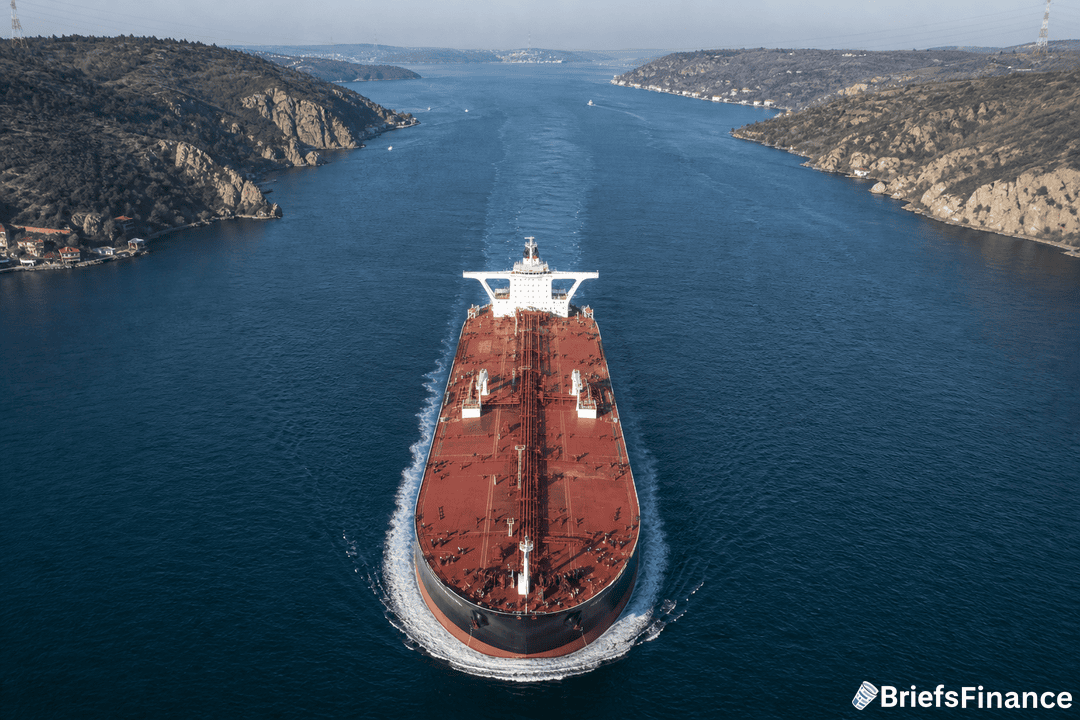
Before the Iran war, about one-fifth of global oil and LNG moved through the Strait of Hormuz. Some oil continues to depart the Persian Gulf, frequently on vessels running with their transponders turned off to avoid detection, yet risks to shipping are still high.
After a lull during which Washington declared a shift from military operations to economic pressure on Tehran, the fighting has resumed. Crude saw little gain last month, yet prices are still up over 30% compared with levels when the war started in late February. Products like diesel have climbed even more, driven by the double hit from the Middle East conflict and the Russia‑Ukraine war.
The money story behind the headlines is usually the part that matters. Join Market Briefs free and get it every morning.
At a news conference after a Group of 20 gathering in Asheville, North Carolina, U.S. Treasury Secretary Scott Bessent said Iran's bankruptcy is in the "acceleration phase." He also said 17 million barrels of crude moved out of Hormuz on Monday and argued that the Islamic Republic does not control the strait.
A document reviewed by Bloomberg said the industry-funded American Petroleum Institute reported that U.S. crude inventories dropped by 2.6 million barrels last week. If official data later Wednesday confirm it, that would mark the first decline in five weeks.
What it means for your money
Energy markets are now hanging on two things: whether traffic through Hormuz keeps moving and how far the U.S. and Iran push this. Add tighter product markets and a possible turn in U.S. stockpiles, and you get a fatter risk premium at the pump and on your power bill. Keep an eye on Gulf headlines and those weekly inventory prints - they are setting the tone for what you'll pay next.