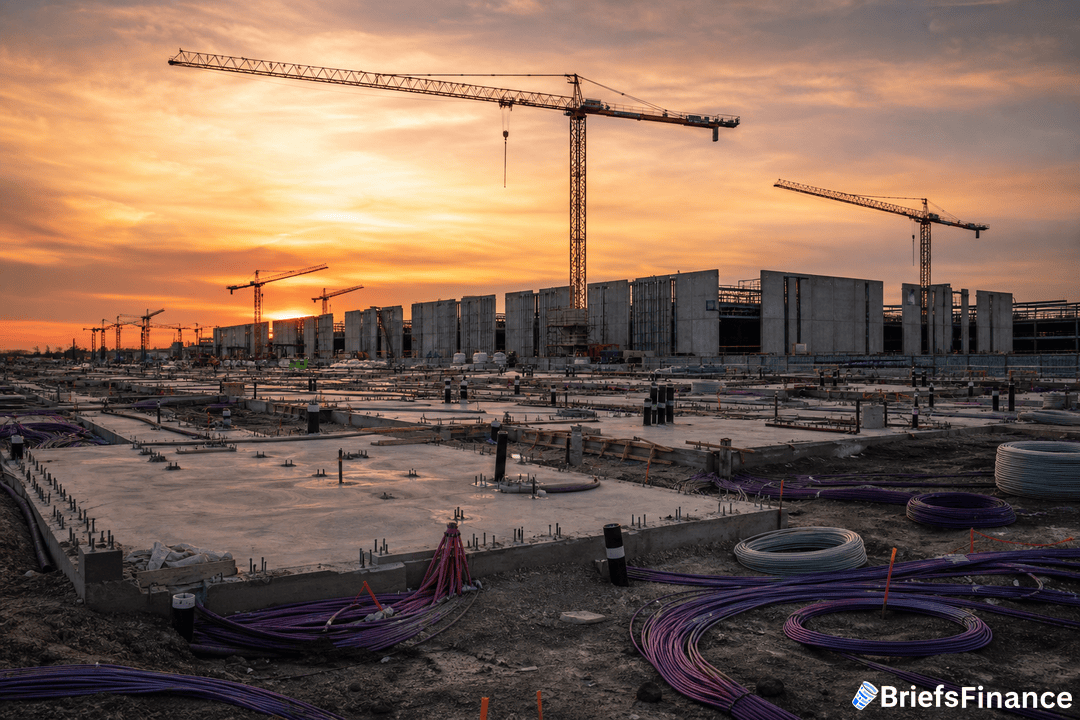
Something unusual is happening inside Britain's data centers, and the money piling into them looks like the year 2000.
The Office for National Statistics revised how it counts this kind of spending, and the new figures tell a much bigger story. Investment activity in 2024 and 2025 reached more than twice the levels recorded a decade prior, climbing back to peaks not seen since the dot-com boom.
According to the ONS, the change shows how data centers have become a crucial part of the country's digital backbone, driven by surging needs for AI, cloud services, and data storage. The revised totals are much higher than initial estimates, which used a narrower methodology.
The UK has long been a hub for data hosting, with the country itself serving as a major connectivity point. But the recent acceleration is tied directly to the explosion of generative AI, which requires massive parallel processing and high-speed data transfer. This shift has transformed data centers from simple storage facilities into power-hungry computing hubs, prompting a wave of new construction across the nation.
AI's compute requirements are met inside data centers, which house the necessary servers and power systems. Building out these facilities is essential for AI, as it demands vast computing and storage resources.
As AI data center spending hits dot-com levels, grab the free Always Be Buying E-Book for a consistent wealth plan
The previous methodology captured only a fraction of the true scale. Under the old counting system, much of the spending on servers, cooling, and networking equipment was classified as different, obscuring how rapidly the sector was expanding. The updated approach now recognizes that these facilities function as critical national infrastructure, similar to how earlier eras treated railways or the electricity grid. This reclassification matters because it gives policymakers and investors a clearer picture of where the economy is heading and which sectors are attracting serious capital.
The economic significance of this shift is profound. Data centers are no longer just storage warehouses; they are major consumers of energy and water, and their construction has ripple effects across construction, engineering, and power generation. As the ONS data shows, the scale of investment is not a statistical blip but a genuine structural change in the economy.
This surge has sparked worries about pressure on resources like energy and water. Bank of England Governor Andrew Bailey has warned that AI may need to be rationed, saying, "a lack of energy capacity will restrain the ability for every economic sector to deploy the technology."
The parallels to the late 1990s are hard to ignore. Back then, telecommunications companies laid fiber optic cable across the country at breakneck speed, betting that internet traffic would explode. Some of those bets paid off handsomely; many others ended in bankruptcy when the bubble burst.
Today's data center developers are making similar wagers on AI's growth trajectory, and the stakes are just as high. The difference is that AI adoption among businesses is already measurable and growing quickly, rather than being purely speculative. Still, the energy constraints Bailey highlighted could prove to be the bottleneck that separates sustainable growth from overbuilding.
What It Means for Investors
The revised figures suggest the UK is in the middle of a genuine infrastructure boom, not just a statistical anomaly. For investors, this means opportunities in construction, power generation, and cooling technology companies that support data centers. But it also carries risk.
If energy capacity cannot keep pace with construction, some projects may sit idle or operate below capacity, hurting returns. The dot-com comparison cuts both ways: it signals enormous potential, but also the possibility of overbuilding if the underlying demand assumptions prove too optimistic.
With digital investment back to boom times, get the free Always Be Buying E-Book to invest on any income