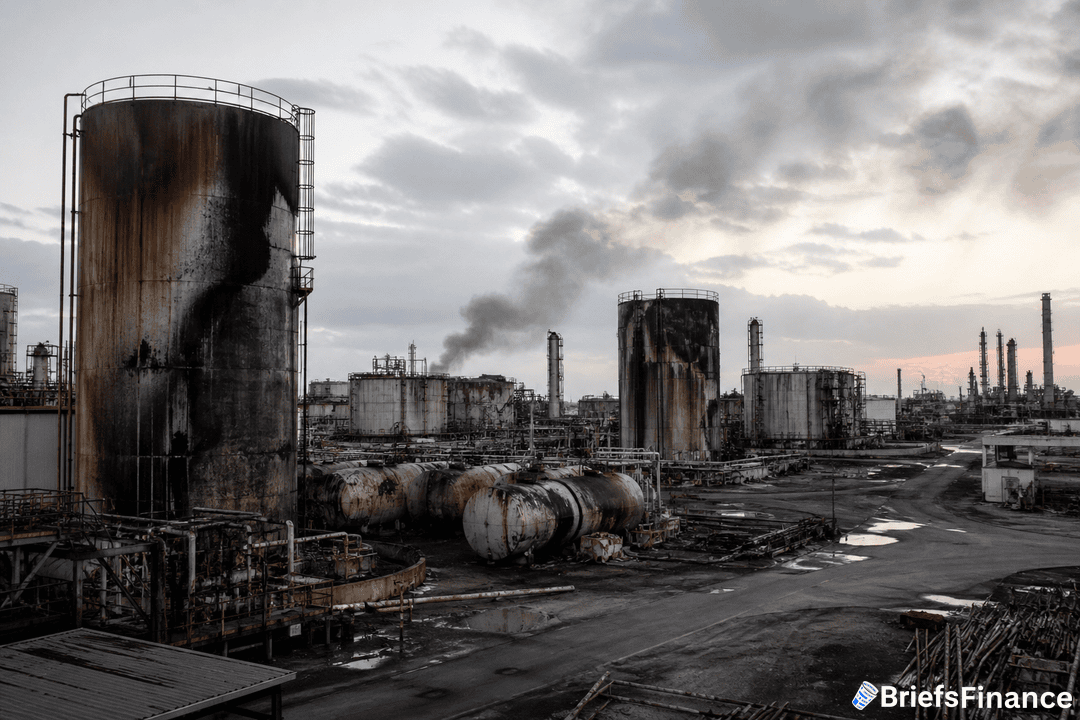
Ukrainian drones have been hitting Russian warehouses and refineries since mid-July. On August 22, 2026, Vladimir Putin publicly acknowledged the damage.
"Those strikes inflict economic damage on our country. They lead to losses," he told Pavel Zarubin in an interview released Saturday. "They are heroes," Putin said of Russian soldiers, insisting no turning point has occurred in the conflict.
Refinery and Warehouse Fires
Overnight strikes in Russia's Samara region demonstrated his point. A photo dated Aug 21 shows smoke rising from the Novokuybyshevsk refinery, located roughly 900 kilometers (560 miles) from the Ukrainian border. Ukraine's military General Staff confirmed the Rosneft facility was the target.
In the same area, Ozon, Russia's No. 2 online retailer, reported a logistics hub caught fire. About 500 employees were evacuated, and the regional governor blamed a massive drone attack.
When conflict disrupts economies, steady investing matters, so get the free Always Be Buying E-Book for a simple wealth system
These attacks have intensified since mid-July. Ukrainian strikes have reached more than a dozen Russian warehouses, many operated by Wildberries, spread across regions from the south to the country's interior. According to expert evaluations reported by Russian news organizations, the company's storage capacity has declined by roughly 17 percent.
Russia's Counterstrikes
Moscow has responded with similar tactics. The Defense Ministry reported hitting a train depot at Darnytsia, a logistics base in Brovary, and fuel storage at Black Sea ports. One railway employee died in the Darnytsia attack, according to Ukrainian State Railways.
Ukrainian civilians have suffered heavily. A two-wave drone attack Friday struck a mall in Kryvyi Rih, killing at least 16 people and injuring 130, including 23 children. The fire covered 9,000 square meters (97,000 sq ft). Saturday's attacks killed at least seven more people across multiple regions, including Odessa, Dnipro, Kharkiv, and Sumy.
Market Implications
Monday marks Ukraine's 35th anniversary of independence, with members of the Coalition of the Willing, a group spearheaded by France and the UK, expected to gather in Kyiv. Putin stated he remains open to peace dialogue "only on the basis of realities on the ground," calling proposals from Kyiv and its supporters unacceptable.
Russia faces domestic economic strain. Deputy Prime Minister Alexander Novak acknowledged tight gasoline supplies. The agricultural minister is preparing support for grain growers whose shipping routes face disruption. While Putin claims there will be no global grain shortage, he has not explained how exports will continue reliably.
These attacks mark a significant evolution in the war's economic front. By targeting logistics and energy infrastructure deep inside Russia, Ukraine has forced Moscow to confront costs that go beyond the battlefield. The strikes have disrupted supply chains, complicated fuel distribution, and added pressure on an economy already grappling with Western sanctions.
When major exporters struggle to move fuel and grain, global prices become less stable. Each warehouse, ship, or refinery hit creates ripple effects. For investors, these disruptions can influence portfolios through energy and agricultural commodity exposure.
As both sides target infrastructure, the true cost appears in supply chains and household budgets. Watching ports, refineries, and harvests offers a clearer picture of where the war's economic pressure points lie.
Economic shocks from abroad are a reminder to build your own resilience with the free Always Be Buying E-Book today