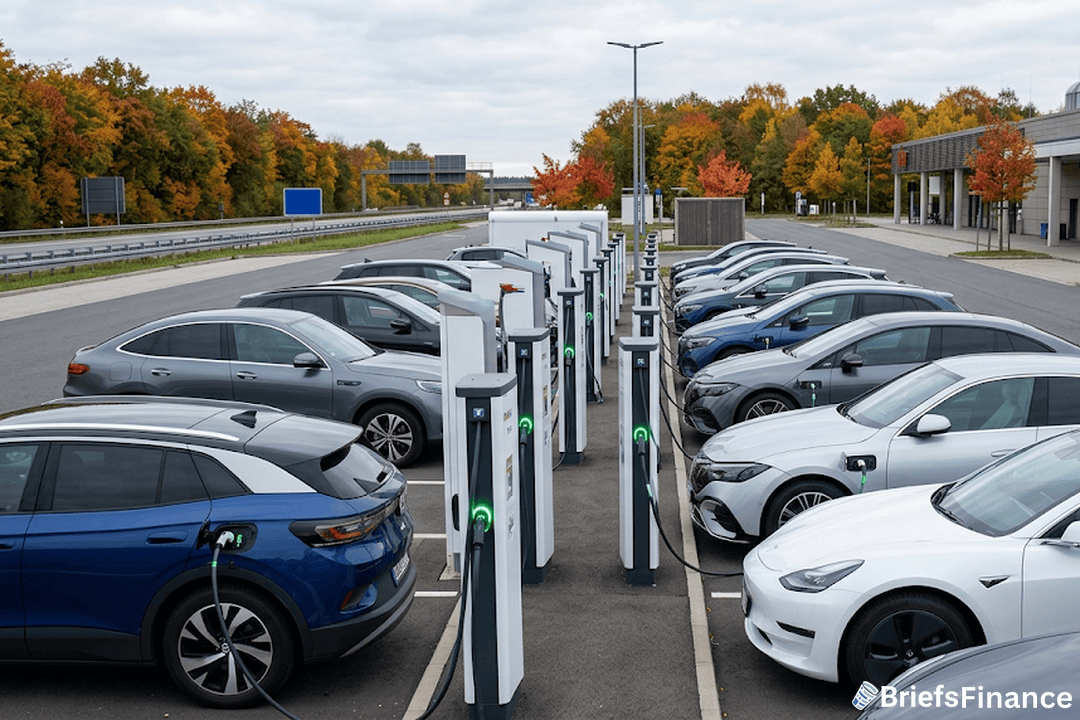
German Drivers Made a Record Switch
There is one number that can change a driver's mind faster than almost anything else: the price at the pump.
In Germany, that number is now steering more people into electric cars than ever before.
Huk-Coburg surveyed German drivers and found that, in Q2, 12% of respondents swapped a gas-powered vehicle for an electric one. That is a record share, and it is more than double the rate from January and February.
The insurer says the Middle East war is a major factor, and the fuel prices back that up. The conflict with Iran began in late February, and after that, German petrol and diesel climbed above €2 ($2.3) per liter, a threshold not crossed since 2022.
When a liter of petrol costs more than €2, it is hard to miss in the monthly budget. That kind of cost gets a driver's attention.
For many drivers, that is the moment the math on an EV starts to look different. A gas car costs more every time you fill up.
When fuel prices jump, the gap between gas and electric widens fast. That is a notable shift in a country where the car has long been king.
Get the free Always Be Buying eBook and learn the simple system for building wealth on any income
Higher Fuel Costs Change the Math
The survey backs that up. Nearly a quarter of German drivers said higher fuel costs alone made them consider or prioritize buying their first EV.
The people who switched are the ones who feel fuel costs the most. Drivers covering more than 12,000 kilometers (7,457 miles) per year adopted EVs, new or used, at a much higher rate than people who drive less.
More miles means more trips to the pump, so every price increase hits harder. That is the kind of driving where the savings from an EV add up fastest.
The fact that both new and used EVs are part of that shift matters. It means buyers are not only chasing the newest models.
That practical focus fits Germany's car-centric culture. The survey looked at drivers who replaced a car, not first-time buyers, so it captures the kind of purchase decision that is driven by running costs. An earlier Huk-Coburg survey had already found EV adoption reaching an all-time high during Q1, helped by a new German incentive program for buying or leasing zero-emission vehicles.
The incentives gave people a reason to switch, and the fuel prices gave them a stronger one. Together, they helped the second quarter set another record.
That is two records in a row, which points to a steady shift rather than a temporary jump.
The Same Shift Is Showing Up Across Europe
The German data matches a broader European pattern. In June, new EVs drove the biggest jump in overall car sales across the continent since late 2023.
That shows the shift is not only about one country's fuel prices. Electric cars are becoming a bigger part of the new-car market across the region.
Fuel is often the biggest everyday cost of running a gas car, so when prices climb, the case for an EV gets stronger. That is especially true for people who drive a lot.
If fuel prices stay high, that math gets harder to ignore. More drivers are likely to reach the same conclusion.
Download the free Always Be Buying eBook and start putting your money to work today