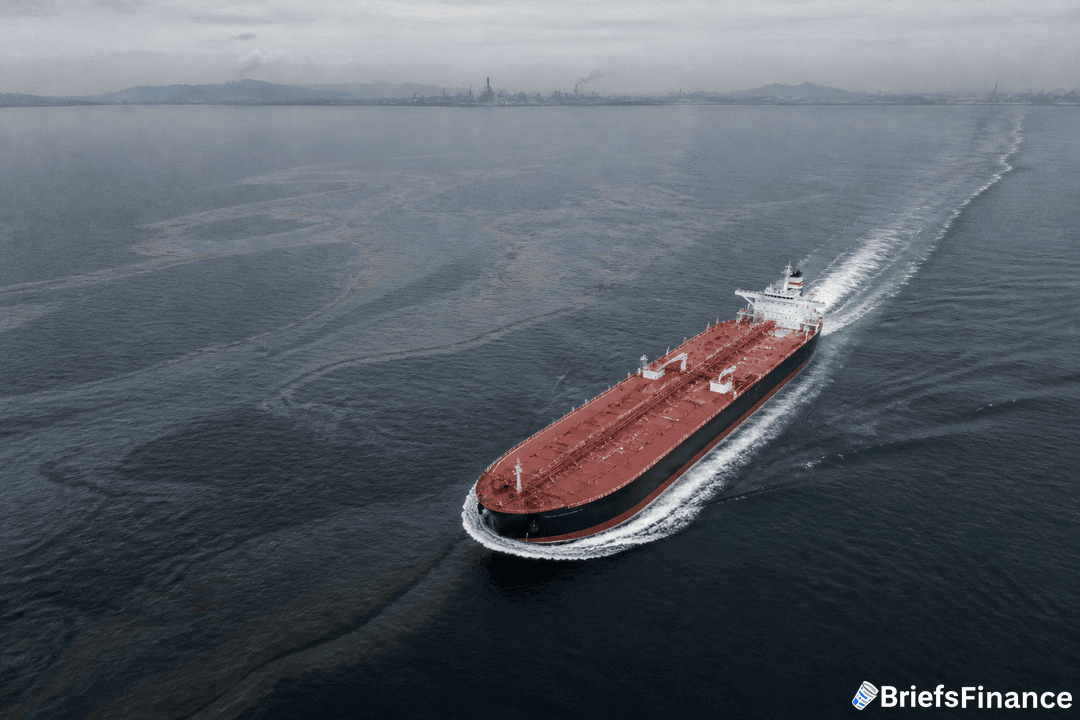
What happened and how severe it looks
After a quieter spell, incidents near Hormuz accelerated in October and have kept up that faster tempo in November. Traders and shipowners passed around video of a burning vessel this week, though it has not been verified.
Several maritime security officials say Iran has attempted to strike the same ship multiple times to discourage salvors, and reports have described limpet mines fixed to ship hulls. Producers release little detail for security reasons, and UK Maritime Trade Operations said last month it struggled to tally incidents because many firms were not reporting. To date this month, UKMTO's tally averages nearly one assault per day, totaling about 14 in Hormuz.
Georgios Sakellariou at Signal Ocean put it this way: "It seems like the new normal: Something like a war, but not exactly a war, with attacks on ships virtually every day." Oil is still moving, but secrecy and strikes make volumes hard to pin down, he said, adding that the fleet required could rise because some vessels are being taken out by attacks. One Gulf oil official said conditions in and around Hormuz had worsened since the US midterms, while a senior Saudi shipping official said the kingdom has to keep shipping through Hormuz despite the risks. The economies of Gulf producers are financed largely by energy exports.
What the shipping and oil flow data show
Flows appear to have eased from early month highs, according to Kpler and Vortexa. Kpler's seven day moving average for Hormuz transits and net ship to ship transfers in the Gulf of Oman, excluding Iranian loadings, fell to roughly 10 million barrels a day as of Nov. 10, down from about 13.4 million at the start of November. The figures are provisional as additional crossings are still being identified and validated, and November is incomplete. Flows can swing week to week, and it is unclear whether the latest dip is tied to the attacks.
Saudi Arabia told OPEC that what it supplied to the market last month was below its output. Historically, that kind of gap has signaled the kingdom was filling storage or moving more barrels through Hormuz in case the war escalated.
When global events touch energy and trade, stay informed with the free Market Briefs newsletter for simple five-minute clarity
How markets and governments are responding
This month, Brent futures are down roughly a fifth, while Middle East exports are approaching their pre-war pace.
This week, US warplanes hit a missile-launch facility belonging to Iran on Qeshm Island in the Persian Gulf after Iran earlier targeted US personnel and assets. Western officials say the odds of another round of mass US strikes against Iran have risen in recent days, and Washington also delivered a new warning to ships violating its blockade of Iranian ports.
ADNOC said one of its ships was hit while crossing Hormuz, with one seafarer unaccounted for and 11 injured. In a letter to the International Maritime Organization, Kuwait reported that eight of its tankers had been attacked in recent weeks, stating, "Such actions undermine the security and stability of the region and constitute a clear breach of international law," and that "Kuwait reiterates its demands that the Islamic Republic of Iran immediately cease its unlawful attacks." Traders, analysts and shipping officials lean on UKMTO and IMO updates to gauge severity, but limited disclosure by Gulf producers keeps details scarce and rumors active.
The bottom line for investors
Two currents are pushing in opposite directions. Prices are soft, and the IEA says supply is running ahead of demand, while third party tracking shows a step down in measured crossings to roughly 10 million barrels a day as of Nov. 10 from about 13.4 million at the month's start, with data still being refined.
Why it matters: a higher maritime risk premium can lift shipping and insurance costs even as abundant supply weighs on crude. Watch the pace of incidents, any military follow through, and revisions to flow data for clues on whether maritime risk starts to outweigh today's surplus in your energy exposure.
Markets can feel complex, so sign up for Market Briefs to get a short daily rundown you can read in minutes