Free NewsletterPro Login

Warning: Undefined variable $stocks in /var/www/briefs.co/htdocs/wp-content/plugins/oxygen/component-framework/components/classes/code-block.class.php(133) : eval()'d code on line 448

Warning: foreach() argument must be of type array|object, null given in /var/www/briefs.co/htdocs/wp-content/plugins/oxygen/component-framework/components/classes/code-block.class.php(133) : eval()'d code on line 448

Warning: Undefined variable $funds in /var/www/briefs.co/htdocs/wp-content/plugins/oxygen/component-framework/components/classes/code-block.class.php(133) : eval()'d code on line 472

Warning: foreach() argument must be of type array|object, null given in /var/www/briefs.co/htdocs/wp-content/plugins/oxygen/component-framework/components/classes/code-block.class.php(133) : eval()'d code on line 472
/* the link was here */

Supertanker Charter Rates for Gulf-to-Asia Crude Hauls Near $500,000 a Day

Published Aug 10, 2026
Share:
Supertanker Charter Rates for Gulf-to-Asia Crude Hauls Near $500,000 a Day
Summary:
  • The daily rate for a VLCC on the Middle East-to-China route hit nearly $498,000 on Friday.
  • Escalating Iran conflict has made shipowners reluctant to enter the Strait of Hormuz, shrinking tanker supply.
  • Rates have climbed from about $200,000 before the war began.

Tanker Owners Shun the Gulf as War Risk Rises

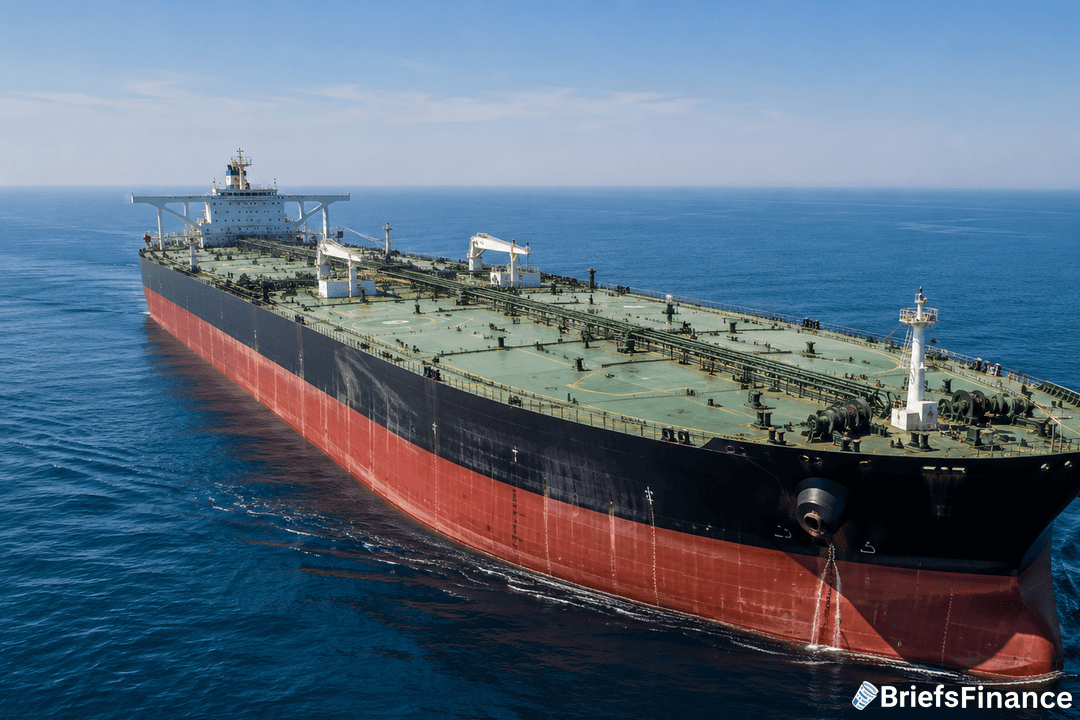
The price of chartering a supertanker to transport crude from the Persian Gulf to China has climbed to about half a million dollars per day. The escalation in the Iran conflict is causing many vessel operators to avoid the Strait of Hormuz, which has drastically reduced the number of ships willing to load within the Gulf.

This latest jump follows a provisional booking by Sinokor Group, a South Korean company that owns the largest fleet of supertankers globally. Shipping fixture data show the firm chartered one of its tankers for an unusually high rate to lift a cargo at a Gulf port and carry it to Asia. The benchmark route reached its highest level since June on Friday.

Sinokor did not respond to requests for comment outside of regular office hours.

The Benchmark Explained

The Baltic Exchange, a London-based provider of shipping benchmarks, publishes daily assessments for routes such as TD3. The exchange expresses each rate in worldscale points, a system that lets charterers and owners compare prices across different voyages. A reading of 490 points means the voyage pays close to five times the baseline rate in the official scale.

Get the free Always Be Buying eBook and learn the simple system for building wealth on any income

With ships occasionally coming under attack while traversing Hormuz, the number of owners prepared to call at ports within the Persian Gulf has dropped, although some continue to transit the strait. A significant share of Gulf-loading voyages is covered by vessels belonging to Middle Eastern producers, the private Sinokor, or a handful of smaller operators willing to accept greater danger in those waters.

Because fewer transactions are publicly reported along this route, the market has become less transparent and the main benchmark for VLCC rates is harder to assess. The turmoil has even prompted one of the world's largest commodity traders to file a lawsuit against the Baltic Exchange, which publishes the benchmark.

The Latest Numbers

The TD3 route specifically covers ships loading at Saudi Arabia's Ras Tanura port.

Sinokor's vessel was booked at 560 worldscale points, according to the fixture data, though the exact loading port inside the Persian Gulf was not specified, making it difficult to convert that into a precise daily dollar figure.

What It Means for Investors

"Owners willing to load inside Hormuz are earning a scarcity premium," wrote Clarksons Securities analysts led by Frode Morkedal in a note. They also noted that vessels taking cargoes on board in the Gulf of Oman for Asia earn far less, roughly $147,000 daily.

"The pool of willing owners remains small," they said, referring to those prepared to enter the Persian Gulf.

The sharp rise in freight costs could have broader implications for oil prices and global trade, as higher shipping expenses may eventually be passed on to consumers. With the conflict showing no signs of abating, the premium for taking on the risk of transiting Hormuz is likely to persist, keeping rates elevated for the foreseeable future.

Download the free Always Be Buying eBook and start putting your money to work today
Disclosure

Recent News

1 2 3 … 90

Get Market Briefs delivered to your inbox every morning for free!

No fluff. No noise. No politics. Just finance news you can read in 5 minutes.

Blogs

October 1, 2026
Housing Market 2026: Why Office Buildings Are Cracking Before Houses Do
  • Office buildings are selling for 80% to 95% off because their five-year loans are resetting at much higher rates while half-empty floors have gutted the income those buildings are valued on.
  • Housing is under pressure, not cracking: a $400,000 mortgage costs $975 more a month than at 3%, but six of every seven mortgages are still under 6% and those owners are staying put.
  • Whether pressure turns into cracks is a race between unaffordability and the economy, and either way Jaspreet's rule is to treat your house as a liability and buy only what you can afford.
Read More
September 30, 2026
Dividend Investing vs. Growth Investing: Why the Slower Portfolio Can End Up Bigger
  • "What stock should I buy?" is the wrong first question. Growth, income, or wealth preservation comes first, and the goal changes which stocks even make sense.
  • At $500 a month for 30 years, 13% growth builds about $1.75 million. 10% growth plus a reinvested 4% dividend builds a little more than $2.2 million and pays a little more than $80,000 a year.
  • Income investors have US dividend ETFs, REITs, and international dividend funds to study. Growth investors have the Nasdaq 100, AI and chip funds, and small caps. None of it is a recommendation.
Read More
September 29, 2026
Why Is Gold Going Down? A 5.2% Treasury Yield Just Took Its Job
  • President Trump rejected Iran's deal to reopen the Strait of Hormuz, oil prices jumped back up, and gold fell instead of rising.
  • Treasury yields hit their highest level in more than 20 years, so investors sold gold and bought Treasuries that pay interest.
  • Higher Treasury yields make the national debt, mortgages, car loans, and credit cards more expensive, with the Fed's next rate decision due October 28.
Read More
September 28, 2026
The Strategic Bitcoin Reserve: Why the Government Wants Bitcoin to Explode
  • The US government holds about 328,000 Bitcoin, worth roughly $25 billion, and since a 2025 executive order it keeps seized coins instead of selling them.
  • Washington wants a bigger pile of assets so its $40 trillion national debt looks smaller next to them, which lets it keep borrowing and spending.
  • Bitcoin's wild price swings, and a government holding a coin built to escape governments, are the two risks investors need to watch.
Read More
September 25, 2026
BRIEFS EXCLUSIVE: 43% Of Respondents Say Bills Outran Their Income Over Past Two Years
  • 43% of the 494 Market Briefs readers surveyed said their bills grew faster than their income over the past two years, even though 79% could cover a surprise $5,000 expense tomorrow.
  • Half of readers own gold or crypto, the two classic bets against a weaker dollar, and only 13% bought nothing at all in the last 12 months.
  • The median reader says it takes $150,000 a year to feel financially secure, about $62,000 above the U.S. median household income.
Read More
September 25, 2026
The Economy Is Booming. So Why Did Stocks and Bonds Fall Together?
  • S&P Global says the US economy is growing at its fastest rate since 2021, with corporate profits up 28.9% in a year, almost four times the historical average.
  • Stocks and bonds fell at the same time, which is not how the two markets normally behave, because Treasury yields above 5% now compete with stocks for investors' money.
  • Jaspreet Singh lays out three ways to invest through a shift like this: always be buying, buy the crash, or follow the money before it hits the headlines.
Read More
September 24, 2026
The 2026 Economic Reset Is Starting: Are We in a Recession, or Is the Pain Still Ahead?
  • The Federal Reserve has flipped from stimulating the economy to fighting inflation with higher interest rates, while the White House still wants growth at almost any cost.
  • The national debt tops $40 trillion, has outgrown the entire U.S. economy, and its interest payments are now the government's fastest-growing expense.
  • Higher rates bring pain for private equity, private credit, and speculative assets, but they open opportunities for investors holding cash, treasuries, and value assets.
Read More
September 23, 2026
Are We in a Recession? Without AI, America Might Already Be in One - and Washington Knows It
  • The White House attributes about three quarters of U.S. economic growth to AI, and many believe the economy would already be in a recession without it.
  • Washington has three reasons it cannot let the AI boom slow down: staying the world's superpower, outgrowing $40 trillion in national debt, and protecting a government stock portfolio worth billions.
  • Every market goes through booms and busts, and investors who understand the cycle get to buy the downturn instead of panic-selling with the crowd.
Read More
September 22, 2026
Will Interest Rates Go Down in 2026? Where the Money Moves Either Way
  • The Fed is leaning toward higher rates to fight 4% inflation, while the White House and a cracking job market push the other way.
  • If rates rise, money has tended to move toward short-term Treasuries, floating-rate loans, energy, banks and dividend payers.
  • If rates fall, it has tended to move toward gold, silver and Bitcoin, real estate, small caps, the S&P 500 and speculative bets.
Read More
September 21, 2026
How the Federal Reserve Makes Money - and Why It Just Posted Its Biggest Loss Ever
  • For 109 years the Federal Reserve created money, lent it to the U.S. government and handed the interest it collected back to Washington - almost $1 trillion in the decade starting in 2011.
  • Pandemic-era lending locked the Fed into earning about 2% on trillions of dollars while it now pays banks around 4%, producing a record loss of hundreds of billions in 2026.
  • The Fed covers its losses by creating money and the government covers its lost revenue by borrowing, and both feed the inflation that eats at the dollars in your account.
Read More
1 2 3 … 28
Share via
Copy link











