What Happened: Retaliation Across Dozens of Sites
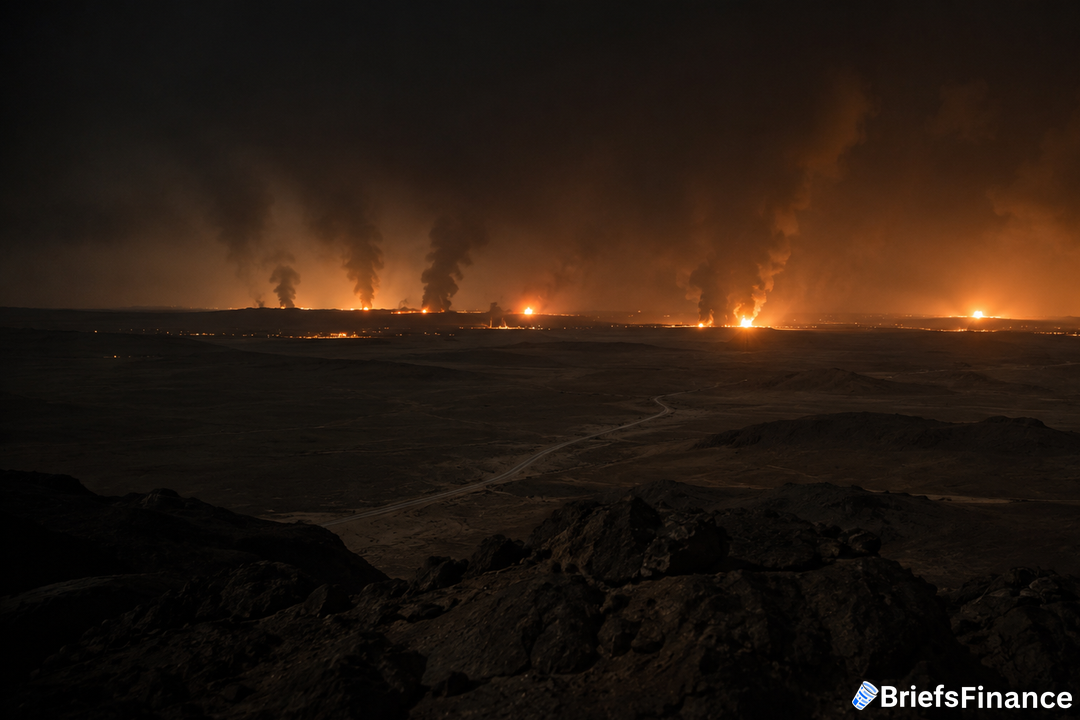
The U.S. military did not waste time. On July 29, 2026, Central Command announced it had carried out a "heavy wave of strikes" on Iranian military targets. The attacks targeted numerous facilities belonging to the Islamic Revolutionary Guard Corps (IRGC), including missile and drone sites.
This came after Iran's Islamic Revolutionary Guard Corps fired several ballistic missiles targeting American forces based in Jordan. All of those missiles were intercepted by U.S. air defenses. According to President Donald Trump, the American forces had extremely limited time to react and intercept the incoming missiles.
The response did not stop at airstrikes. According to CENTCOM, the renewed blockade of Iranian ports has already caused 20 cargo ships to be diverted. Two other vessels were disabled in the Strait of Hormuz.
Jordan's armed forces reported that they shot down five missiles that had been fired from Iran during the night. Kuwait also confirmed one death after a building owned by a Chinese firm was struck by an Iranian attack. The region is clearly on edge.
Public Opinion: Most Americans Aren't on Board
So how do people back home feel about all this? A new poll from AP-NORC, conducted July 23-27 among 1,165 adults, gives a clear answer. The poll found that merely one-third of American adults consider the conflict with Iran worth pursuing. A much larger 64% say it is not.
Get the market news that matters in a five-minute read with Market Briefs, our free daily newsletter
The numbers break down along party lines, but the discontent is broad. Among Democrats, 87% are not in favor of the war. Among independents, 68% are against it. Even among Republicans, 37% say it is not worthwhile.
President Trump's approval rating on handling Iran has fallen to 28%, down from 34% last month.
The White House is not sweating the polls. In a statement to Fox News Digital, Assistant Press Secretary Olivia Wales said, "What matters most to the American people is having a Commander in Chief who takes bold action to keep them safe, which is exactly what President Trump is doing." She added that Trump "does not make national security decisions based on fluid opinion polls, but on the best interests of the country, and Americans are already safer for the United States' bold actions to deny the Iranian regime the ability to develop a nuclear weapon."
Still, the poll suggests something else is on voters' minds: money. A full 72% of U.S. adults said preventing domestic oil and gas price increases is extremely or very important, up slightly from 67% in March.
What Comes Next
Some of the biggest voices in the region are trying to pump the brakes. Qatar's foreign ministry called the attacks "a dangerous escalation" that would "complicate efforts to contain tensions" and stressed the need for "an immediate and comprehensive cessation of all military operations and attacks that threaten the security and stability of the region."
Kuwait condemned the attacks. Reportedly, Saudi Arabia is attempting to assemble a multinational force aimed at guarding vessels in the Red Sea against Houthi assaults.
CENTCOM released new images of F/A-18E Super Hornet fighter jets launching from the USS George H.W. Bush in the Arabian Sea. The USS George H.W. Bush, currently stationed in the Arabian Sea, has been supporting the port blockade.
The U.S. has made its position clear: it will strike back when its troops are attacked.
Join Market Briefs, our free daily newsletter, for a quick daily rundown of the markets