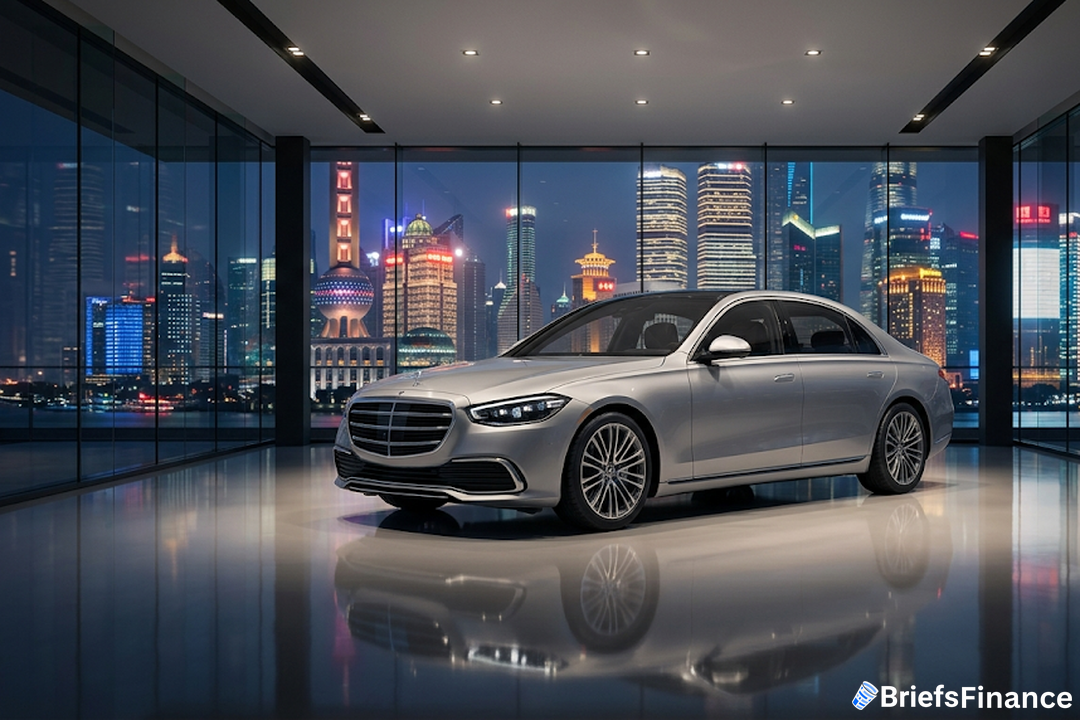
Why China Is Getting Tougher for Luxury Car Makers
China is the world's biggest auto market. Chinese car brands like BYD are spending heavily to move into the luxury segment. Mercedes CEO Ola Källenius described it as an "enormous amount of money" going into that push. The result is a brutal price war that is squeezing everyone.
"That competitive intensity in China - I don't believe it's going to go away anytime soon," Källenius remarked on July 29, 2026, during an appearance near Helsinki, Finland.
At the same time, a long-running property crisis in China has weighed on big-ticket purchasing. That combination of more supply and less demand has shrunk the country's luxury-car market. Mercedes is not alone. Other luxury brands, such as Porsche, BMW, and Volkswagen's Audi, have also experienced drops in sales.
Get the market news that matters in a five-minute read with Market Briefs, our free daily newsletter
These headwinds have forced luxury automakers to reassess their strategies in China. With domestic competitors like BYD pouring resources into premium models, the battleground is shifting. Mercedes, once dominant in the segment, now faces the dual challenge of defending market share and maintaining margins. The company's response - launching new vehicles and cutting costs - reflects the gravity of the situation.
A prolonged downturn in China's real estate market has made consumers more hesitant to spend on high-ticket items like luxury automobiles. As a result, even established premium brands like Mercedes must fight harder for every sale, often through aggressive discounts that erode profitability.
Mercedes Responds With a New SUV and Deeper Cost Cuts
Mercedes CEO Ola Källenius showed off a redesigned version of its GLA compact SUV in Finland. The fully electric version can drive up to 657 kilometers (408 miles) on a single charge. Orders in Germany begin on Thursday, with an entry price of approximately €48,600 (equivalent to $55,300). Källenius described the new design as looking "like a predator." This updated GLA model is primarily targeted at European buyers, a region where electric-vehicle demand continues to grow.
This rollout serves as a gauge for Mercedes' ability to restore sales volume while protecting profit margins. The company relies on models like the GLA to rebuild its customer base amid weakening demand in China and the heightened vulnerability from its concentration on higher-priced vehicles during a global luxury downturn. The company aims to achieve annual car sales of roughly 2 million in the medium term, up from about 1.8 million last year.
Källenius observed that the sales drop was only slightly above the decline seen across China's entire market. Mercedes is managing pricing in China "as carefully and financially sound as we can." With the Chinese market expected to remain challenging, the European electric-vehicle push becomes even more critical for Mercedes.
The electric GLA also represents a strategic bet on Europe's growing EV market, where stricter emissions regulations and rising consumer interest are driving sales. For Mercedes, this model is a key part of efforts to offset the revenue pressure from China while demonstrating that it can compete in the premium electric segment against both legacy rivals and newer entrants like Tesla. Success in Europe could help stabilize the company's global profitability amid the prolonged price war in its largest single market.
Join Market Briefs, our free daily newsletter, for a quick daily rundown of the markets