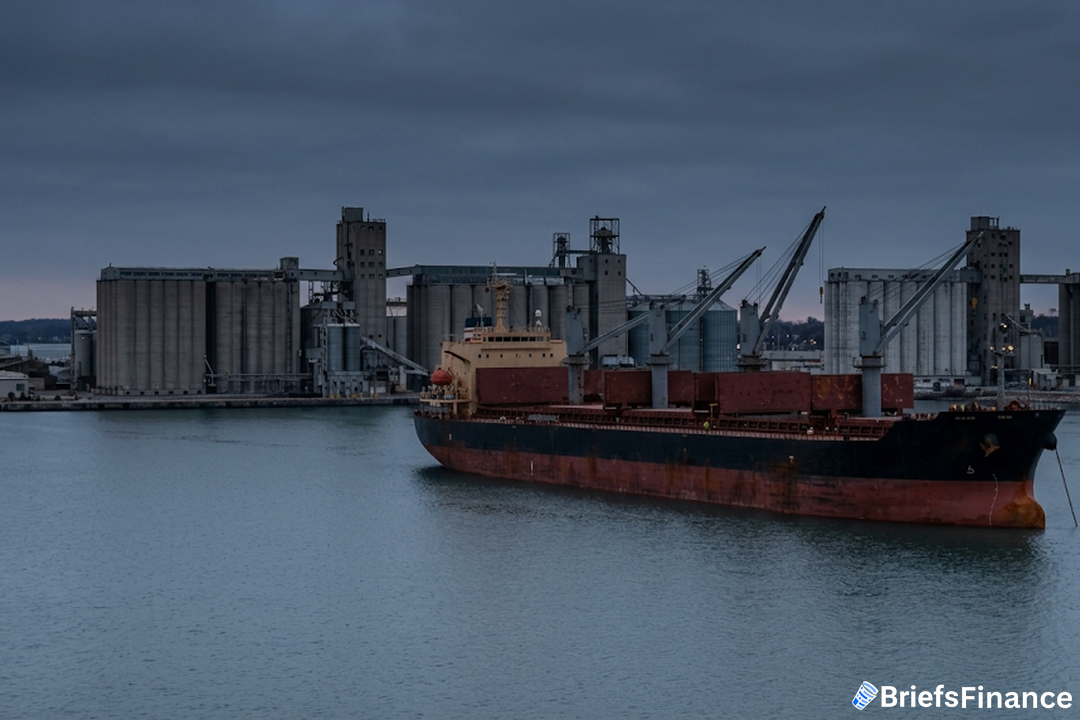
Armed Escorts for Grain Ships
Approximately one-fourth of Russia's grain exports pass through the Sea of Azov under normal conditions. But that trade has come to a complete stop.
That is roughly two weeks of silence in a waterway that moves millions of tons of food.
Now Russian officials are floating an unusual solution: arm the ships themselves. Representatives of the defense and transport ministries are in discussions with grain companies and shipping lines about equipping commercial vessels with small arms and portable anti-aircraft systems, along with arranging navy escorts.
Kremlin spokesman Dmitry Peskov said, "Russia's navy can protect commercial ships," and added that President Vladimir Putin "views attacks on merchant vessels as piracy." According to analytics firm Logistic OS, vessel movements at Russian ports on the Azov Sea are at a standstill.
Get the market news that matters in a five-minute read with Market Briefs, our free daily newsletter
Meanwhile, the strikes are not one-sided. Ukraine's own grain shipments from its Black Sea ports in Odesa were also halted last week after Russian attacks. Both sides have been hitting each other's commercial ships and port infrastructure in the Black Sea for the past two weeks.
Wheat Prices Jump as Supply Fears Grow
Russia is one of the world's biggest wheat exporters. When a quarter of its grain route shuts down, the world feels it. Moscow has already labeled the Black Sea as hazardous for maritime traffic and is offering rail subsidies to divert shipments toward alternative harbors.
The proposed arming of grain ships is getting a skeptical reception from the people who would have to pay for it. Some shippers and traders question whether mounting machine guns on a cargo vessel is a realistic solution. They also warn it could get expensive.
Broader Impact and Alternatives
To mitigate the disruption, Russia's rail subsidies aim to reroute grain to alternative ports such as those on the Black Sea ports. However, shifting large volumes overland is costly and time-consuming, and port capacity elsewhere is limited. The dual nature of the conflict - with both sides striking commercial shipping - raises fears of a prolonged standoff in the Black Sea basin, which could further squeeze global wheat supplies and keep prices elevated.
The Sea of Azov has been a flashpoint since the start of the broader war. Ukraine has targeted Russian vessels in retaliation for Russia's blockade of Ukrainian ports, and the recent escalation marks a dangerous phase where commercial shipping is directly in the crosshairs. This tit-for-tat pattern risks disrupting global food supply chains far beyond the immediate region.
The conflict in the Black Sea region has escalated since Russia's invasion of Ukraine in 2022, with both sides using naval drones and missiles to strike maritime targets. The recent focus on grain vessels threatens a key global food supply corridor, recalling earlier disruptions from the collapse of the Black Sea Grain Initiative. Without a diplomatic solution, the standoff could persist, keeping markets on edge.
The proposal to militarize merchant vessels, while novel, introduces complex legal and insurance challenges that have yet to be addressed by international maritime authorities. Any escalation could further destabilize an already fragile global food supply chain, especially for nations dependent on Russian wheat imports.
Join Market Briefs, our free daily newsletter, for a quick daily rundown of the markets